
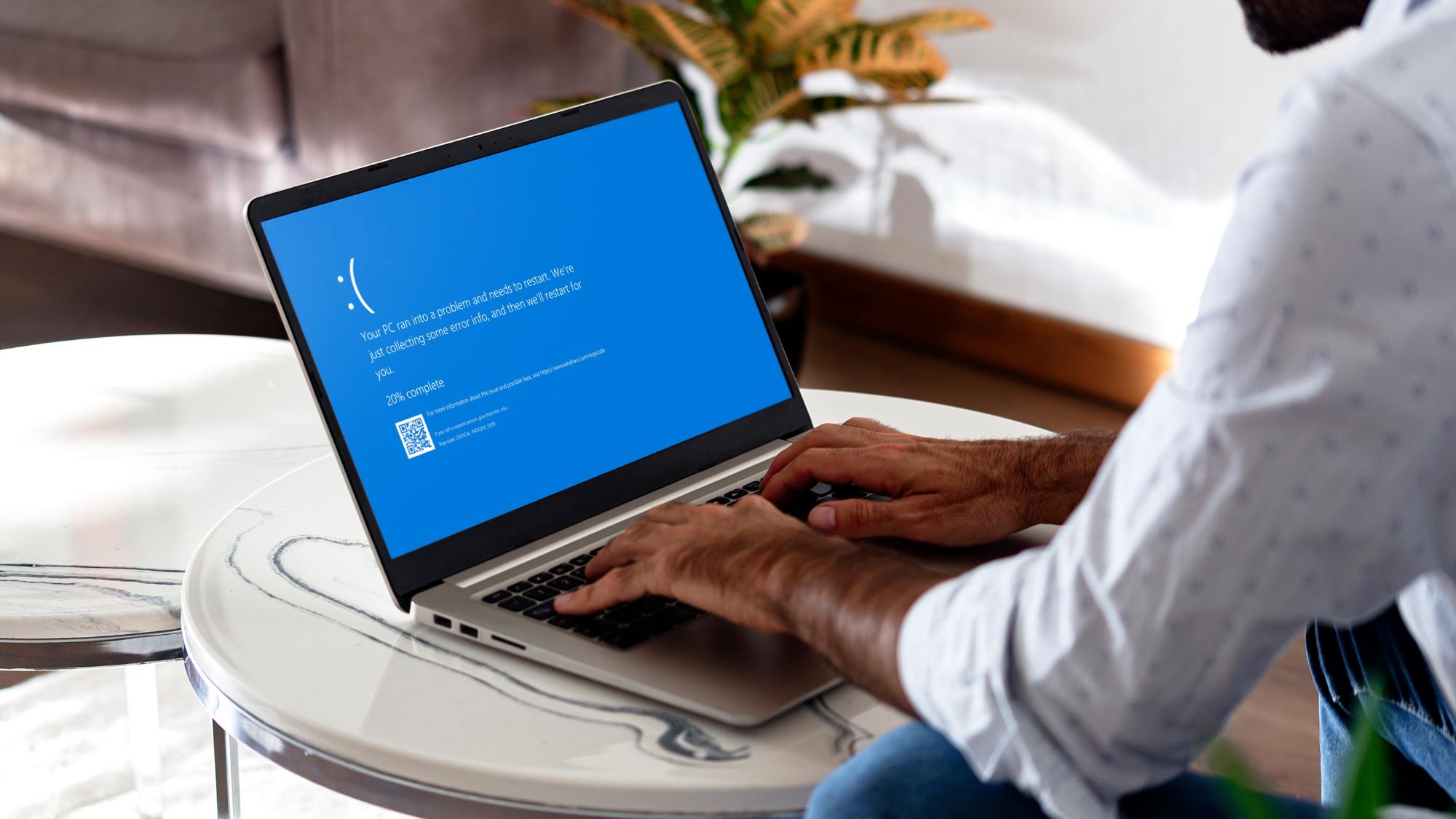
- Windows 11 has a new black death screen (BSOD) rather than blue
- It simplifies the current BSOD and changes the color
- The problem is that it may go too far with rationalization and looks too much like a Windows applied update
Windows 11 obtains a new design – and a color – for the infamous “death screen” that appears when the system locks completely and must be restarted.
The penis reports that after 40 years from the blue screen of death, we now get a black death screen – always abbreviated in BSOD – and it seems quite different from the current version of Windows 11.
In a change that we already knew in the pipeline, Microsoft has simplified the existing BSOD and deleted the faced face with the QR code on the screen. The new black color screen for system accidents is much more rationalized and is currently deployed during tests on the version preview chain.
In the blog post for this new Windows 11 overview version, Microsoft explains: “A more rationalized interface appears during an unexpected restart [system crash]. This update design is aligned with the visual style of Windows 11 and helps you return to work faster. The screen displays a more readable provision while keeping the technical details visible. This screen appears with a black background. “”
You can see the new black screen below, which is mainly a simple message: “Your device has encountered a problem and must restart.”
It is quite vague, of course, but for those who are more interested in detail, there is a stop code (error message) at the bottom of the screen, as well as a pointer on “ what failed ” (information on which system file was involved in error).
With this movement now present in the preview version of the version, this means that the Redessené BSOD will soon arrive on the finished version of Windows 11.
Analysis: the bore crashing
Address these adjustments one by one, let’s start with the QR code, which was banished. Will I miss this? No, in a word, and I doubt that many other people will do it either. The idea was to scan it and get a more complete image of the details of the accident presented to you, but it has never really transmitted useful information, just a generic support text. (And sometimes users were not fast enough to be able to scan the code on the screen, anyway).
Regarding the distribution of the fruiting facial, I suppose that the argument on this subject is that it seemed rather clumsy, or probably even childish, but it filled a kind of important function: clearly indicating that a bad thing happened ” (TM).
Here, we arrive on the question with the new BSOD look in my opinion (and not only mine): that it is not so clear that an error has occurred. The design is very similar to a standard Windows update, in particular with the new black background, as well as the “full percentage” counter.
And so people who do not read the thing correctly – and these people are definitely there – can be confused with regard to what is happening. Another elbow is that having the black screen can feel a little more intimidating – I have certainly seen this point raised before – because blue is a more user -friendly color, black is a little misfortune.
In any case, I think that a visual backup of the text “the device encountered a problem” would be practical. Okay, you don’t need a giant fronking face, but there could be a kind of graph to indicate that an error occurred, mainly to differentiate the BSOD screen from an update.
It would not be so difficult for Microsoft to make this setting, of course, and the company may well do, depending on the comments of the new BSOD. In theory, however, it is a delicate change to test; In the final overview chain, accidents must be unlikely, so few Windows initiates (AKA Testers) will see it. (It should also be noted that in the first preview versions, the BSOD is actually a GSOD – a green screen).


