
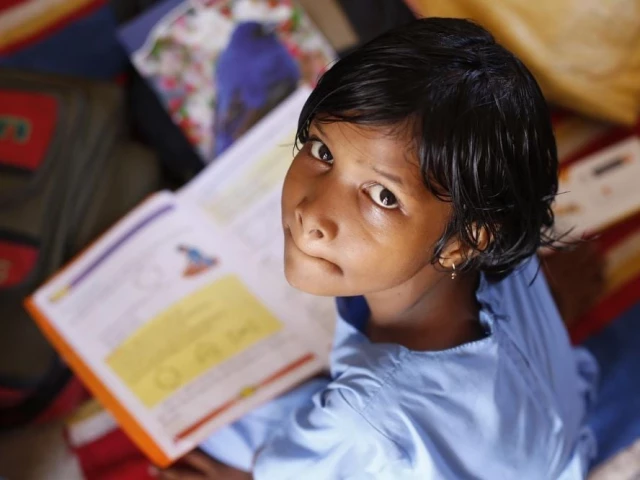
A Gallup survey shows that girls and rural students face the greatest barriers despite gains in enrollment and literacy rates.
Nearly 28% of children aged 5 to 16 are out of school, with girls disproportionately affected, with 34% of girls out of school compared to 22% of boys. These disparities are more pronounced in rural areas, particularly among girls, where exclusion from education is much more severe, revealing a clear intersection between gender and geography as a predictor of educational disadvantage.
Read: Pakistan’s Digital Leap: A Youth-Led Innovation Strategy for Global Competitiveness
The HIES survey by Gallup Pakistan highlights that although two-thirds of Pakistanis aged 10 and above have attended school at some point, access to education remains highly unequal across the country. The national literacy rate is 63%, that of men is 73%, while that of women lags behind at 52%. Urban areas fare better, with a literacy rate of 77%, compared to 56% in rural areas.
While 68% of children are enrolled in primary school, these figures decrease sharply at higher levels of education: only 40% are enrolled in middle school and around 30% in the baccalaureate. This sharp drop in retention rates highlights the challenges many face in continuing their education, particularly in rural and disadvantaged areas, highlighting structural barriers such as school distance, safety concerns and increasing opportunity costs as children age, particularly pronounced for rural girls.
According to their analysis, dropout trends show that the transition from elementary to middle school is a point of attrition. Economic pressures, domestic responsibilities and limited options for post-primary schooling contribute to early exit from the education system.
For girls, these challenges are compounded by social expectations and early marriage.
At the provincial level, Punjab tops with the highest literacy rate at 66%, while Sindh stands at 61%, Khyber Pakhtunkhwa (KP) at 55% and Balochistan lags far behind at just 43%. This provincial gap further illustrates the uneven distribution of educational opportunities, with Balochistan facing unique challenges such as inadequate infrastructure and a lack of accessible educational resources.
Learn more: Thousands miss out on Eid cash aid
Gallup Pakistan’s analysis highlights that while progress has been made in increasing school enrollment, the real challenge lies in tackling the persistent and deep-rooted inequalities that continue to shape Pakistan’s education system. These inequalities, linked to gender, geography and economic factors, prevent many children from receiving a quality education. Going forward, policymakers must focus not only on increasing enrollment, but also on improving retention rates, ensuring gender equity, and reducing the impact of geographic and economic barriers to education.


