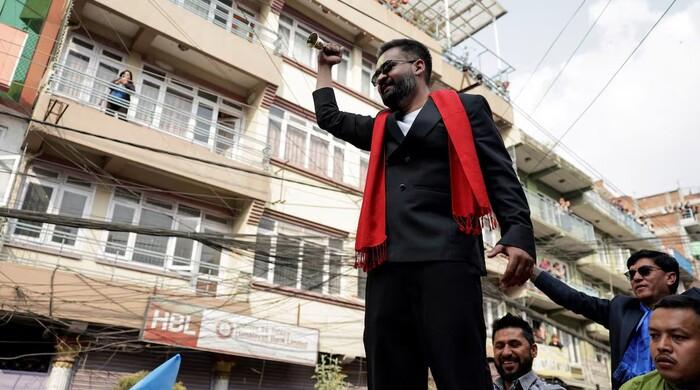
- Shah’s popularity is driven by social media and connections with young people.
- The RSP party manifesto promises job creation and economic growth.
- Final results covering 165 seats decided by direct voting are expected within a few days.
After Nepal’s historic youth uprising last September killed 77 people and forced then-Prime Minister KP Sharma Oli to resign, a 35-year-old rapper-turned-politician posted a typically terse message to millions of followers on social media.
“Dear Generation Z, the resignation of your assassin has arrived,” wrote Balendra Shah – better known as Balen. “Now your generation will have to lead the country. Be prepared.”
Five months later, the musician, who cut his teeth in politics in 2022 by becoming mayor of the capital Kathmandu, is poised to become Nepal’s next Prime Minister following the country’s first elections since the September uprising.
Shah’s Rastriya Swatantra Party (RSP) was in the lead with around a hundred seats, far ahead of its main rivals, according to the first counts of the electoral commission published on Friday.
The final results, covering 165 seats decided by direct voting and 110 seats by proportional representation, are expected within a few days.
The Nepali Congress, currently in second place, has already conceded defeat, and analysts say the RSP’s dominance means it will likely form the next government.
“Balen Shah is so popular that now buses arriving in Kathmandu carry stickers saying ‘Heading to Balen Town,'” said Bipin Adhikari, a constitutional law expert who teaches at Kathmandu University.
If Shah succeeds in seizing power, it would cap a dramatic rise for a man who rose to public prominence with rap music critical of the establishment and traded his popularity to rise to high political office.
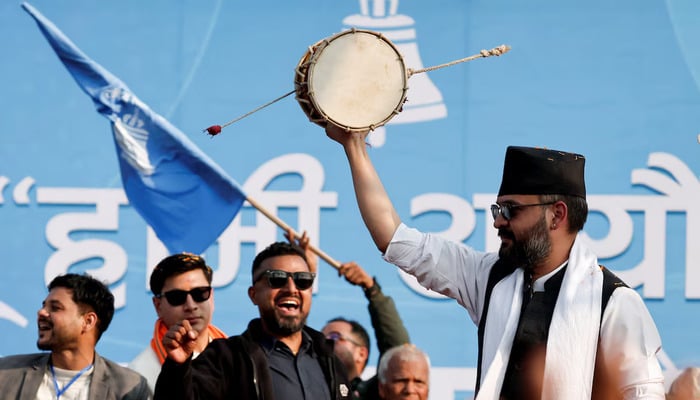
It could also reshape the politics of Nepal, a small Himalayan nation wedged between China and India, long dominated by a handful of established parties.
“It’s not a piece of cake”
Part of Shah’s national appeal is due to the work he did as mayor of Kathmandu, where he focused on improving urban infrastructure, such as waste management, and providing services such as health care.
He has also faced criticism, including from Human Rights Watch, for allegedly using police to seize the properties of street vendors and landless people.
Shah – who resigned as mayor in January to run in the general election – did not respond to interview requests and questions from Reuters sent by email.
Unlike much of Nepal’s political elite made up of veterans from older generations, Shah has made a habit of largely avoiding the mainstream press.
Rather, it is his prolific presence on social media, with more than 3.5 million followers on platforms like Facebook, that allows him to connect directly with young Nepalis.
“What makes Balen special is that he stays in touch with the youth through his short posts on social media, but it would not be a piece of cake for him once he becomes prime minister,” said independent political analyst Puranjan Acharya.
‘Let me speak’
Born to a father who practiced traditional Ayurvedic medicine and a stay-at-home mother, Shah showed an early penchant for poetry that evolved into a love of rap music, influenced by American artists including Tupac Shakur and Curtis “50 Cent” Jackson, according to an aide.
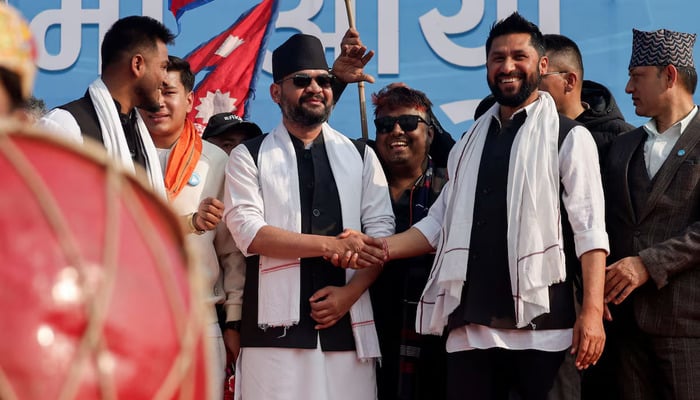
After earning an undergraduate degree in civil engineering in Nepal, Shah then studied for a master’s degree in structural engineering in southern India – by which time he had already become a rap star in his home country.
His songs, which often attack Nepal’s ruling class, have struck a chord with many people in a country where about 20 percent of the 30 million people live in extreme poverty.
Released in 2019, one of Shah’s best-known songs, “Balidan” – or sacrifice in the Nepali language – has been viewed over 12 million times on YouTube.
His words read:
“Let me speak, sir, it’s not a crime,
Let me open my mind, I’m not a curse to the palace,
My mind is not bad, it is not afraid to tell the truth. »
“Wood attacked by termites”
Last December, Shah joined the RSP, led by former TV host turned politician Rabi Lamichhane, as a candidate for prime minister.

In its manifesto, Shah’s RSP pledged to create 1.2 million jobs and reduce forced migration, aiming to exploit frustration over unemployment and low wages that have pushed millions of Nepalis to seek work abroad.
The party also pledged to increase Nepal’s per capita income from $1,447 to $3,000, more than double the country’s economy to $100 billion in GDP, and provide safety nets such as health insurance to the entire population, all within five years.
Domestically, analysts predict that if elected, much of the Shah’s success will depend on the talent he surrounds himself with to reform a moribund administrative system riven by corruption.
“This needs a team, experts and support,” Acharya said. “With the existing state apparatus, it cannot function and it will be finished like wood attacked by termites.”