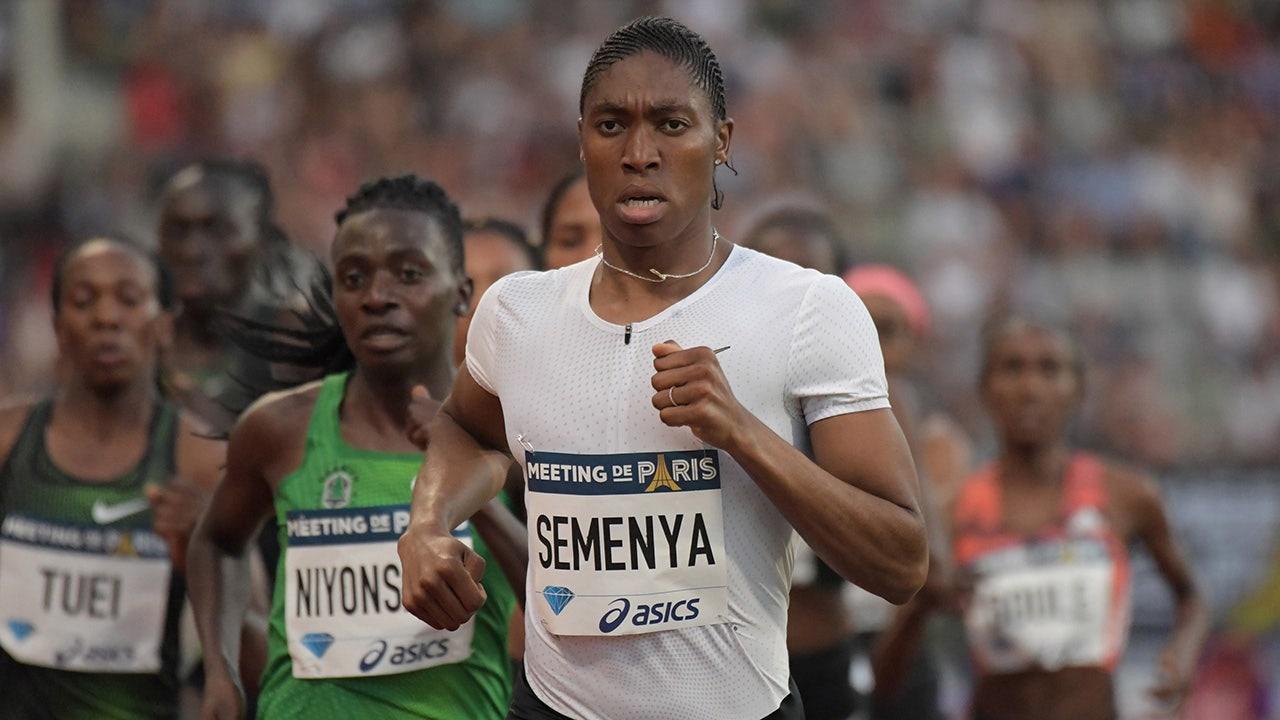
NEWYou can now listen to PK Press Club articles!
Caster Semenya, a two-time Olympic gold medalist in the women’s 800 meters, has slammed the International Olympic Committee (IOC) over a new policy aimed at ensuring fairness for women competing at the highest level of sport.
Semenya, who suffers from Disorders of Sexual Development (DSD), has higher testosterone levels than a typical woman and has launched legal proceedings in order to compete in the women’s category. Semenya said she expected more from IOC President Kirsty Coventry.
CLICK HERE FOR MORE SPORTS COVERAGE ON PK Press Club
Caster Semenya (RSA) runs during a heat of the women’s 5,000m during the Oregon 22 World Athletics Championships at Hayward Field on July 20, 2022. (Kirby Lee/USA TODAY Sports)
“Personally, for her as a leader, she’s African, I’m sure she understands how, you know, we as Africans come from a southern country, you know, you can’t control genetics,” Semenya said Thursday. “For me personally, because she’s a woman coming from Africa, knowing how, you know, African women or women from the Global South are affected by this.”
The IOC said it would use genetic testing to verify the biological sex of competitors in women’s events. The IOC said eligibility for events in the women’s category is “now limited to biological females, determined based on a single SRY gene screening.”
“Based on evidence and informed by experts, the policy – applicable from the LA28 Olympic Games – protects fairness, safety and integrity in the women’s category,” according to the organization.
“Obviously if you’re talking about science, because we’re talking about science here, if the science is clear, show us who decided and don’t present it as a lie because it’s a lie and we know it because we’ve seen it, so if we were to respond or confront Kirsty, that’s how we would respond and we would respond forcefully as we are because it affects women,” Semenya said.
US OLYMPIAN, WHO IDENTIFIES AS NON-BINARY TRANSGENDER, SLAMS NEW IOC POLICY TO PROTECT WOMEN’S SPORT
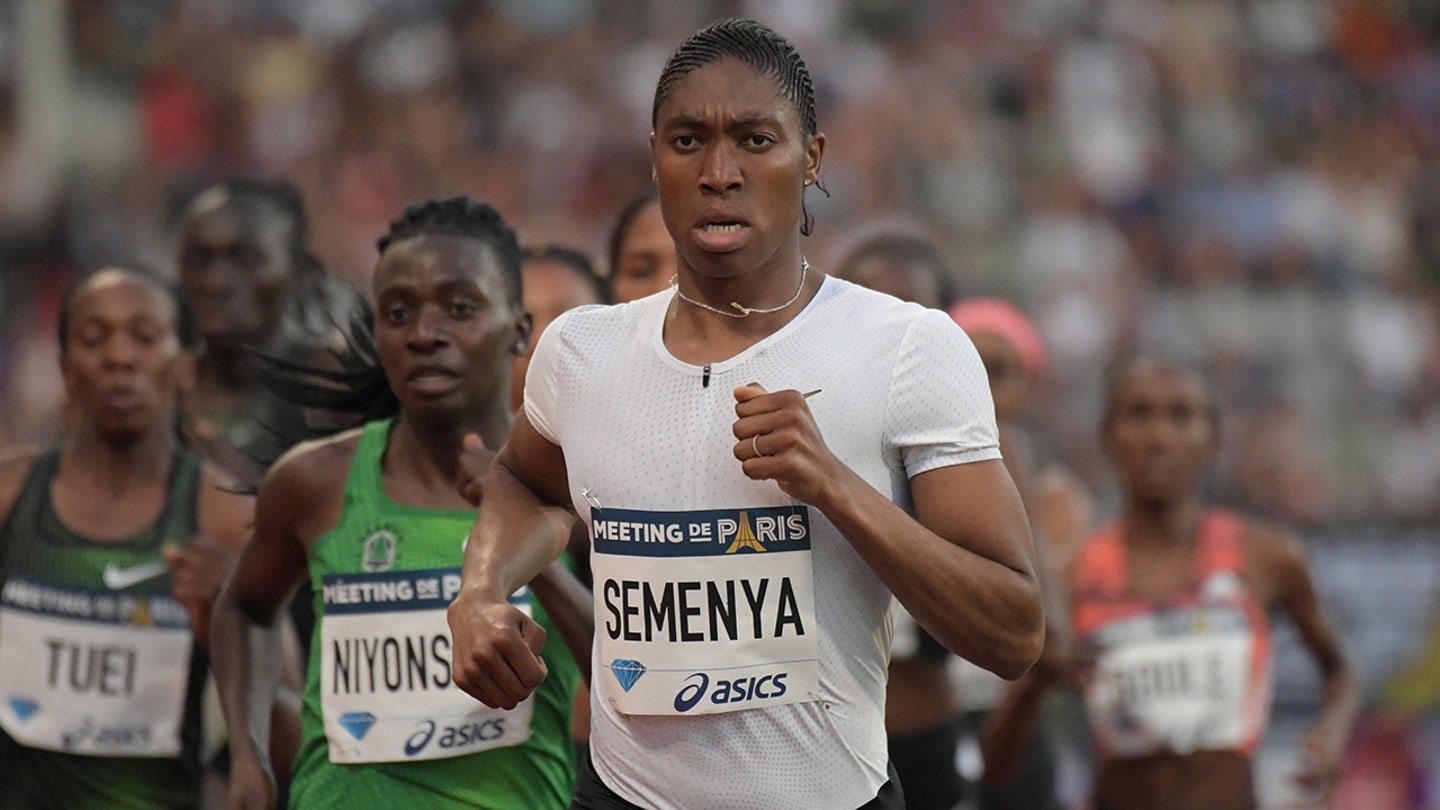
Caster Semenya (RSA) wins the women’s 800m in an African record time of 1:54.25 at the Paris Meeting during an IAAF Diamond League meet at Stade Charlety on June 30, 2018. (Kirby Lee/USA TODAY Sports)
Semenya won Olympic gold medals at the 2012 and 2016 Games, but she is banned from participating in some international competitions like the Olympics and world championships because she refused to follow the rules and take medication to reduce her hormone levels.
“For me personally, I would say the voice is not being heard because you take it as a check box, you check a box to be able to clarify or say yes, we consulted,” she said. “For me, you’re the one that checks the box.”
The IOC said it made the decision to implement the policy after consulting a group of experts, with the aim of providing equal opportunities for women in sport.
“The policy has been developed on the basis that it is universally recognized that there is a need for a women’s category to allow men and women equal access to elite sport,” the IOC said in a statement.
“It was guided by the IOC’s modern goals of equality (equal opportunities for female athletes in finals, on podiums and at championships), strengthening Olympic value (with women’s and men’s finals in all sports) and visibility and inspiration (celebrating female athletes on the Olympic podium to inspire and represent women and girls around the world).”
Coventry suggested that keeping men in women’s sports was “not safe” in the announcement.
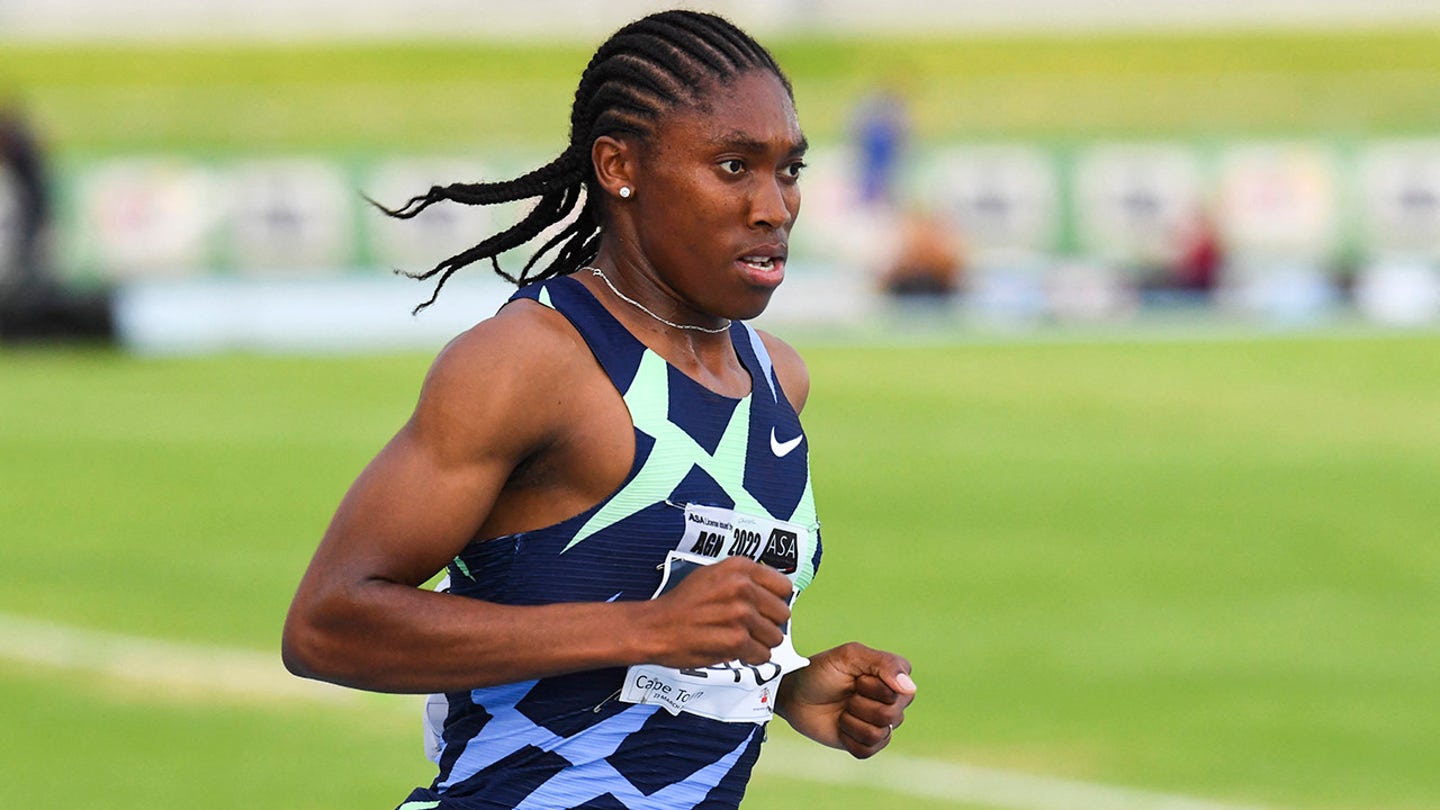
Caster Semenya of South Africa competes in the women’s 3000m final during the South African Athletics Grand Prix (ASA) at Greenpoint Athletics Stadium in Cape Town on March 23, 2022. (RODGER BOSCH/AFP via Getty Images)
“As a former athlete, I believe passionately in the right of all Olympians to compete fairly. The policy we have announced is based on science and has been led by medical experts. At the Olympic Games, even the smallest margins can make the difference between victory and defeat,” she said.
CLICK HERE TO DOWNLOAD THE PK Press Club APP
“So it is absolutely clear that it would not be right for biological males to compete in the women’s category. Furthermore, in some sports it simply would not be safe.”