
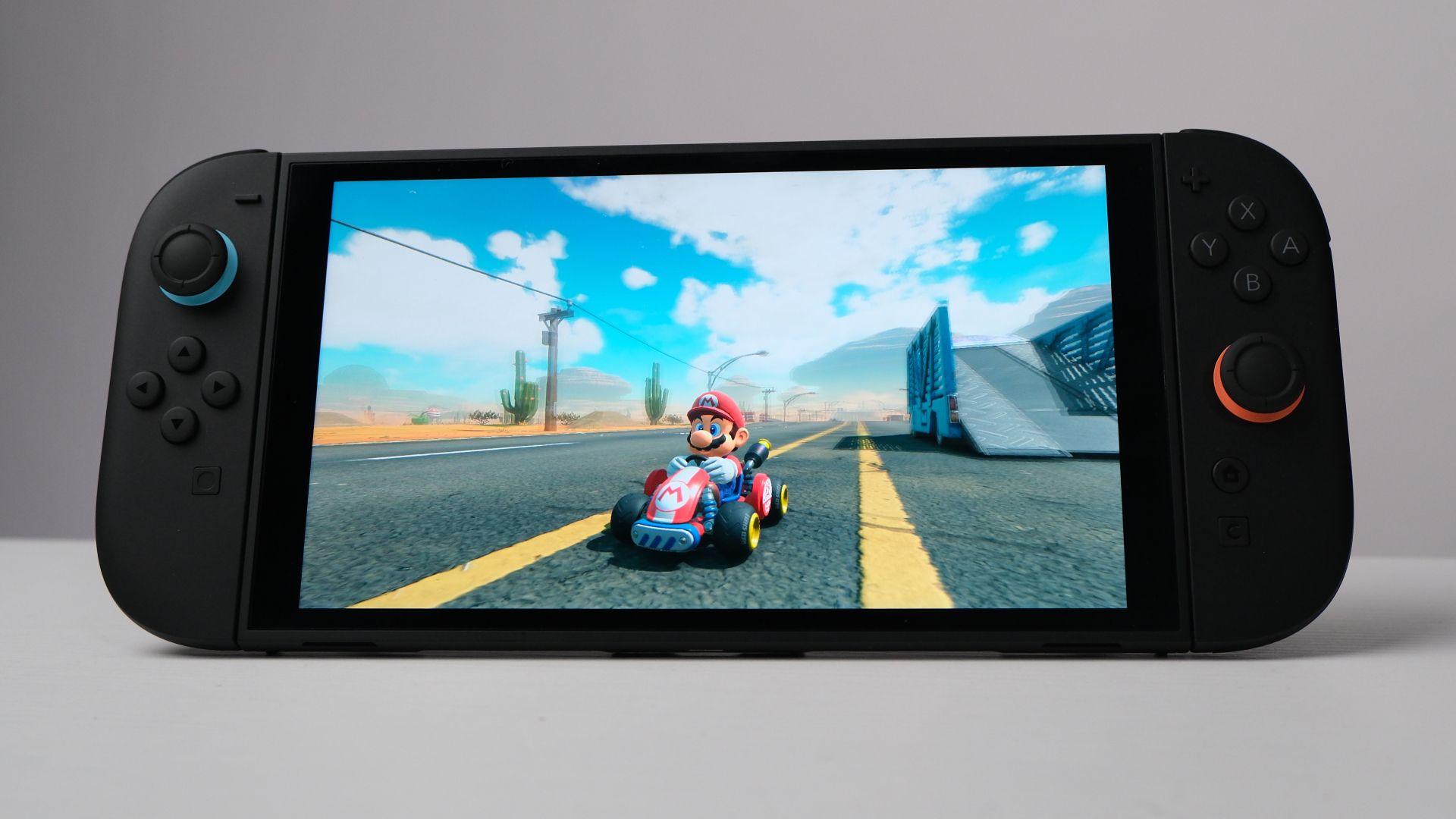
- Nintendo President Shuntaro Furukawa said the company is monitoring the RAM shortage within the industry.
- Furukawa explained that hardware profitability depends on component supply conditions, cost reductions and the impact of tariffs and exchange rates.
- He would not comment on the “hypothetical” Switch 2 price changes, but confirmed that “there is no immediate impact on earnings, but it is something we need to monitor closely.”
Nintendo President Shuntaro Furukawa spoke about the recent RAM price increase and confirmed that the company is closely monitoring the issue.
Speaking in an interview with Kyoto Shimbun (translated via VGC), Furukawa discussed the challenges the company faces with the Nintendo Switch 2’s lower profit margin compared to the original Switch, explaining that the company is monitoring the memory shortage, as well as continued price increases.
“Hardware profitability depends on factors such as component supply conditions, cost reductions through mass production, and the impact of exchange rates and tariffs,” Furukawa said.
“It’s difficult to generalize. Basically, our goal is to solve this problem by advancing the supply of components in the medium to long term.”
Despite ongoing RAM shortage concerns, mainly caused by demand for AI data centers, Furukawa confirmed that the situation is not expected to affect the company yet.
“We source from suppliers based on our mid- and long-term business plans, but the current memory market is very volatile,” Furukawa said. “There is no immediate impact on earnings, but it is something we need to monitor closely.”
The president also declined to say whether the Nintendo Switch 2 could be affected in the pricing market, calling it “hypothetical.”
Ahead of the Switch 2’s launch last year, it was reported that consoles in the US could be hit with a 145% tariff, which would threaten to make the Nintendo console even more expensive than it already was at $449.99/£395.99.
At the time, pre-orders in the United States and Canada were affected by delays, but the console managed to achieve a massive launch, selling over 10 million units by the end of 2025.
However, when asked about the potential impact of higher tariffs in Japan implemented by the United States, Furukawa said that Nintendo was forecasting a negative result of tens of billions of yen due to the tariffs, confirming that it had indeed seen a corresponding impact in the first half of the year.
“While it is difficult to accurately assess the future impact, our fundamental policy is to recognize tariffs as a cost and pass them on in prices wherever possible, not just in the United States,” the Nintendo president said.
“On the other hand, this is a crucial time for our gaming business as we drive the adoption of new hardware and maintain the momentum of our platforms. We are working on this while carefully reviewing the situation.”
The best portable game consoles for every budget
Follow TechRadar on Google News And add us as your favorite source to get our news, reviews and expert opinions in your feeds. Make sure to click the Follow button!
And of course you can too follow TechRadar on TikTok for news, reviews, unboxings in video form and receive regular updates from us on WhatsApp Also.


