
Balochistan CM says issue ‘buried forever’, ending all allegations of enforced disappearances
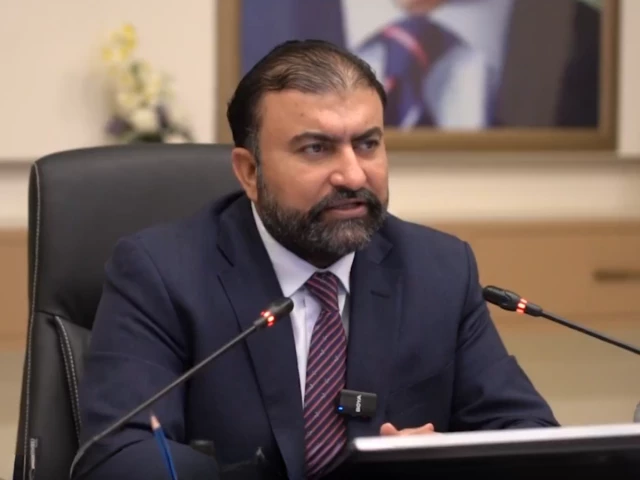
Balochistan Chief Minister Mir Sarfraz Bugti chairs the 22nd provincial cabinet meeting at the Chief Minister’s Secretariat, Quetta. SCREENSHOT
Balochistan Chief Minister Sarfraz Bugti on Tuesday asserted that there would be no more enforced disappearances by the state or government after February 1.
The chief minister made these remarks while chairing the 22nd meeting of the provincial cabinet at the Chief Minister’s Secretariat in Quetta. The session addressed several key administrative, legal, social, educational and development issues, including the issue of missing persons.
The issue of missing persons has become one of the most sensitive and complex human rights challenges in Pakistan, particularly in Balochistan. For many, this represents not only a legal and political crisis, but also a deeply personal one.
Unraveling the Missing Persons Crisis: Realities, Misconceptions, and the Path to Resolution
Stressing on the need for a permanent solution, CM Bugti said certain elements and parties had “politicized” the issue as a “systematic propaganda tool” against Pakistan, but no serious efforts had been made to resolve it legally.
He explained that security forces carried out intelligence operations in “gray areas” and the suspects were arrested. However, he stressed that “the issue of missing persons will end after February 1 and a legal framework will be put in place in this regard.”
The chief minister added, “We have buried this issue forever, which will put an end to allegations of enforced disappearances against the State of Pakistan and negative propaganda on the basis of this. »
He clarified, however, that the state would not be responsible for anyone hiding or being kidnapped by a terrorist organization.
وزیر اعلیٰ بلوچستان میر سرفراز گٹی کی زیر صدارت صوبائی کابینہ کے 22ویں اجلاس میں گورننس، امن و امان اور میرٹ کے فروغ سے متعلق تاریخ ساز فیصلے کیے گئے۔ مسنگ پرسنز کے مسئلے کے مستقل حل کے لیے قانونی فریم ورک منظور، تفتیشی مراکز میں شفاف طریقۂ کار اور اہلِ خانہ سے ملاقات کی اجازت… pic.twitter.com/X2VVvYakrb
– Government. of Balochistan (@dpr_gob) January 20, 2026
CM Bugti further pointed out that courts and relevant commissions were available to investigate the disappearance allegations, but “unfortunately, in Balochistan, propaganda against the state begins immediately by creating the impression of voluntary disappearance.”
On the legal front, the chief minister outlined measures to tackle enforced disappearances under the Balochistan Prevention of Detention and Radicalization Act (Double One Tetra E), which was passed with its Rules 2025. “In the specific centers established under this Act, suspects would be interrogated under the supervision of authorized police officers, along with counseling, so that extremism, misleading narratives and thought anti-state can be dealt with,” he said.
Bugti added that families of those under investigation would be informed within 24 hours, meetings could be allowed, medical facilities would be provided and no one would be expelled from these centers. “Whichever law enforcement agency conducts the investigation will do so in the same centers,” he said.
“The government has the honor of resolving an issue that has been politicized for years; now those who were playing politics on this issue are buried forever,” CM Bugti said.
During the meeting, the provincial cabinet approved the Balochistan Witness Protection Amendment Bill 2025. Bugti noted that previously, the lack of an effective witness protection system meant a conviction rate of only one to two percent in cases of terrorism and serious crimes.
As part of the new reforms, “faceless” courts have been created, where the identity of witnesses will remain confidential to everyone except the judge. According to him, this should increase the conviction rate by 50 to 60%.
The cabinet also approved the abolition of the Department of Religious Affairs, whose employees will be absorbed into other departments. Additionally, two new divisions – Pishin and Koh-e-Sulaiman – were created, with Ziarat now administratively part of Loralai. Karbala Municipal Committee was also established in Pishin district.


