
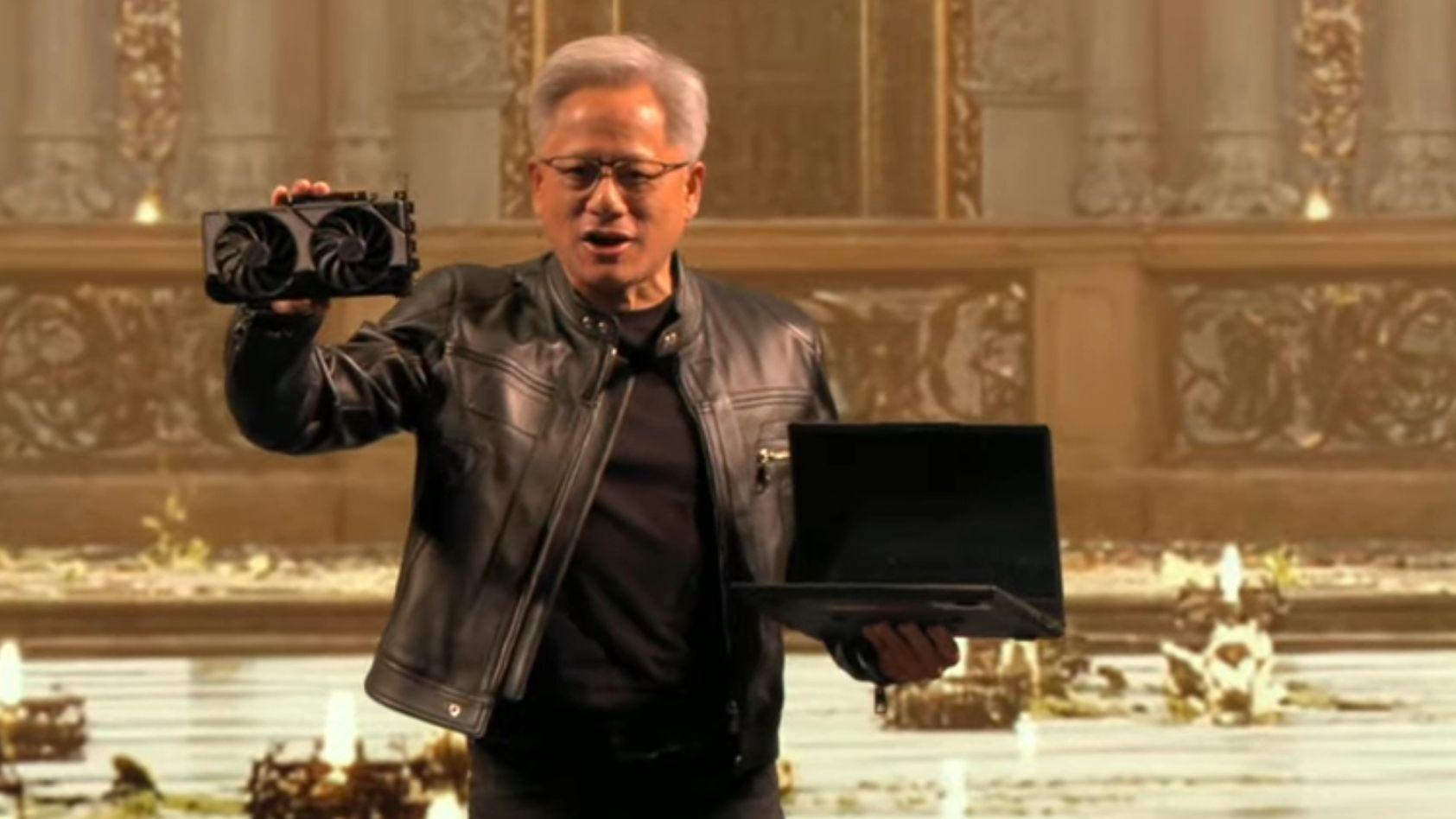
- Nvidia CEO Jensen Huang met with Donald Trump and criticized the GAIN AI Act’s proposed chip export restrictions.
- Lawmakers have now removed the chip export proposal from the annual defense bill.
- Huang also warned that state-level AI laws would harm U.S. innovation and national security.
Nvidia CEO Jensen Huang isn’t known for jumping into the political fray, but this week he made an exception by spending some quality time in Washington, DC. He met with President Trump to oppose the GAIN AI Act and his proposed rule requiring U.S. chipmakers like Nvidia and AMD to prioritize domestic buyers before selling advanced AI chips abroad.
The law was touted as a way to keep America ahead of China in the AI race, but shortly after meeting with the president, lawmakers removed it from the National Defense Authorization Act. Huang was quick to proclaim his support for export controls, but not this one.
“The GAIN AI Act is even more harmful to the United States than the AI Spread Act,” Huang said at a press conference after the meeting. He called it “wise” for lawmakers to walk away from the project.
For Nvidia, the undisputed global heavyweight in AI hardware, this kind of disruption would be like asking Boeing to fly with half an engine. Their chips are already dominating cloud computing and generative AI development worldwide. Losing the freedom to sell to select international customers without a government-imposed queue would erode their advantage in a business built on speed and scale.
Although Huang gave his corporate lobbying a patriotic veneer, he cited more than just Nvidia’s results as a reason to oppose the GAIN AI Act. The law would have forced companies like Nvidia to delay orders for foreign chips while confirming that there was no exceptional demand in the United States. But giving U.S. institutions and companies a fair chance to acquire high-end AI chips ahead of foreign markets would also slow innovation among competitors, complicate global logistics, and harm America’s ability to remain competitive in AI.
For most people, the impact of these legislative debates is indirect, but very real. If Huange is right, the regulatory bottleneck would slow the pace of AI improvements for everyone. But if he is wrong, it will be more difficult for American companies to be competitive if foreign groups manage to appropriate all the most powerful chips.
Patchwork AI Rules
That wasn’t Huang’s only legislative foe this week. He met with lawmakers to criticize a separate idea that is gaining traction among U.S. states: local regulation of AI. “State-by-state regulation of AI would bring this industry to a halt,” Huang warned. “It would create a national security problem.”
If AI laws begin to diverge significantly between California, Texas, New York, and every other state, it could create a compliance nightmare for developers. Imagine having to modify the functionality of your chatbot based on the zip code your user lives in. Bills are circulating in at least 30 states proposing different standards for disclosure, bias, transparency and security in AI systems.
Trump reportedly echoed Huang’s concerns during their meeting and publicly supported the idea of a national standard that would override state laws. So far, the NDAA doesn’t have this kind of rule, but if it becomes a real problem, it could end up in the bill next year.
For tech critics, this is familiar territory: Big tech is pushing for a single federal rule to avoid facing 50 regulatory headaches. And it’s not as if regulatory frictions can’t hinder the average AI user. This would amount to 50 different versions of GDPR, but with no way to fully comply.
Shelving the GAIN AI Act is, depending on your view, a sign that lawmakers are either unwilling to clip the wings of America’s largest microchip company, or that they are in thrall to powerful and wealthy corporate interests. Or both. And while the future of AI regulation at all levels is still evolving, Huang outlined what the tech’s most powerful players envision as the ideal solution.
If you use AI tools, or soon will, it matters. It’s not just about export forms and legal frameworks. It’s about who can move fast, who is slowed down, and how much trust we place in a handful of companies to shape the technology infrastructure of the next decade.
Follow TechRadar on Google News And add us as your favorite source to get our news, reviews and expert opinions in your feeds. Make sure to click the Follow button!
And of course you can too follow TechRadar on TikTok for news, reviews, unboxings in video form and receive regular updates from us on WhatsApp Also.
The best business laptops for every budget


