
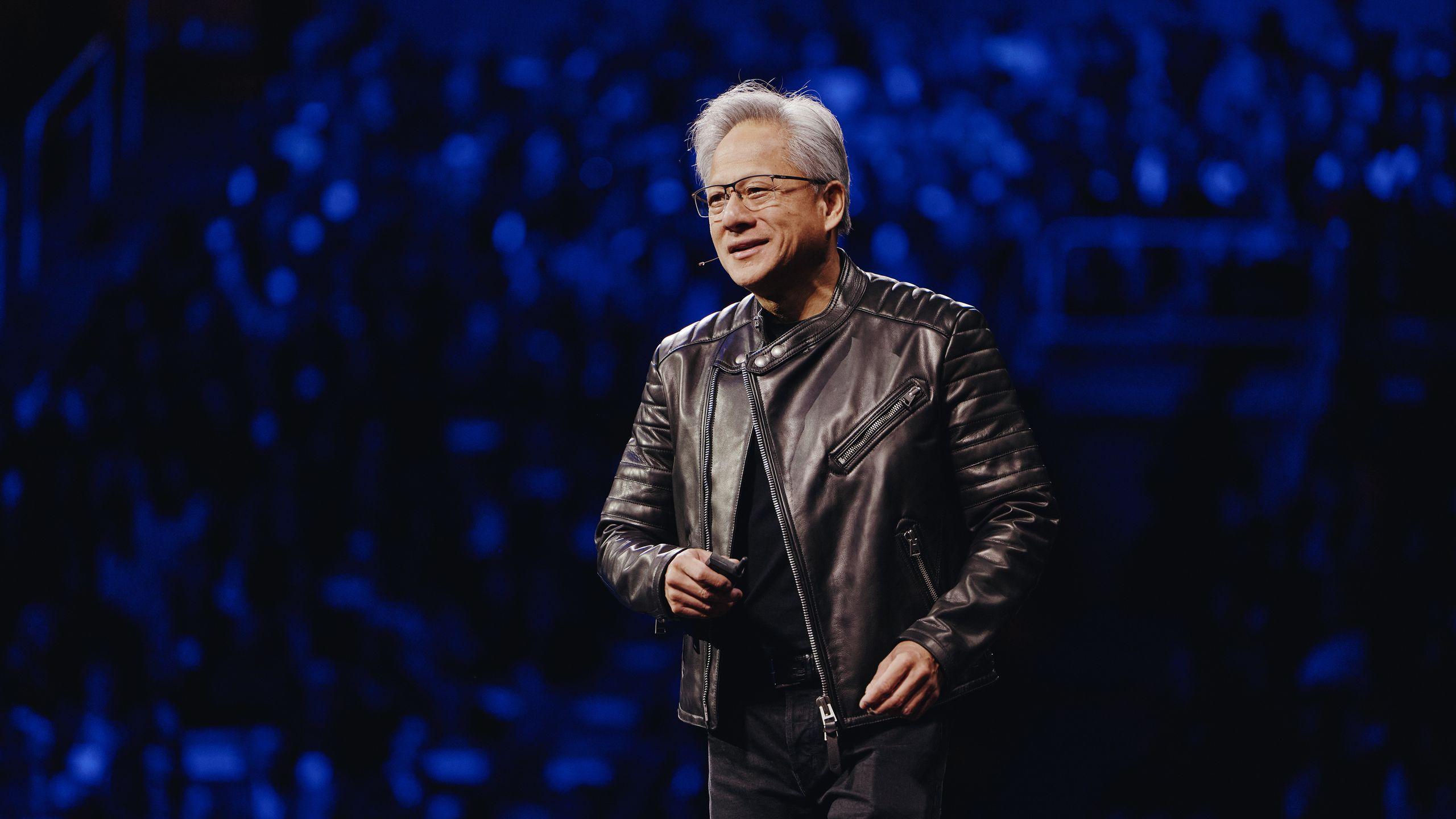
- Nvidia controls processors and networks, forming the backbone of AI factories today
- Nvidia could soon control not only chips but also energy, models and applications
- Huang presents AI not as software, but as the foundation of modern industry
Nvidia CEO Jensen Huang recently described artificial intelligence through the metaphor of a multi-layered system.
The framework explains how modern AI systems operate as an industrial chain rather than as isolated software tools.
The structure consists of five layers: energy, chips, infrastructure, models and applications, which interact with industries and consumers.
Article continues below
How the AI Stack Works on Multiple Layers
“Every successful application leverages all the layers underneath, all the way down to the power plant that keeps it alive,” Huang wrote, illustrating how intelligence generated in real time depends on the physical resources of the computing ecosystem.
Nvidia already dominates the processor layer, provides networking technologies and provides computing platforms within large data centers.
The company’s influence on infrastructure includes systems that connect thousands of processors to machines capable of continuously generating intelligence.
These facilities, sometimes described as AI factories, require land, power, and network systems to operate at scale.
Huang noted that construction of new chip manufacturing plants, computer assembly facilities and data centers is taking place in several regions.
“We are investing a few hundred billion dollars in it,” he wrote. “Billions of dollars of infrastructure still need to be built. »
This expansion reflects one of the largest industrial developments associated with modern computing.
At the top of the stack are applications that convert computing capacity into economic value.
Huang cited examples including drug discovery platforms, industrial robotics, legal analysis tools and autonomous vehicles, which act as physical embodiments of artificial intelligence.
“A self-driving car is an application of AI embedded in a machine,” he writes. “A humanoid robot is an AI application embodied in a body. »
These systems rely on models that can process language, images, scientific data, and real-world environments, thereby increasing the demand for computing resources in the lower layers of the stack.
The framework also suggests how Nvidia could grow through the layers described.
Companies controlling the foundational technology sometimes expand into adjacent layers, such as Amazon after creating AWS.
Nvidia has been actively expanding into large-scale network systems and computing infrastructure.
The company has also invested in areas such as photonics, which affect the way data flows between computer systems.
If Nvidia expands further into models, infrastructure, energy supply or applications, the company could operate on most of the layers described in Huang’s framework.
By presenting AI as a layered stack, Nvidia isn’t just explaining the industry, it’s staking its claim on it.
From chips to infrastructure to applications, the company wants to have the cake and eat it too.
Follow TechRadar on Google News And add us as your favorite source to get our news, reviews and expert opinions in your feeds. Make sure to click the Follow button!
And of course you can too follow TechRadar on TikTok for news, reviews, unboxings in video form and receive regular updates from us on WhatsApp Also.


