
Pakistan highlights contrast between UN experts’ statement and established findings of various UN Security Council reports
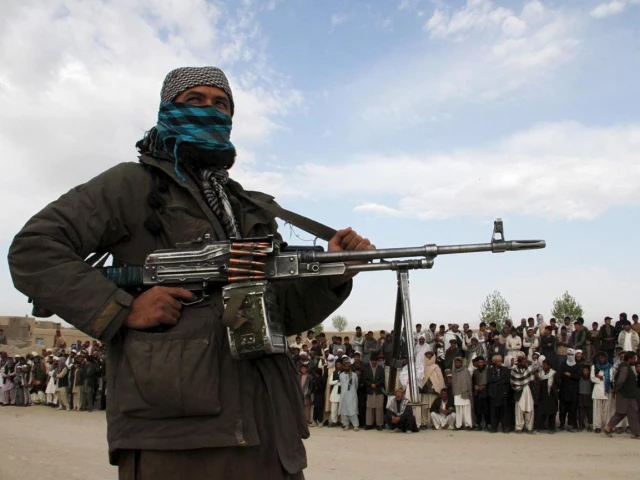
A photo of a TTP member. PHOTO: FILE
ISLAMABAD:
Pakistan on Sunday questioned the stance of United Nations human rights experts on the lack of “credible evidence” linking the banned Tehreek-i-Taliban Pakistan (TTP) attacks to Afghan soil, pointing to several UN and international reports that documented the presence and activities of terrorist groups operating from Afghanistan.
Last month, UN experts had urged Pakistan and Afghanistan to commit to a permanent ceasefire and also claimed that Pakistan had not published credible evidence showing that TTP attacks on its territory were directed or controlled by de facto Afghan authorities.
The experts called on parties to respect international human rights law and international humanitarian law, including the protection of civilians and civilian objects. They called for prompt, independent and transparent investigations into all alleged violations, accountability for perpetrators and remedies for victims, in line with international standards.
Contrary to its position, Pakistan pointed out a contrast between the statement of the UN experts and the established findings of various reports and assessments of the UN Security Council Monitoring Team systematically documenting the presence of the TTP, safe havens and operational activity from Afghan soil.
Pakistan referred to the 35th, 36th, 16th and 37th reports of the United Nations Security Council Monitoring Team. He also cited the 66th and 68th SIGAR Reports of January 2025. Additional references include the February 2026 Russian MFA Military-Political Assessment, the 2026 CSTO Security Assessment, the September 2025 SCO Deliberations, and the September 2025 Quadrilateral Assessment of Russia, China and Iran.
The said reports and assessments have collectively highlighted Afghanistan as a hub for more than 20 international terrorist organizations (ITOs).


