
ISLAMABAD:
Pakistan has intensified diplomatic consultations with key regional partners on President Trump’s Gaza peace plan and its next phase which envisages, among other things, the deployment of a multinational force in one of the world’s most protracted hotspots.
On Sunday, the Deputy Prime Minister and Minister of Foreign Affairs spoke with his Turkish and Iranian counterparts, focusing on the Gaza peace plan.
Diplomatic sources told The Express PK Press Club that Islamabad was actively engaging friendly countries, particularly Turkey and Iran, to exchange views on the evolving ground realities in Gaza and explore avenues for humanitarian assistance, a lasting ceasefire and longer-term stabilization agreements within an international framework.
The consultations come against the backdrop of recent remarks by US Secretary of State Marco Rubio, who revealed that Pakistan was among a handful of countries approached for possible troop contributions to a future international Gaza stabilization force.
Rubio’s statement, made during a media interaction, underscored Washington’s assessment that Muslim-majority countries with professional armed forces and credible peacekeeping could play a constructive role in any post-war security mechanism.
However, Pakistani officials stress that while Islamabad remains open to discussions, it has drawn clear red lines.
“Pakistan will not be part of any force mandated to disarm Hamas or engage in combat operations against Palestinian resistance groups,” said a senior official, speaking on condition of anonymity.
“Any contribution, if any, would fall strictly within a UN-mandated framework, focused on stabilization, protection of civilians and facilitation of humanitarian assistance.”
The official added that Pakistan’s long-standing position on Palestine, rooted in support for a two-state solution based on pre-1967 borders with Al-Quds Al-Sharif as the capital of an independent Palestinian state, remains unchanged. “Our approach is principled and non-transactional,” the official said.
These diplomatic signals translated into a series of high-level contacts over the weekend.
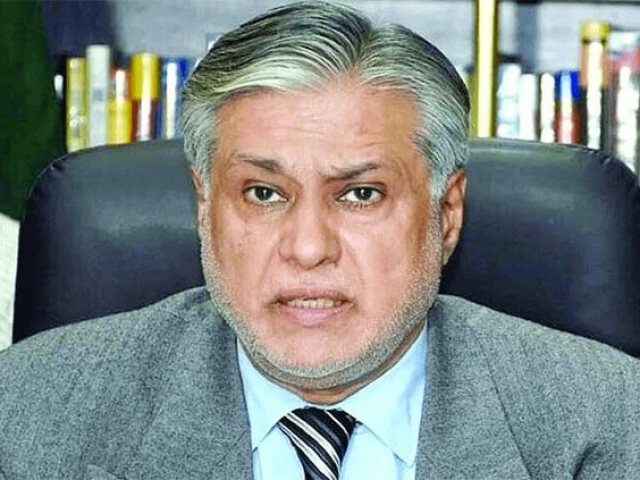
Deputy Prime Minister and Minister of Foreign Affairs Senator Ishaq Dar held a telephone conversation with Turkish Foreign Minister Hakan Fidan, during which the two leaders discussed the latest developments regarding Palestine and Gaza, according to a statement issued by the Ministry of Foreign Affairs on Sunday.
The statement said the two sides shared views on developments in regional and international issues and stressed the importance of strengthening collaboration in trade, investment, connectivity and people-to-people exchanges.
They also reaffirmed their shared commitment to promoting peace, stability and development in the region – language that diplomats say carries particular weight in the Gaza context.
Turkey is among the most vocal regional actors calling for an immediate ceasefire, unhindered humanitarian access and an international protection mechanism for the Palestinians.
Pakistani officials say Ankara’s views are of great importance as discussions move toward possible post-conflict arrangements.
On the same day, Dar also spoke with Iranian Foreign Minister Seyyed Abbas Araghchi. The two leaders reviewed bilateral cooperation in various sectors and exchanged views on regional developments, the Foreign Ministry said. Both reaffirmed their determination to work closely for regional peace and development, while strengthening cooperation in the areas of trade, connectivity and people-to-people ties.
Diplomatic observers say Islamabad’s parallel efforts toward Ankara and Tehran highlight Pakistan’s intention to remain aligned with key regional stakeholders while carefully managing sensitivities around Gaza.
Iran-backed groups, including Hamas, remain a central factor in the conflict dynamics, making Pakistan’s red lines particularly important.
“Pakistan has a strong peacekeeping record, but Gaza is politically and militarily far more complex than traditional U.N. missions,” another official said.
“Islamabad shows its willingness to contribute to stability, but not at the cost of being seen as pursuing an agenda against the Palestinians.”
Pakistan is one of the largest contributors to UN peacekeeping operations worldwide, with tens of thousands of troops having served in conflict zones in Africa and elsewhere.
This experience has made Islamabad a frequent candidate in discussions about international stabilization forces. Still, officials insist that Gaza presents unique challenges, including the lack of a comprehensive political settlement and the risk of mission drift.
Sources say the consultations in Pakistan are also aimed at ensuring that any future international force is truly neutral, operates with the consent of the Palestinians and is part of a broader political process leading to a viable Palestinian state, not a substitute for it.
For now, Islamabad appears to be keeping its options open, balancing international expectations with domestic sentiment and its historical stance on Palestine. As one official said: “Pakistan will support peace in Gaza, but peace cannot be built by setting aside Palestinian aspirations or imposing solutions at gunpoint.” »
The coming weeks are likely to see increased diplomatic engagement as regional and global actors debate the contours of a post-war Gaza and whether an international stabilization force can realistically provide security without deepening existing fault lines.


