
Karachi:
On Wednesday, India unilaterally suspended a keywater sharing contract with Pakistan after blaming its neighbor for a deadly outburst in a picturesque tourist resort in the state of Jammu and the cashmere occupied illegally. Islamabad, however, warned that any Indian attempt to stop or divert water in the rivers that the SPI governs will be considered as an “act of war” and has responded by all conventional and unconventional means.
The IWT – which was negotiated by the World Bank in September 1960 – determined the rights and obligations of Pakistan and India concerning the use of water from the Industry River system. The agreement has resisted the time test and has long been praised as a rare example of cooperation between the two Arch-Necks.
In a very provocative decision, the India cabinet’s security committee decided on Wednesday to hold the historic treaty “in absence” following the murder of 26 people, including tourists, in Pahalgam, in the IIOJK ANANNAG district on April 22. The movement was most important among the measures of measures that the CCS announced for Ratchet to the pressure on Pakistan.
The CCS decision could have serious consequences for Pakistan – an agrarian economy – where agriculture depends on almost 90% depending on the Indus drainage system. This decision is calculated because Delhi believes that the shortage of water would have an impact on the yield of cultures which, in turn, would create food insecurity and would trigger social troubles in Pakistan.
In the short term, India could stop sharing vital data on water in rivers flowing in Pakistan, which could have a devastating impact, especially during the next monsoon season when flooding increases the collector.
However, Islamabad rejected the Indian move by saying that none of the parties could suspend or revoke the Commercial Treaty of the World Bank. The main Pakistan security forum said Thursday that water is a vital national interest, a rescue buoy for its 240 million people, and its availability will be saved at all costs.
“Any attempt to stop or divert the flow of water belonging to Pakistan in accordance with the Water Treaty in the Indus, and the usurpation of the rights of the lower retirement will be considered as an act of war and has fully responded in the complete spectrum of national power,” said a declaration published after the meeting of the National Security Committee (NSC).
Analysts believe that India could use the suspension of the treaty as an excuse to accelerate development on hydroelectric and storage projects along the Western rivers, notably Pakal Dul, Ratle, Kiru and Sawalkot, which he was not able to build because of objections to his conceptions of Pakistan under the IWT.
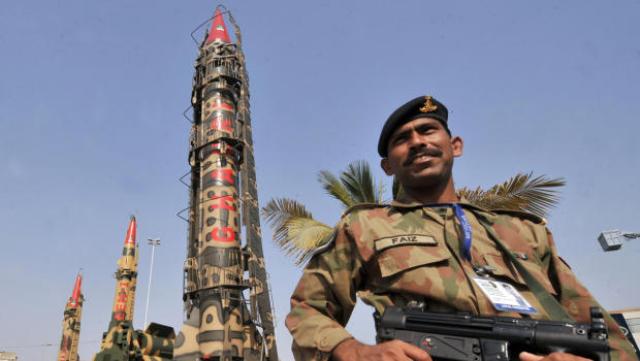
However, defense and security analysts claim that if and when India tries to build an installation to stop or divert the share of water from Pakistan, Islamabad will militarily remove this installation using its complete combat power. Explaining the use of the NSC of the expression “complete spectrum of national power”, a defense analyst said: “This means that Pakistan can go to any limit, including the use of nuclear weapons.”
Another analyst added that, since the NSC categorically declared that water is “a vital national interest”, the country’s political and military leadership “will not even think a minute and will not hear the place that endangers the supply of water to Pakistan”.
Experts have described India’s decision to suspend the IWT as a political cascade and a dye designed to appease the Indian public, stressing that Delhi cannot unilaterally revoke or suspend the agreement. “India or Pakistan cannot suspend or revoke the Water Treaty of Industrially, and any change in the Treaty would require mutual consent,” said former Pakistani commissioner for Indus waters (PCIW) Jamaat Ali Shah at The Express PK Press Club.
He said that IWT is a permanent agreement, and therefore India should take the confidence of Pakistan to suspend or revoke it. However, Indian officials claim that if Pakistan approaches the World Bank, the guarantor of ICTI, Delhi could say that “suspension” is a temporary suspension, not a violation, and that cooperation can resume once Pakistan responds to the concerns of India.


