
.
ISLAMABAD:
Pakistan on Saturday condemned Israeli and US strikes on Iran as well as Iranian retaliation against several Gulf countries, in what appears to be a carefully calibrated diplomatic response aimed at maintaining balance in a rapidly escalating regional crisis.
In a strongly worded statement, the Foreign Office expressed regret over the “failure of talks and the outbreak of hostilities” in the Middle East, saying the attacks on Iran took place at a time when diplomatic efforts were underway to reach a peaceful, negotiated settlement.
“These attacks will undermine the peace and stability of the entire region, with far-reaching consequences,” the statement said, without directly naming Israel or the United States, but clearly referring to its strikes against Iranian targets earlier in the day.
However, in a parallel condemnation, Islamabad also denounced Iran’s subsequent attacks on what it described as “brotherly countries”, including Saudi Arabia, Bahrain, Jordan, Kuwait, Qatar and the United Arab Emirates, calling them “gross violations of sovereignty”.
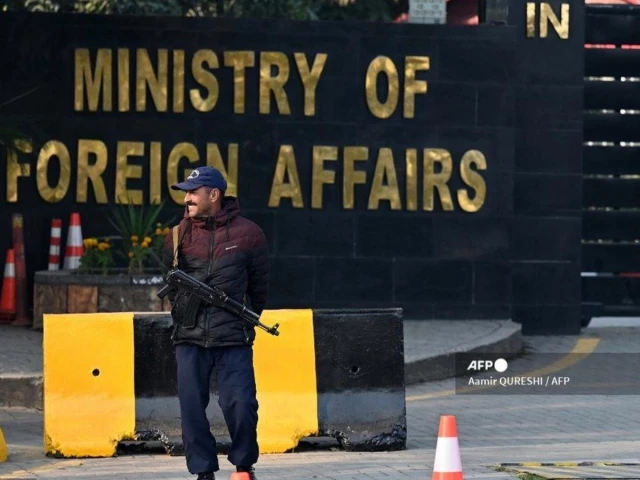
The Ministry of Foreign Affairs confirmed the death of a Pakistani national in the United Arab Emirates in what it called a “vile attack”, further underscoring Islamabad’s concern over the growing fallout from the confrontation.
This carefully balanced statement reflects Pakistan’s complex diplomatic position. Although Islamabad traditionally supports Iran’s right to sovereignty and consistently criticizes Israeli actions in the region, the country also maintains deep strategic, economic and security ties with Gulf states, including Saudi Arabia and the United Arab Emirates.
Prime Minister Shehbaz Sharif moved quickly to strengthen these ties, holding separate telephone conversations with Saudi Crown Prince Mohammed bin Salman, UAE President Sheikh Mohamed bin Zayed Al Nahyan and Qatar’s Emir Tamim bin Hamad Al Thani.
During his meeting with the Saudi crown prince, the prime minister “strongly condemned the serious regional escalation” resulting from the Israeli attack on Iran and subsequent strikes against Gulf countries.
He assured the Saudi leaders of Pakistan’s “full solidarity and support”, promising that Islamabad would stand with its “Saudi brothers and sisters in all circumstances”.
Similarly, during his call with the Emir of Qatar, the Prime Minister reiterated Pakistan’s “full solidarity and support” with Qatar in the crisis, referring to his recent meeting in Doha and emphasizing Pakistan’s readiness to play a constructive role in ensuring regional peace.
Furthermore, during a meeting with the President of the UAE, the Prime Minister strongly condemned the serious regional escalation resulting from the Israeli attack on Iran earlier, followed by the unfortunate attacks on the UAE, Abu Dhabi and Dubai, as well as other Gulf countries.
The Prime Minister also expressed sadness over the tragic disappearance of a Pakistani national during the missile attack on Abu Dhabi.
He assured the UAE leadership of Pakistan’s solidarity and support in the current crisis and said Pakistan would always stand by its Emirati brothers and sisters, in keeping with the close fraternal ties between the two countries, which have stood the test of time.
Diplomatic observers say Islamabad is trying to walk a tightrope at a time when tensions threaten to escalate into a broader regional conflict. Pakistan shares a long border with Iran and has recently sought to stabilize relations. At the same time, its economic lifeline is closely tied to the Gulf states, where millions of Pakistani expatriates reside and billions of dollars in remittances originate.
The Ministry of Foreign Affairs urged all parties to exercise “maximum restraint” and refrain from any further actions that could undermine the security and territorial integrity of countries in the region. He also stressed the need to respect international law and the principles of the United Nations Charter.
Significantly, Islamabad called for a return to diplomacy, emphasizing that only a peaceful, negotiated solution could defuse the crisis.
In the same vein, Deputy Prime Minister and Foreign Minister Ishaq Dar on Saturday strongly condemned the unjustified attacks against Iran.
He called for an immediate halt to the escalation through an urgent resumption of diplomacy to achieve a peaceful and negotiated resolution to the crisis, the Foreign Ministry spokesperson said in a press release.
The DPM/FM received a call from Iranian Foreign Minister Seyed Abbas Araghchi. They reviewed developments in Iran and the wider region.


