
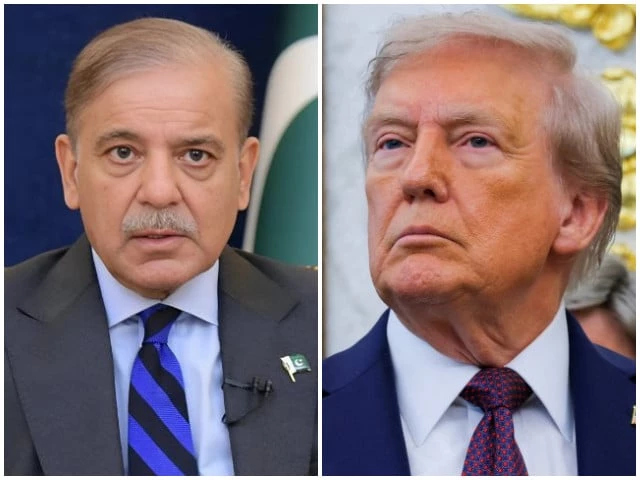
The invitation comes as the White House officially unveiled the structure and composition of the BoP.
ISLAMABAD:
Pakistan has been invited to join the United States’ recently announced Gaza Peace Council (BoP), a high-level international body tasked with overseeing the reconstruction of Gaza, transitional governance and the disarmament of Hamas, the Foreign Ministry said on Sunday.
Responding to media queries, Foreign Ministry Spokesperson Tahir Andrabi confirmed that US President Donald Trump had invited the Prime Minister of Pakistan to join the Council, emphasizing Islamabad’s continued engagement in international efforts aimed at peace and stability in Gaza.
“Pakistan will remain committed to international efforts for peace and security in Gaza, leading to a lasting solution to the Palestinian question in accordance with United Nations resolutions,” the spokesperson said.
The invitation comes as the White House formally unveiled the structure and composition of the BoP, which U.S. officials describe as a global mechanism to manage the post-war transition in Gaza. Western diplomats said The Jerusalem Post that the initiative resembles “a sort of mini-UN” initially focused on Gaza, but potentially expandable to other conflict zones.
Key figures, global reach
According to the White House’s announcement on Friday, the BoP’s founding members include US Secretary of State Marco Rubio, US Special Envoy for the Middle East Steve Witkoff, former British Prime Minister Tony Blair and Jared Kushner, President Trump’s son-in-law. Other members include Marc Rowan, CEO of Apollo Global Management; World Bank Group President Ajay Banga; and US Deputy National Security Advisor Robert Gabriel.
Leaders from more than 60 countries have been invited to serve on the Peace Council. Canadian media reported that Prime Minister Mark Carney had accepted an invitation to join the organization. Argentine President Javier Milei publicly confirmed his acceptance, calling it an “honor” and stating that Argentina would stand with countries that “confront terrorism head-on and promote peace and freedom.”
Turkey confirmed having received a formal invitation. “US President Donald Trump, in his capacity as the founding chairman of the Peace Council, sent a letter inviting our President, His Excellency Recep Tayyip Erdoğan, to participate as a founding member of the Peace Council,” said Turkish presidential spokesperson Burhanettin Duran.
Egypt’s Foreign Ministry said Cairo was considering an invitation for President Abdel Fattah al-Sisi, while Jordan confirmed that King Abdullah was also invited and that consultations were underway.
Governance, security and reconstruction
Under the US plan, Gaza will be governed during a transition period by a technocratic Palestinian administration, the National Committee for the Administration of Gaza (NCAG), led by Dr. Ali Sha’ath, a former Palestinian Authority deputy minister originally from Khan Younis. The NCAG will oversee the restoration of public services, reconstruction of civil institutions and stabilization of daily life, while laying the foundations for long-term governance.
Former UN Middle East envoy Nickolay Mladenov was named senior representative for Gaza, serving as the main link between the BoP and the NCAG and holding executive power on the ground.
Security responsibilities will fall to an International Stabilization Force (ISF), commanded by US Major General Jasper Jeffers, currently head of US Special Forces. According to the White House, the ISF will direct security operations, support “full demilitarization” and enable the safe delivery of humanitarian aid and reconstruction materials.
A separate executive council for Gaza was also formed to support governance and service delivery. Its members include Turkish Foreign Minister Hakan Fidan, Qatari diplomat Ali Al-Thawadi, Egyptian General Hassan Rashad, UAE Minister Reem Al-Hashimy, Dutch diplomat Sigrid Kaag and Israeli businessman Yakir Gabay, alongside several BoP members.
President Trump said Thursday that he supports the newly appointed technocratic Palestinian government to rule Gaza during its transition, supported by the High Representative and the Peace Council. The initiative is expected to oversee a broader “US 20-point plan” aimed at ending the war in Gaza and reshaping post-conflict governance.
While Washington has long supported Israel’s demand that Hamas surrender all its weapons, the group has insisted it would demand political and security guarantees before any disarmament.
Pakistan has consistently called for an immediate ceasefire, unhindered humanitarian access and accountability for violations of international humanitarian law. Islamabad maintains that any lasting peace effort must ultimately lead to the creation of an independent Palestinian state, in accordance with UN resolutions.
The officials said Pakistan would carefully evaluate its role in the BoP while continuing to support diplomatic initiatives that address both the humanitarian catastrophe in Gaza and the broader Palestinian issue.


