
Pakistan has once again rejected the affirmation of India that Jammu-et-Cachemire is an integral part of the country, reiterating that the region remains disputed and that its status is recognized as such by the United Nations and the international community.
“Each official UN card describes Jammu and cashmere as a disputed territory,” said Gul-Qaiser Sarwani, advisor to Pakistan’s mission to the UN, while exercising his right of response at the end of a high-level debate of the United Nations Security Council on peacekeeping operations.
Sarwani’s response came after the Ambassador of India Parvathaneni Harish repeated the affirmation of New Delhi according to which “the cashmere was, and will always be an integral and inalienable part of India”.
The Indian envoy made the declaration in response to a speech by Syed Tariq Fatemi, special assistant of the Prime Minister of Pakistan, who had urged the council of 15 members to implement his own resolutions which call for an unleuned plebiscite to determine the future of Jammu and Cashmere.
“No quantity of obscure can change legal, political and historical reality-Jammu-et-Cachemire is not, and has never been, a so-called” integral “part of India,” said Sarwani.
He described the region as a “disputed territory”, whose “final provision” must be decided by his people through a plebiscite, as mandated by several resolutions of the United Nations Security Council.
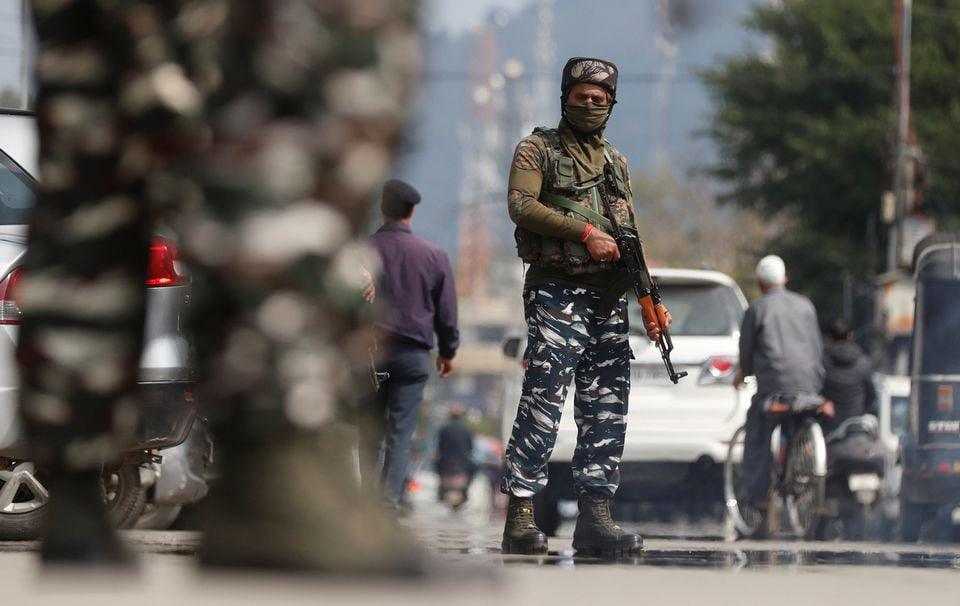
Sarwani criticized the strong military presence of India in the region, declaring that more than 900,000 soldiers and paramilitary forces are deployed in what he called “the densest occupation in history”.
He also declared that the ore of 100,000 Kashmiris had been killed since 1989 and underlined the blatant violation of Human Rights India, citing reports registered by the UN.
Responding to the Indian allegations of cross -border terrorism, the Pakistani diplomat said: “It is more ironic than India, which commits the worst form of state terrorism in Jammu and occupied cashmere, represents itself as the victim.”
He added that occupants and colonizers often call legitimate difficulties for self -determination as terrorism.
Sarwani continued by noting that India orchestrated subversion and targeted murders in foreign countries, and stressed that India finances and supports anti-Pakistani groups, including Tehreek-I-Taliban Pakistan (TTP), the Liberation Army Baloch (Bla) and the Brigade Majeed.
Pakistan has constantly argued that an equitable and peaceful resolution of the Jammu-et-Cachemire dispute resides in the implementation of United Nations resolutions and the holding of a plebiscite under the United Nations surveillance.
Earlier, on the occasion of Pakistan Day, the illegally detained president of the All Party Hurriyat conference (APHC), Masarrat Alam Butt, as well as other Hurriyat leaders and organizations have extended their warm congratulations to the people and the government of Pakistan, praying for continuous progress, stability and prosperity of the country.
According to the cashmere media service, in a message from the famous Tihar prison in New Delhi, Masarrat Aalam Butt expressed his solidarity with the inhabitants of Pakistan, describing the country as a headlight of the oppressed Kashmiris and the whole Muslim Ummah.
He stressed that Pakistan, based on a noble ideology, serves as a great blessing for Muslims around the world.


