
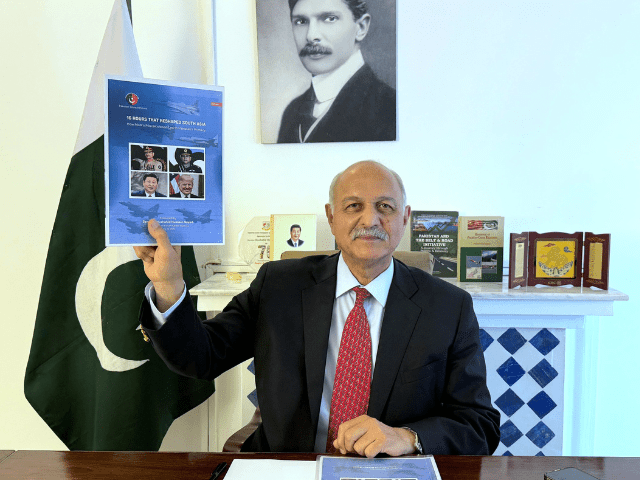
Pakistan-China Institute (PCI), a first Islamabad-based reflection group, published a detailed report on the Pakistani-Indian confrontation in 2025, describing it as a turning point which reaffirmed the strategic deterrence of Pakistan and exposed what it called a “monumental dismay” by Indian Prime Minister Narendra Moda.
Title “16 hours that reshaped in Southern Asia: how Modi’s mal calculation led to the primacy of Pakistan”The 25 -page report was launched by the president of the PCI, Senator Mushahid Hussain Sayed. He described the confrontation as “the most serious reverse in India since Nehru’s defeat in the 1962 war with China”.
The report analyzes the regional implications of the conflict which followed the terrorist attack of April 22 in Pehelgam, tracing events to the ceasefire possible.
According to PCI, the armed forces of Pakistan, under the direction of Marshal Syed Asim Munir and the Marshal in chief of air, Zaheer Ahmed Babar, responded with flawless intellectual coordination and strategic clarity.
Hussain praised the military use of sophisticated technology, including electronic war tools, saying that Pakistan has reached cyber-supremacy during the confrontation. He also underlined the role of Pakistan Air Force (PAF), crediting their professionalism, their training and their operational skills as vital for the successful response.
Call the episode “The most beautiful hour in Pakistan” from the 1998 nuclear tests – when it served as a Minister of Information – Senator Hussain said that the state presented “perfect planning, perfect coordination and perfect execution”, still reinforced by skilful diplomacy and effective media messaging.
The coverage of the report, with images of JF-17 Thunder and J-10C fighter planes, symbolizes the advanced military capacities of Pakistan. He also underlines the central support of China, noting that under President Xi Jinping, Beijing was held near Pakistan “like a solid rock”.
The United States has also received praise. Hussain has credited former President Donald Trump for negotiating the ceasefire and helping to relaunch the question of cashmere on the international scene, which the report described as a blow to the diplomatic position of India.
According to PCI, the conflict has produced three lasting strategic results: the restoration of Pakistan of deterrence, the emergence of China as a facto part of the cashmere dispute and the role of the United States as a stabilizer of peace in South Asia.
The reflection group recommends a complete strategic approach based on three pillars: proactive regional diplomacy, the “creative law” on issues such as the industrial water Treaty and the shaping of the global narrative through reflection groups, the media and diplomatic engagement.
The report also establishes historical parallels, comparing Modi’s decision -making to other infamous strategic errors, including the invasion of the Soviet Union in 1941 of Hitler.
Senator Hussain concluded with a warning: despite the absence of an imminent war, India continues what PCI calls a “3D strategy” – to demonize, damage and destabilize Pakistan. He urged the vigilance, national unity and healing of political divisions to counter these threats and preserve morale and cohesion demonstrated during the conflict.
“This episode has strengthened national self-confidence and revived public pride in the future of Pakistan,” he said.
The report includes a detailed calendar of events, international reactions and evaluations of the way in which coordinated and popular support responses have contributed to Pakistan’s strategic success.


