
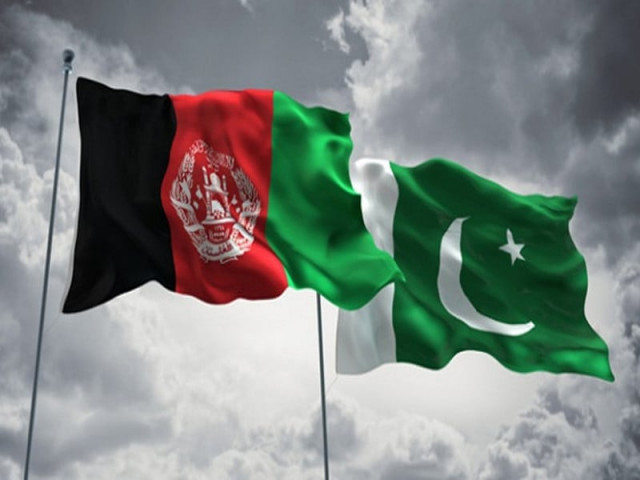
Pakistan will not deviate from its basic demand for decisive action against terrorist groups, sources say
ISLAMABAD:
Pakistani and Afghan Taliban officials visited Urumqi, China, on Wednesday for a new round of China-brokered talks, sources said. The Express PK Press Club.
The talks are scheduled for Thursday, with both sides represented by officials from the Ministry of Foreign Affairs as well as defense and security institutions. However, official sources indicated that they remained cautious about any progress.
They added that Pakistan would not deviate from its basic demand for verifiable and decisive action against the banned Tehreek-e-Taliban Pakistan (TTP) and other terrorist groups harbored by the Taliban regime.
The development came as Deputy Prime Minister and Foreign Minister Ishaq Dar left China after concluding his one-day official visit after meeting Chinese Foreign Minister Wang Yi. He traveled after hosting a meeting of foreign ministers from Saudi Arabia, Turkey and Egypt as part of Pakistan’s diplomatic efforts to end the conflict.
Learn more: Pakistan, China unveil 5-point Gulf peace plan
Relations between Pakistan and Afghanistan have reached their lowest point. Operation Ghazab Lil Haq was launched in February following renewed clashes along the Pakistan-Afghan border after Afghan Taliban forces fired on several sites, provoking swift military retaliation from Pakistan.
Since then, neighboring countries have engaged in an escalation of hostilities along the border. The clashes intensified after Afghanistan launched a border offensive in response to Pakistani airstrikes targeting terrorist positions.
China’s special envoy for Afghanistan, Yue Xiaoyong, visited Kabul on March 8 and held talks with the Taliban regime’s acting foreign minister, Amir Khan Muttaqi, to discuss bilateral cooperation as well as the deteriorating security situation in the region.
During the meeting, the Chinese envoy emphasized Beijing’s desire to see tensions between Afghanistan and Pakistan resolved through diplomacy and dialogue. He stressed that it was important for regional stability and security to prevent further escalation.
Read: Pakistan, China unveil 5-point Gulf peace plan
A Chinese Foreign Ministry spokesperson said on March 13 that China would continue mediation efforts to ease tensions between Pakistan and Afghanistan, as Islamabad pushed for a change in the Taliban’s current approach to meaningful engagement.
“As a mediator between Afghanistan and Pakistan, Foreign Minister Wang Yi held telephone conversations with his Afghan and Pakistani counterparts over the past week,” the spokesperson said.
Earlier, Pakistan informed China that it would continue its current policy of non-engagement with the Taliban regime, citing Kabul’s inability to change its stance on the presence of the banned TTP and other terrorist groups operating from Afghan soil.
China recently stepped up its diplomatic engagement by sending its special envoy for Afghanistan to Kabul and Islamabad as part of a broader effort to ease simmering tensions between the two neighbors.
Read also: UAE prepares to support US efforts to open Hormuz by force (WSJ)
Sources aware of the development said The Express PK Press Club that while Pakistan recognized China’s sincere efforts to defuse the crisis, it made clear that a return to normal diplomatic engagement with Kabul was not possible without tangible changes on the ground.
According to these sources, the Pakistani authorities informed the Chinese side that Islamabad had already exhausted all diplomatic channels before adopting its current policy towards the Taliban government.
According to officials close to the discussions, Taliban authorities reiterated to the Chinese envoy their long-standing position that the TTP issue was an “internal issue” in Pakistan, while asserting that Afghan territory was not being used against neighboring countries.
Growing tensions
The latest escalation in tensions between the two countries follows a series of retaliatory actions over the past year.
Pakistan had earlier carried out airstrikes against camps in the TTP and Islamic State’s Khorasan province in Afghanistan after a wave of attacks in Pakistan, including a suicide bombing in Islamabad. Islamabad has long maintained that TTP leaders operate from Afghan territory, an allegation that Kabul has repeatedly denied.
Tensions also increased after a series of explosions in Kabul on October 9 last year. Taliban forces then targeted areas along the Pakistani border, prompting Islamabad to respond with cross-border bombings.
The exchanges caused casualties and damage to infrastructure on both sides and led to the suspension of trade after the closure of border crossings on October 12, 2025.
Officials said Islamabad had no choice but to resort to cross-border counter-terrorism operations after the Afghan Taliban regime failed to rein in terror groups targeting Pakistan.
Islamabad has repeatedly said that terrorist groups operating from Afghan soil are carrying out attacks inside Pakistan, particularly against the banned TTP.


