
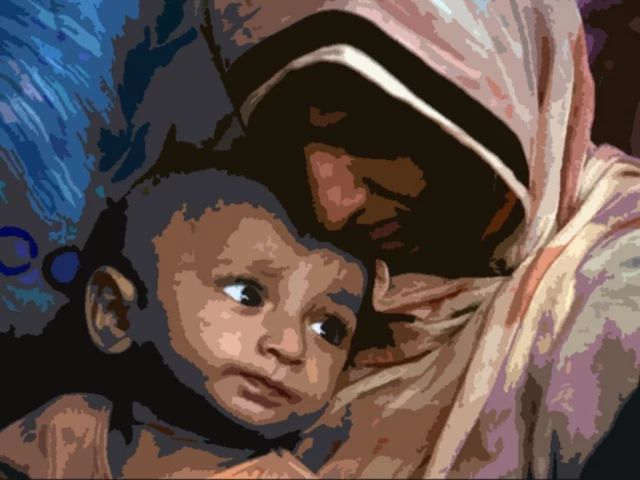
In Kurram district, patriarchy and poor health care force women like Gul Rukh to fight for survival
Gul Rukh Bibi, 35, still remembers the silence that followed the birth of her eighth child: there were no congratulations, no muttered prayers, no parents arriving with sweets. Only the quiet certainty that his life was about to change.
Her husband had warned her months earlier that another girl would cost him the marriage. “When the midwife said it was a girl, I closed my eyes,” recalls Gul Rukh, sitting on a woven charpoy in her mudbrick house in the recently merged Kurram district of Khyber Pakhtunkhwa.
“Here, a woman is blamed for what she gives birth to, even if it’s not in her hands,” she told me.
A few weeks after giving birth, Gul Rukh’s fears came true, she said, when her husband took a second wife and withdrew financial support for her medication and postnatal care. Weakened by repeated pregnancies and complicated deliveries, she had to recover alone while raising eight daughters in a district where access to reproductive health care remains very limited.
Read: How a mother’s stress can decide the arrival of her baby
An endemic problem
Health workers say her story is not an exception but a reflection of entrenched gender norms, high fertility and systemic neglect in the merged districts of Khyber Pakhtunkhwa. Since the former tribal areas were merged into the KP in 2018, administrative changes have progressed slowly, but for women like Gul Rukh, access to maternal and reproductive health care has seen little improvement, according to Shahid Hussain, a resident of Kurram district.
He further added that Kurram and other merged districts have limited number of health centers for women and due to the security situation, curfews are sometimes imposed in tribal areas and women have to give birth at home, without any facilities. Health visitors and midwives are rare in tribal areas, he added.
Lack of education, especially for women and girls, prevents them from making informed decisions about their reproductive health and contraceptive use, he said.
Dr Ali Mohammad Mir, senior program director at the Population Council, said there was a shortage of trained female staff, contraceptive supplies, postnatal services and functional maternal health facilities in the merged districts.
Demographic data underscores the scale of the challenge. According to the 2023 population census, KP’s population exceeded 40.8 million, with an annual growth of 2.38%. A significant portion of this growth has occurred in merged districts, where fertility rates remain well above the provincial average due to limited access to family planning.
The population of Bajaur district now stands at over 1.28 million, while that of North Waziristan exceeds 693,000. The 2023 census indicates that local health infrastructure was never designed to support these numbers.
The crisis is compounded by broader demographic pressures, with Pakistan now the fifth most populous country in the world, with an estimated population of 234 million in 2023 and the highest population growth rate in South Asia at 2.4%. According to the World Development Indicators, Pakistani women have the highest average number of children in the region, with a total fertility rate of 3.6, compared to 2.2 in Bangladesh and 1.7 in Iran.
Health outcomes in KP and especially in the merged districts remain alarming, according to the Pakistan Demographic and Health Survey (PDHS). While the national maternal mortality rate is estimated at around 186 deaths per 100,000 live births, experts say the rate is significantly higher in remote districts due to home births, lack of skilled birth attendants and delay in emergency care. In the merged districts, the fertility rate stands at 4.8, compared to 4.0 for KP as a whole, while contraceptive prevalence remains low at 21.8%.
Mohmand District Health Officer Aisha Khan explained how frontline health workers face daily struggles that often prove life-threatening. “Most women give birth at home because there is no female doctor, no midwife, no functioning delivery room nearby,” she said. “When complications arise and families decide to move, it is often too late. »
According to national estimates, Pakistan experiences around nine million pregnancies each year: five million wanted and four million unintended. Of these, 1.4 million result in unwanted births, while 2.2 million result in induced abortions, Dr Mir added.
He said decision-making power remains largely imbalanced against women, with only about 10 percent of Pakistani women able to independently make decisions about their own health care, while choices about family size and contraception are largely controlled by men.
Dr. Mir said that due to this imbalance, our population is seriously affected, which has adverse effects on climate change and financial situation, adding that the government should expand the budget and plan emergency measures for population control.
Education gaps further reinforce these vulnerabilities, according to Qamar Naseem, an activist for girls’ education. He cited the Global Gender Gap Index 2024, which ranks Pakistan 139th out of 146 countries in terms of educational attainment. “Pakistan has more than 26.2 million out-of-school children, placing it second in the world,” he said. “KP alone has a population of 4.9 million, of which almost 60% are girls. »
Health professionals say social pressure on male children is a silent driver of repeat pregnancies. A gynecologist at Bajaur district headquarters hospital, Dr Abdul Basit, said many women arrive severely anemic after multiple and closely spaced pregnancies. “Families put pressure on women to keep trying for a boy,” he said. “These mothers face higher risks of complications and even death, yet very few husbands or relatives support them. »
UNFPA provincial coordinator in KP Mah Jabeen Qazi noted that limited government resources, donor hesitation due to security concerns and past attacks on health workers have limited awareness. “Curfews, mobility restrictions and fear make it difficult for women to access health facilities or for workers to provide services,” she said.
KP Population Protection Department Secretary Dr Aneela Mahfooz Durrani said efforts were underway, but acknowledged deep-rooted challenges as the department runs more than 800 family protection centers, 35 reproductive health service centers and 43 mobile units across the province. “We work with cultural sensitivities to promote family planning and reproductive health,” she said, adding that peace and sustainable investments remain essential.
However, for women like Gul Rukh, political promises remain distant realities. “I don’t want my daughters to live the life I lived,” she said.


