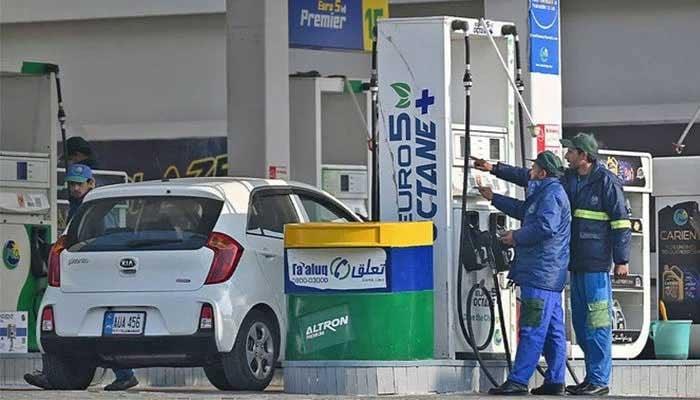
In the month since the United States and Israel launched attacks on Iran, the growing economic fallout, with global consequences, has hit some countries, including Pakistan, hard.
The latest blow to Pakistani consumers came this week, with a sharp increase in the domestic price of high-octane fuel used in luxury vehicles. This was apparently to force relatively rich countries to bear a higher cost of the national burden, which now burdens oil-importing countries around the world.
However, this latest measure shows once again that the government relies more on symbolic measures than on concrete measures. In Pakistan, many areas require urgent action to address the growing economic challenge posed by the war in Iran.
For a long time, Pakistan remained a country where a relatively small and well-endowed elite remained shielded from sharing the national burden. It is hardly surprising that almost 3% of Pakistan’s 250 million people are registered as tax filers, with an even smaller number contributing significantly to the cause.
Meanwhile, a history of largesse extended to the rich and powerful only reinforces a tragic trend: in daily life, Pakistan remains a country where privileges are bestowed on a privileged few. This story is well informed by the examples of the ruling elite over time heading to popular foreign destinations for medical care when treatment of similar quality is available in Pakistan.
Another relevant example: the Pakistani government is establishing higher education institutions, many of which remain neglected and in disrepair. Pakistan’s education system has visibly deteriorated over time as the country’s elite have ignored this field while sending their own children to premier educational destinations around the world. Similar examples are found across all sectors, reinforcing the powerful reality that Pakistan’s well-resourced elite remains virtually isolated from the rest of the country.
While the future of the war against Iran remains impossible to predict, Pakistan’s ruling structure must prepare decisively for the worst. Although Pakistan remains afloat today, aided by an IMF loan, it is important to remember that Pakistan came back from the brink of defaulting on its external debt only a few years ago.
Even if Pakistan remains solvent today thanks to IMF support, this cannot, at best, be the solution to a more serious problem. In short, Pakistan must restore confidence in its future, remain solvent through a significant improvement in its balance of payments and, last but not least, improve its prospects for future economic growth.
For now, Pakistan remains trapped in a cycle of low growth, which best matches the country’s annual population growth. In other words, the size of Pakistan’s economic pie is increasing every year to the same extent as its population growth. This can arguably be considered a cycle of zero growth or marginal growth.
Looking ahead, Pakistan needs to undertake three interrelated reforms to prepare for the future. First, in the face of the growing global consequences of the war against Iran, it is important to force the Pakistani elite to tighten their belts like never before. For example, the luxuries afforded to elected representatives in the past must be suspended immediately so that Pakistan can impose long-overdue spending cuts.
Additionally, wealthy individuals across the country must be forced to meet their real tax obligations, rather than contributing only nominal amounts. In recent years, other classes, such as the visibly well-endowed merchants, have successfully resisted budgetary measures aimed at contributing more to national tax collection.
As Pakistan faces one of the most difficult times in its history, no one can be allowed to shirk their tax obligations. This is essential to avoid imposing a generalized burden in the future, notably by relying more on indirect taxes.
Secondly, while Pakistan is facing a formidable war-related challenge, the country is also facing another major challenge that should not be ignored. The powerful reality of climate change and its subsequent destruction was witnessed across Pakistan last year, when rains of unexpected intensity caused widespread destruction and human displacement across the country.
Even before this year’s expected rainfall cycle, Pakistan’s disaster management officials have already warned of an upcoming period that could exceed last year’s by at least 20 percent. This requires the country to redouble its efforts to refocus on the agricultural and forestry sectors, while responding to the dire consequences of climate change.
Beyond the climate challenge, targeting agriculture could be the quickest way to revive economic growth while combating the growing food insecurity of recent years.
Finally, Pakistanis are known to be generous donors to causes in their own country. But putting this spirit to work for a greater cause requires urgent action to scale up the work of the nonprofit sector across Pakistan.
Together, the path to change must be taken immediately as Pakistan faces the consequences of a formidable global challenge.
The writer is an Islamabad-based journalist who writes on political and economic affairs. He can be reached at: [email protected]
Disclaimer: The views expressed in this article are those of the author and do not necessarily reflect the editorial policies of PK Press Club.tv.
Originally published in The News