
Leaders discuss start of formal negotiations under Pakistan-facilitated framework and reopening of Strait of Hormuz
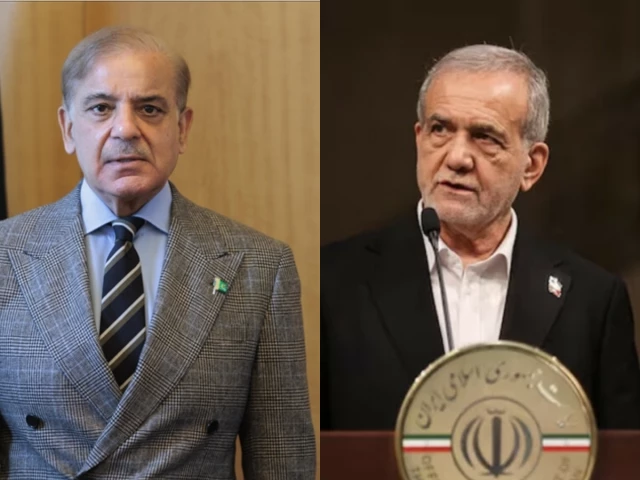
Prime Minister Shehbaz (right) speaks with Iranian President Masoud Pezeshkian (left) on the U.S.-Iran ceasefire
Prime Minister Shehbaz Sharif on Wednesday congratulated Iranian President Masoud Pezeshkian for the ceasefire between Iran and the United States during a telephone conversation, the Prime Minister’s Office said in an official statement. He also conveyed his respects to Supreme Leader Mojtaba Khamenei.
According to the statement, Prime Minister Shebaz “expressed his deep gratitude for the wisdom and sagacity of the Iranian leadership in agreeing to the ceasefire” and for accepting Pakistan’s offer to host the Iran-US negotiations in Islamabad later this week.
President Pezeshkian, in response, “thanked the Prime Minister and appreciated the efforts of the Pakistani leadership to establish a temporary ceasefire” and conveyed “his best wishes to the people of Pakistan,” the statement added. He confirmed that Iran would participate in the upcoming negotiations in Islamabad.
The statement further noted that the two leaders “agreed to remain in close contact” as the diplomatic process continues.
Earlier on Wednesday, Prime Minister Shehbaz announced that Iran and the United States, along with their allies, had agreed to an immediate ceasefire “everywhere, including Lebanon,” effective immediately. The Prime Minister invited delegations from both countries to Islamabad on April 10 to negotiate a successful settlement.
US President Donald Trump approved the two-week truce shortly before Tehran’s self-imposed deadline to reopen the Strait of Hormuz. On Truth Social, he described it as “a great day for world peace” and signaled U.S. support for stabilizing the region, including ensuring safe passage on this strategic waterway.
The talks in Islamabad, brokered by Pakistan, will mark an important step in de-escalating tensions in the Middle East and highlight Islamabad’s growing role in facilitating regional diplomacy.


