
Opposition says ball is in government’s court by accepting PM’s proposal without preconditions
ISLAMABAD:
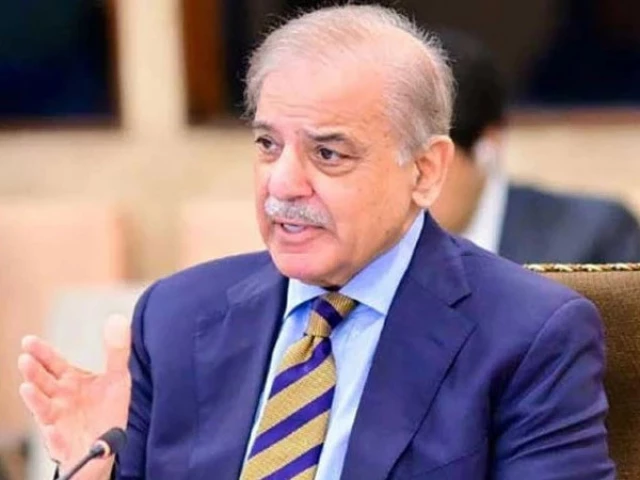
Ten days after Prime Minister Shehbaz Sharif extended the olive branch to political dialogue, the process appears to be slow from the start, with the federal government yet to make formal contact with the opposition alliance on the timetable and framework of the talks, casting a shadow over the seriousness of the move.
Tehreek-e-Tahafuz-e-Aeen Pakistan (TTAP) formally accepted the Prime Minister’s offer on December 24, demonstrating its willingness to engage in dialogue without preconditions. However, no follow-up engagement has taken place so far, leaving the process stuck at the declarative stage.
TTAP vice-president Mustafa Nawaz Khokhar said the opposition responded to the prime minister’s offer with restraint and political maturity.
He said that without imposing preconditions, the opposition had demonstrated its willingness to engage on broader national issues, including the restoration of the 1973 Constitution, parliamentary sovereignty and rehabilitation of the much tarnished reputation of the Election Commission of Pakistan (ECP), as well as the credibility of the electoral process.
Khokhar said the responsibility now rested with the government, adding that the ball was firmly in its court. He said that if the authorities were not serious in their offer, the opposition had actually been bluffing. However, if the intention was truly to lead the country out of its political and economic crisis, his party was prepared to play its role in the broader national interest.
He added that a significant first step by the government would be to stop creating obstacles to the appointment of opposition leaders to both houses of Parliament. Without this, he warned, the government’s intentions would remain questionable.
Despite several months having passed, National Assembly Speaker Ayaz Sadiq is yet to notify Mahmood Khan Achakzai as the Opposition Leader in the National Assembly. Similarly, Allama Raja Abbas Nasir was not appointed as the leader of the opposition in the Senate. Meanwhile, the government passed the 27th constitutional amendment in the absence of officially briefed opposition leaders in both houses.
In this context, TTAP refused to attend the National Dialogue Committee (NDC) conference scheduled for Wednesday.
The National Dialogue Committee, headed by former federal minister Fawad Chaudhry, aims to provide a roadmap for political dialogue in the country. It is learned that the two main ruling parties – PML-N and PPP – are expected to decide on their participation in the conference on Tuesday (today).
Representatives of the senior bars also expressed their willingness to attend.
Political analysts say the road to dialogue remains uneven, particularly because of lingering divisions within the Pakistan Tehreek-e-Insaf (PTI) over the party’s future policy direction.
A faction within the PTI opposes negotiations with the government and favors further agitation – a strategy that has yielded little result since the February 8, 2024 elections. The group believes that public opinion remains receptive to protests against Imran Khan’s continued detention, but recognizes that the party’s weak and fragmented leadership has left its supporters without a clear direction.
They say any upcoming protests could prove decisive, pointing to the increased activism of Khyber Pakhtunkhwa Chief Minister Sohail Afridi, who has stepped up efforts to mobilize party workers across the country, especially within KP. After Lahore, the CM is expected to visit Karachi on January 9.
Imran Khan’s sister Aleema Khan is also said to have opposed any engagement with the current government.
However, there appears to be broader agreement within the party that Imran Khan has delegated authority over future political strategy to TTAP leader Mahmood Khan Achakzai, who accepted the prime minister’s offer of dialogue after what sources describe as lengthy internal deliberations.
Another section of the PTI supports political engagement, arguing that the executive has effectively consolidated its grip on the judiciary, leaving little immediate prospect of relief from the higher courts.
They also highlight the lack of significant international pressure on the government to accommodate the PTI, despite it being the country’s largest political party.
These voices further highlight that authorities have managed to sow fear among PTI supporters in Punjab through sustained repression, significantly limiting the party’s ability to mobilize the streets.


