
Rawalpindi / Peshawar:
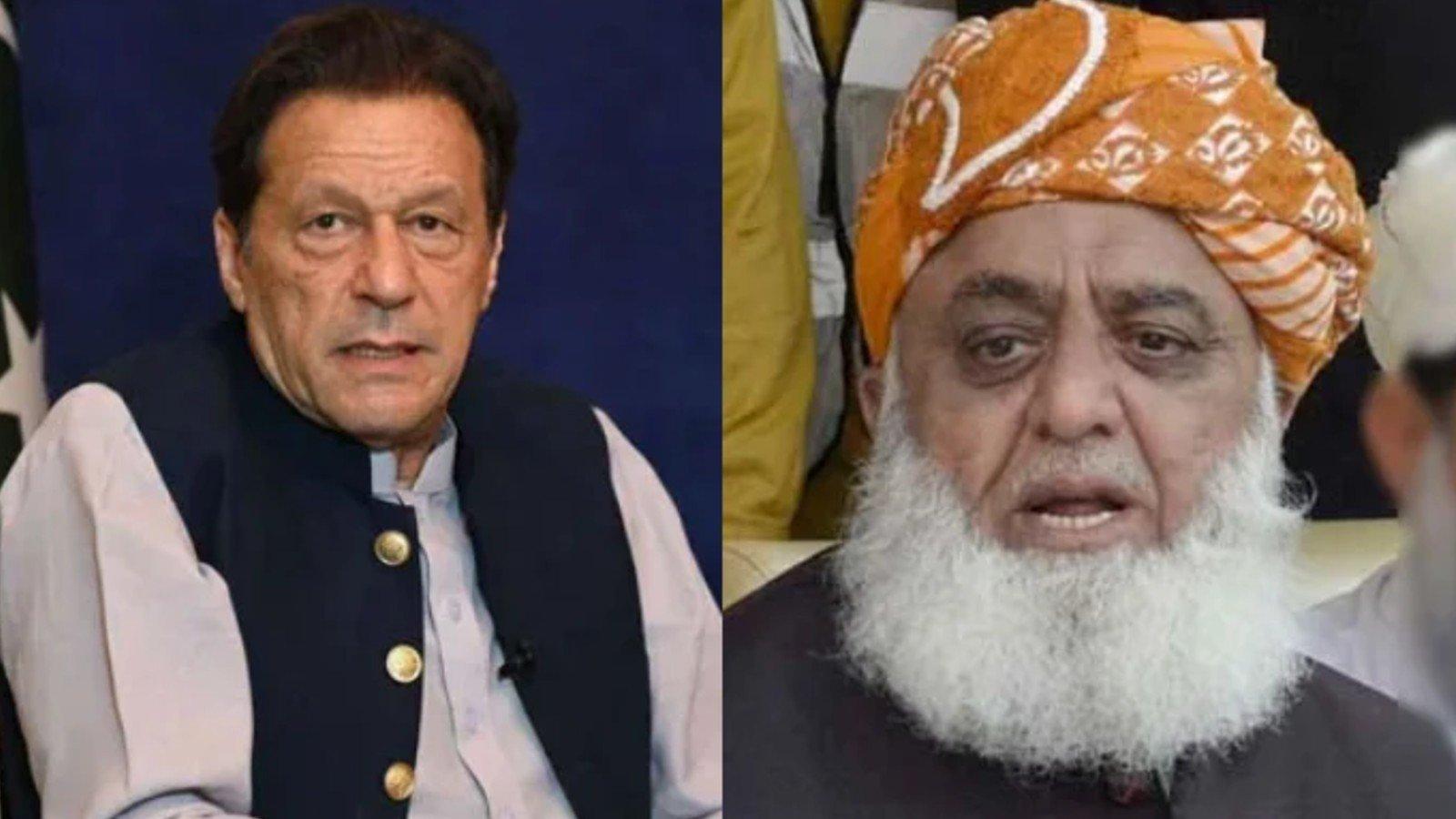
Pakistan Tehreek-e-insaf (PTI) has once again opened its doors with Jamiat Ulema-E-Islam-Fazl (JUI-F) as part of its political officials against power sources Pakistan Muslim-Nawaz (PML-N), sources confirmed on Wednesday.
In the midst of increasing whispers of potential alliances, the sources said that the head of the PTI Salman Akram Raja had contacted the leadership of Jui-F, expressing a desire for talks. However, Jeu-F informed PTI that its chief, Maulana Fazlur Rehman, is currently absent for Omra.
The two former rivals remaining tight and moving cautiously, they would have agreed to meet once Fazl returns, with talks expected next week.
In addition, the secretary general of the PTI, Barrister Salman Akram Raja, confirmed Tuesday that the founding president of the imprisoned party, Imran Khan, had issued certain instructions concerning the Chief Jui-F, who will be transmitted accordingly.
Addressing the media outside the central prison after meeting Imran, Salman said that discussions had taken place on the opposition alliance, although he refrained from disclosing all the details. He reiterated that PTI held Fazl with respect and wanted him to be part of the alliance.
He also confirmed that Imran had no grievance on the party and that discussions had taken place regarding future strategies. The ex-PM has not met his political allies for five months, and measures have been taken in this regard.
Raja has also criticized certain individuals for having taken advantage of the legal representation to acquire a political influence and stressed that the responsibilities of Imran’s responsibilities should remain focused on political affairs.
Responding to the concerns of Imran’s health, he rejected false reports in circulation, adding that the former Prime Minister was in good health following a routine exam.
He denied the allegations according to which Imran was deprived of Suhoor (meal before dawn for fasting) or restricted religious activities.
‘Darkest period’
Meanwhile, the head of the opposition in the Senate and the faithful of the PTI Shibli Faraz announced that the former ruling party joined other opposition parties for a coordinated campaign against the government.
Addressing journalists outside the High Court of Peshawar (PHC), he said that last year was the “darkest period” in the history of Pakistan. He added that the government had laws in bulldo like Peca and the 26th amendment without a democratic process, spending billions in advertisements while doing nothing tangible.
He castigated the expanding federal cabinet, calling it “a reward for turncoats and defectors”, adding that the country was drowning indebted while inflation was at a record level.
Shibli condemned the aggravation of the security situation at Khyber Pakhtunkhwa and Balutchistan and noted that the Sindh was also agitation on water shortages. “We are going to hit the streets against this incompetent government after Eid,” he said, adding that PTI is also preparing for legal battles in various courts.
Meanwhile, during a separate press conference, the head of the opposition to the National Assembly Omar Ayub Khan criticized the government’s performance on his first anniversary, questioning the claims of Prime Minister Shehbaz Sharif of economic stability.
“Where is stability? We certainly do not see it,” he said, adding that the country was in terrible straits, faced with a paralyzing economic slowdown, an industrial closure and an agricultural sector in difficulty.
He stressed that wheat production faced a crisis, the computer and telecommunications sectors have been late and the services deteriorate. “The economy is shrinking and we are going through one of the worst financial periods in history,” added Ayub.
Deploring the depreciation of the rupee, Ayub said that Pakistan’s external debt had increased by 120 billion rupees due to the devaluation of currencies. He added that 2,930 billion loans of loan had been reprogrammed, adding that reimbursement of these loans will be an important burden for the masses.
He deplored that only 92 billion rupees on 1,400 billion rupees were spent, which represents only 8% of funds allocated with only three months during the fiscal year.
Ayub also stressed that payments of capacity in the energy sector have crossed 2,000 billion rupees, but the government remains ineffective in the fight against the crisis.
He questioned the transparency and efficiency of the Special Investment Facilitation Council (SIFC), declaring that foreign direct investments (IDE) fell to a hollow of 50 years. Meanwhile, $ 350 million was paid to an American company for the maintenance of F-16 aircraft, while exchange reserves fell to $ 11 billion.
“Terrorism is increasing at an alarming pace across the country, Balutchistan witness daily attacks,” he warned. “The security forces cannot even enter certain areas, and instead of focusing on activists, intelligence agencies are busy monitoring political opponents,” he said.


