
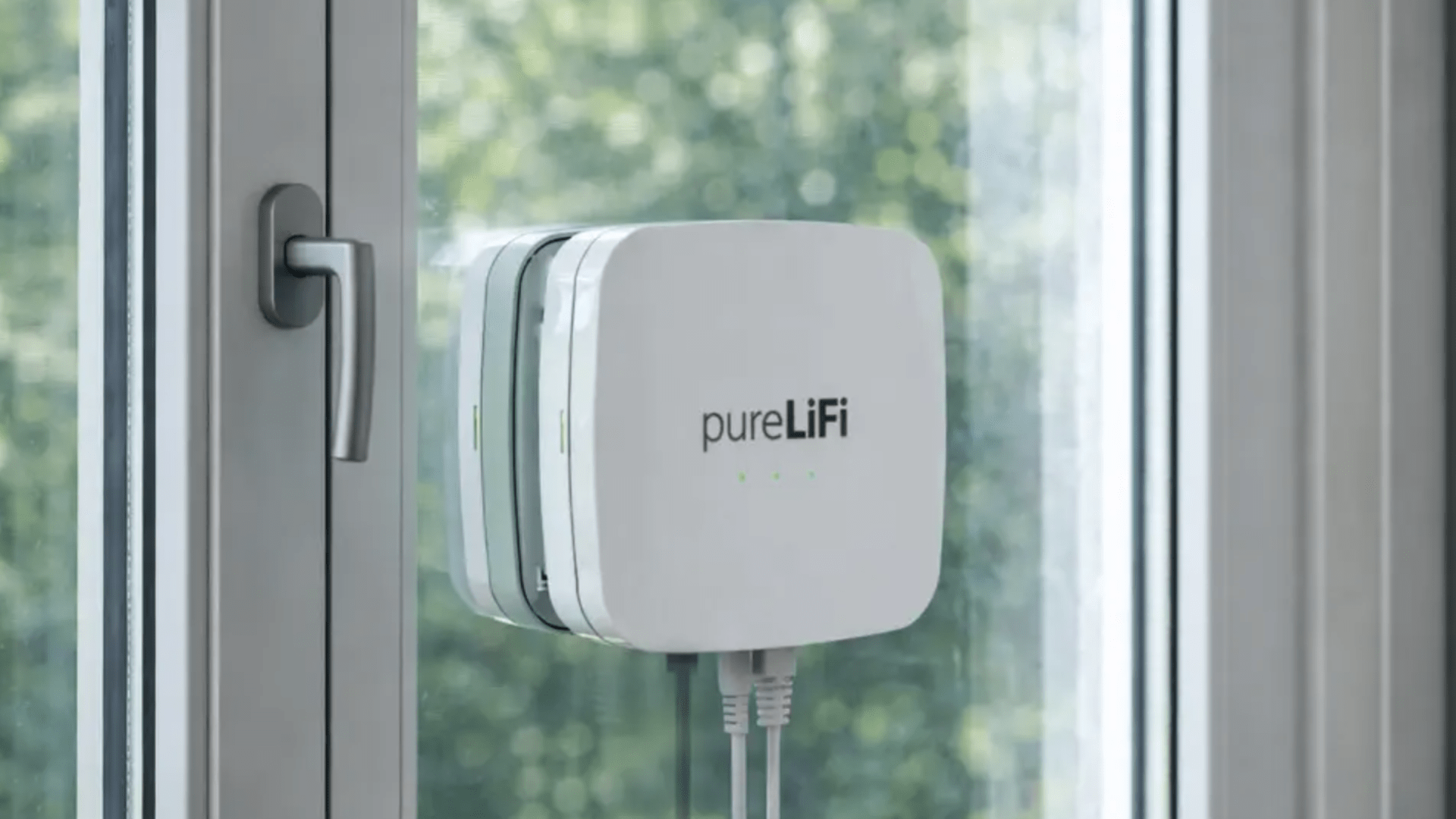
- LiFi provides high-speed connectivity using visible light instead of radio frequencies
- The XC Flex Bridge allows for self-installation without professional setup or drilling
- Installation in less than five minutes significantly reduces costs for broadband providers
At MWC 2026, pureLiFi introduced what it calls a new phase of wireless connectivity based on light-based data transmission rather than radio frequencies.
The company says its high-bandwidth architecture is capable of reaching 10 Gbps and is the “new connectivity DNA” for networks evolving beyond 5G.
This claim puts it in the same performance discussion as Taara, whose light beam system has already promised speeds of up to 25Gbps under optimal conditions.
10Gbps speeds face real-world line-of-sight limitations
pureLiFi CEO Ron Schaeffer said “LiFi is no longer just a faster alternative; it’s the fundamental DNA of the modern network.”
He added that the architecture is “more than just 10Gbps LiFi technology”, describing it as a roadmap for telcos to bring 5G, satellite and fiber capacity indoors “frictionlessly”.
The company says this approach ensures users receive the bandwidth they pay for while reducing interference and improving security.
The commercial focus is on fixed wireless access and indoor signal quality.
The XC Flex Bridge is designed for self-installation, connecting outdoor broadband to indoor networks and transmitting data through windows without drilling or professional setup.
pureLiFi claims installation takes less than five minutes, reducing subscriber acquisition costs and speeding deployment times for providers.
Field trials with major telecom operators have been completed and the product is expected to ship later in 2026.
Additional devices like the LiFi Cube Mini Kitefin XE further expand the range.
While the former is a secure, high-bandwidth unit for remote work and gaming, the latter targets critical indoor environments that require minimal interference.
pureLiFi also promotes “security for all,” claiming that systems derived from technology used in classified networks are now accessible to individuals and businesses.
However, there is a technical constraint which cannot be ignored. LiFi requires a direct line of sight between the transmitter and receiver.
If a hand or object obstructs the path of the light, the connection stops working.
This requirement introduces practical limitations that differ from radio systems capable of penetrating obstacles.
The broader proposal hinges on whether lower installation costs and high theoretical throughput can compensate for this visibility dependence.
Although the company views LiFi as a foundational network infrastructure, its adoption will likely depend on how effectively it manages this physical constraint in everyday environments.
Follow TechRadar on Google News And add us as your favorite source to get our news, reviews and expert opinions in your feeds. Make sure to click the Follow button!
And of course you can too follow TechRadar on TikTok for news, reviews, unboxings in video form and receive regular updates from us on WhatsApp Also.


