
A total of 705 people from 223 families were repatriated, including holders of Afghan citizenship cards and proof of registration.
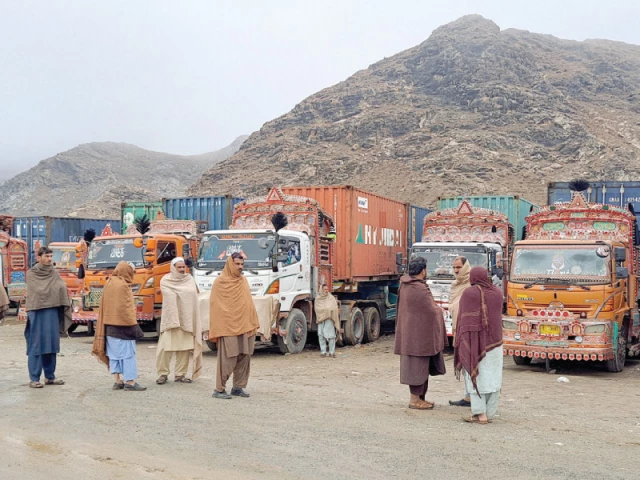
People stand next to parked trucks loaded with supplies at the Torkham border post following a clash between Pakistan and Afghanistan. Photo: Reuters
PESHAWAR:
The process of returning Afghan nationals through the Torkham border post in Khyber district resumed on Wednesday, after a suspension that began on February 26 due to heightened tensions between Pakistan and Afghanistan.
The Torkham border remained closed for almost a month, disrupting not only the movement of Afghan nationals but also bilateral trade between Pakistan and Afghanistan.
Under the supervision of immigration authorities, a total of 705 people from 223 families were repatriated, including 90 people from 21 families with Afghan citizenship cards, 294 people from 82 families with registration cards, and 321 people from 120 families residing illegally.
The group included 223 men, 127 women and 355 children, all of whom underwent extensive immigration and security procedures before being returned to Afghanistan.
Read: Naqvi asks NADRA to help law enforcement deport illegal immigrants
Following successful negotiations between Pakistani and Afghan security authorities, the border was partially reopened, allowing Afghan citizens to return home. Immigration officials said The Express PK Press Club that the repatriation process will continue in a gradual and organized manner in order to avoid security risks or unrest.
However, bilateral trade, suspended since October 12, 2025, remains interrupted and new negotiations are expected to restore commercial activity.
The authorities stressed that the return of Afghan nationals would be systematic to guarantee security, maintain order and effectively monitor all repatriations.
Pakistan launched a nationwide campaign against illegal Afghan immigrants in 2023, arresting and repatriating thousands.
Learn more: Government reopens key Torkham border crossing with Afghanistan
The latest round of border clashes began in late February, following a series of deadly attacks across Pakistan carried out by Tehreek-e-Taliban Pakistan (TTP) terrorists. Islamabad has accused Afghanistan of sheltering them and not taking action against them, while Kabul denies the allegations.
This followed airstrikes by the Pakistani army targeting suspected TTP hideouts in Afghanistan.
According to Kabul, the airstrikes killed dozens of civilians, while Islamabad claimed that more than 600 TTP terrorists were killed in the strikes.
The two sides had agreed to a one-week ceasefire on the eve of Eidul Fitr on March 18, following requests from Turkey, Saudi Arabia and Qatar.
Pakistan and Afghanistan share 18 border crossing points, the busiest of which are Torkham and Chaman in Balochistan province.


