
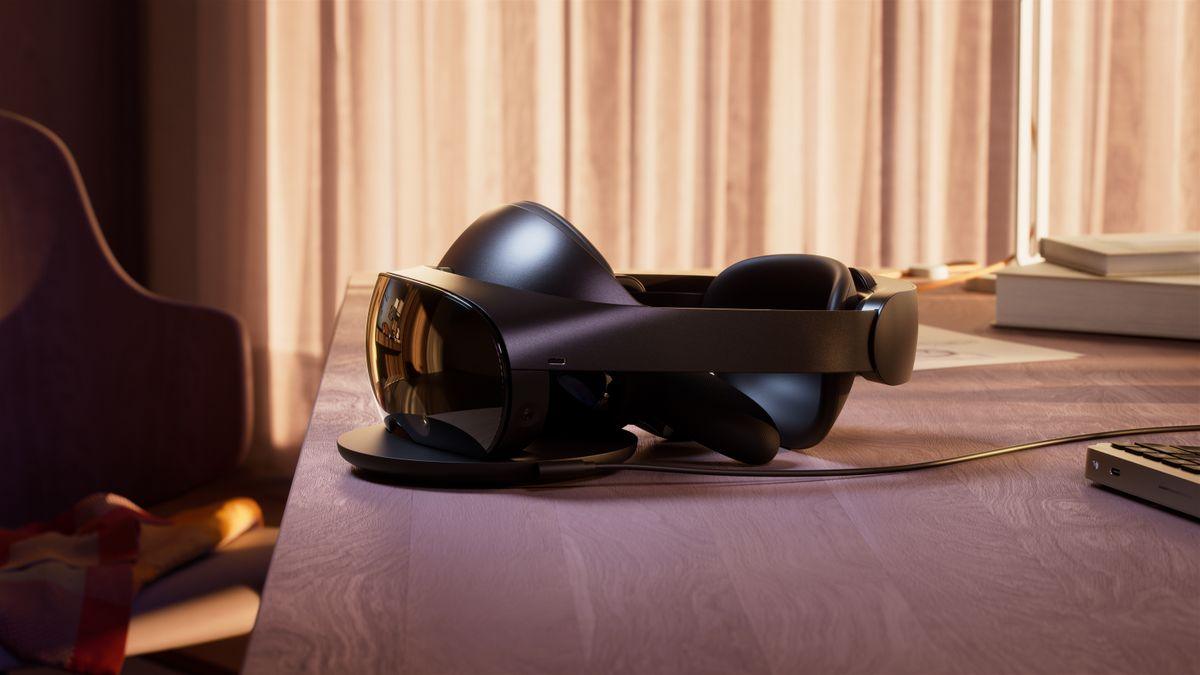
- Samsung, Meta and Apple would work on VR OLED helmets
- Meta helmet is switched to 2026, while Apple is defined for 2027
- Samsung and Meta will use new OLED screens on silicon
OLED, OLED, OLED – This is the name of the game right now in the world XR, if we are to believe a report on the disclosed material specifications. Samsung, Apple and Meta work on helmets equipped with Display OLED. And although Samsung and Apple’s plans are interesting, Meta’s OLED helmet could be a winner for a great reason: the cost.
Starting with Samsung – because his helmet is the only one we officially know – the report via the Elec (a South Korean point of sale, the details translated and summarized by @jukanlosreve) indicates that the next consumer version of the Moohan Moohan project (the Android XR chest is developed with Google) will be delivered with a 1.3 inch display 3,800 ppi (pixels.
Interestingly, this OLEDOS display (OLED on silicon, also known as Micro OLED TL; DR: These are very tiny OLED panels but with high density built on silicon) would come from the Sony display, no Samsung, and it is higher than the 3386pp display used by the Apple Vision Pro Moohan as high -end alternative. I hope it will not be so expensive (I don’t hold back my breath).
Speaking of Apple, it is said that he is working on a more friendly pro vision (read: cheaper). Instead of silicon, according to the above report, Apple will rely on more traditional glass OLEDs with a 1,500ppi, with a version planned for 2027 – but I do not retain my breath so that this device is affordable as being cheaper than a helmet of $ 3500 could always be very expensive.
Last Up is Meta, which plans to use an oledos display from 0.8 to 0.9 inch in a set of set for 2026.
The smallest display size would apparently be a cost reduction measure. The OLED panels are generally made large and then cut at the waist, and META apparently hopes that if it can reliably create an OLEDOS unit of 1.42 (the same size as a pro Vision), it can then reduce this in about four panels from 0.8 to 0.9 ince and reduce its cost by a quarter. Given this small size, however, it may need to use two headset screens (which would follow the configuration with two provisions used in its quest helmets), which would only make the effective cost by half.
Anyway, the Oledos displays, even at the quarter or half of the cost, should probably not be cheap – that is why I expect this 2026 helmet would be the Meta Quest Pro 2. It would have already been canceled twice, but the third time seems to be great, by the fact), and certain OLED screens would have a cement to cement it in the way an excitation.
A 2026 window would also work for a launch of Meta Quest 4 (based on the three -year gap between the Quest 2 and Quest 3 versions), although unless Meta can seriously reduce costs, OLED screens could be a bridge too far for its mid -range line, where they would not be for its high range headphones.
As with all leaks and rumors, we will have to take these details with a pinch of salt – especially in the case of Meta and Apple – because even if these are their current plans, there is a lot of time for things to change, and we will not know what these brands have in store for us until they make an official announcement. I hope Samsung will not let us ask us much longer, and maybe Meta will tease something at Meta Connect 2025.


