
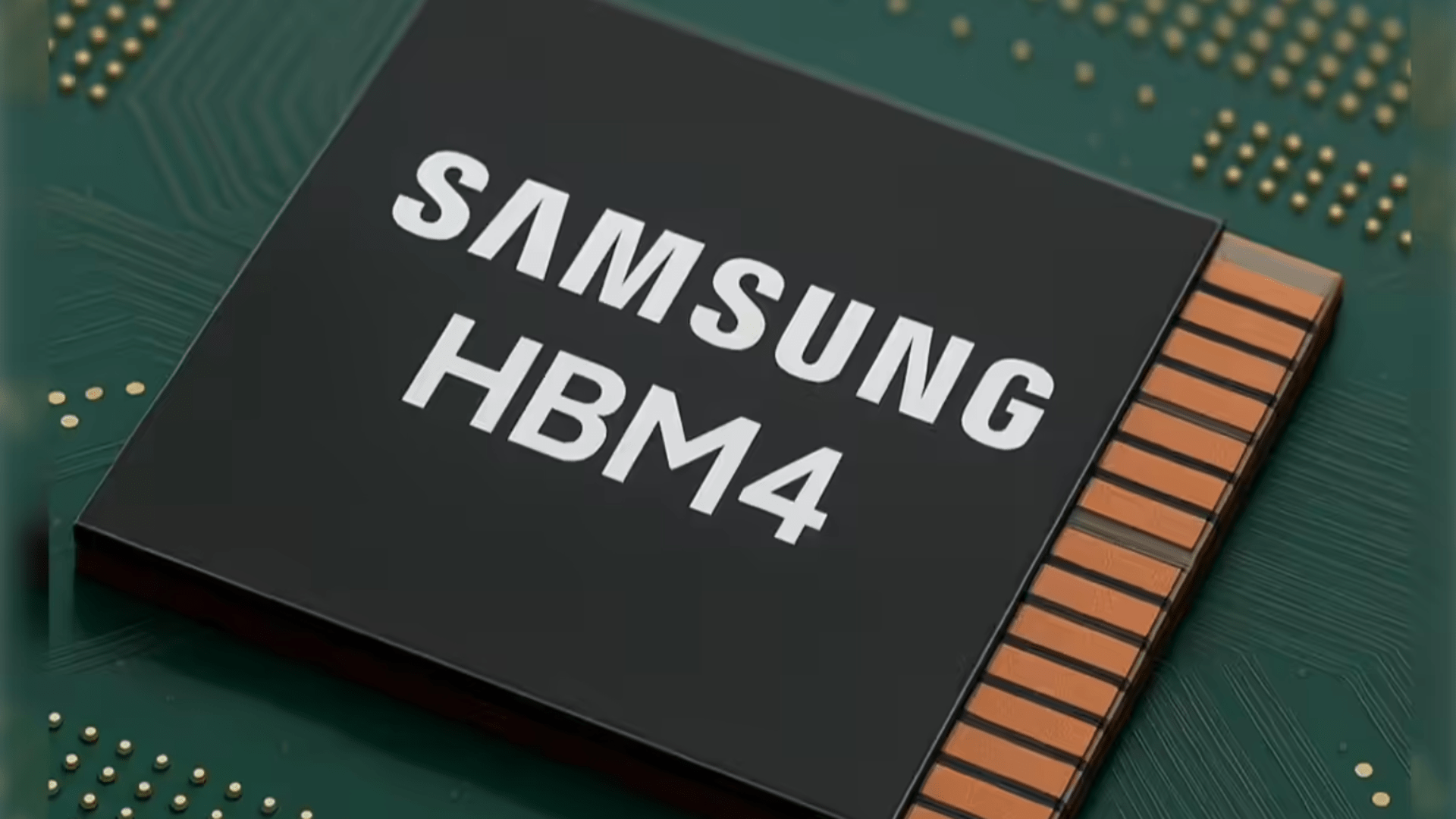
- Samsung HBM4 is already integrated into Nvidia’s Rubin demo platforms
- Production synchronization reduces planning risks for large AI accelerator deployments
- Memory bandwidth becomes a major constraint for next-generation AI systems
Samsung Electronics and Nvidia are reportedly working closely to integrate Samsung’s next-generation HBM4 memory modules into Nvidia’s Vera Rubin AI accelerators.
Reports indicate that the collaboration follows synchronized production timelines, with Samsung finalizing verification for Nvidia and AMD and preparing for massive shipments in February 2026.
These HBM4 modules are ready for immediate use in Rubin performance demonstrations ahead of the official unveiling of GTC 2026.
Technical integration and joint innovation
Samsung’s HBM4 operates at 11.7 Gbps, exceeding Nvidia’s stated requirements and supporting the sustained memory bandwidth needed for advanced AI workloads.
The modules integrate a logic core chip produced using Samsung’s 4nm process, giving it greater control over manufacturing and delivery schedules compared to suppliers who rely on external foundries.
Nvidia integrated memory into Rubin with attention to interface width and bandwidth efficiency, which allows accelerators to support large-scale parallel computing.
Beyond component compatibility, the partnership emphasizes system-level integration, with Samsung and Nvidia coordinating memory supply with chip production, allowing HBM4 shipments to be adjusted based on Rubin’s manufacturing schedules.
This approach reduces temporal uncertainty and contrasts with competing supply chains that rely on third-party manufacturing and less flexible logistics.
Within Rubin-based servers, HBM4 is paired with high-speed SSD storage to handle large data sets and limit data movement bottlenecks.
This configuration reflects a broader focus on end-to-end performance, rather than optimizing individual components in isolation.
Memory bandwidth, storage throughput, and accelerator design function as interdependent elements of the overall system.
This collaboration also marks a shift in Samsung’s position in the high-bandwidth memory market.
HBM4 is now ready for rapid adoption in Nvidia’s Rubin systems, following previous challenges in securing major AI customers.
Reports indicate that Samsung’s modules are at the forefront of Rubin deployments, marking a reversal from previous hesitation around its HBM offerings.
This collaboration reflects the growing focus on memory performance as a key driver for next-generation AI tools and data-intensive applications.
Demos planned for Nvidia GTC 2026 in March are expected to pair Rubin accelerators with HBM4 memory in live system testing. The focus will remain on integrated performance rather than standalone specifications.
The first customer shipments are expected from August. This timing suggests a close alignment between memory production and accelerator deployment as demand for AI infrastructure continues to increase.
Via WCCF technology
Follow TechRadar on Google News And add us as your favorite source to get our news, reviews and expert opinions in your feeds. Make sure to click the Follow button!
And of course you can too follow TechRadar on TikTok for news, reviews, unboxings in video form and receive regular updates from us on WhatsApp Also.


