
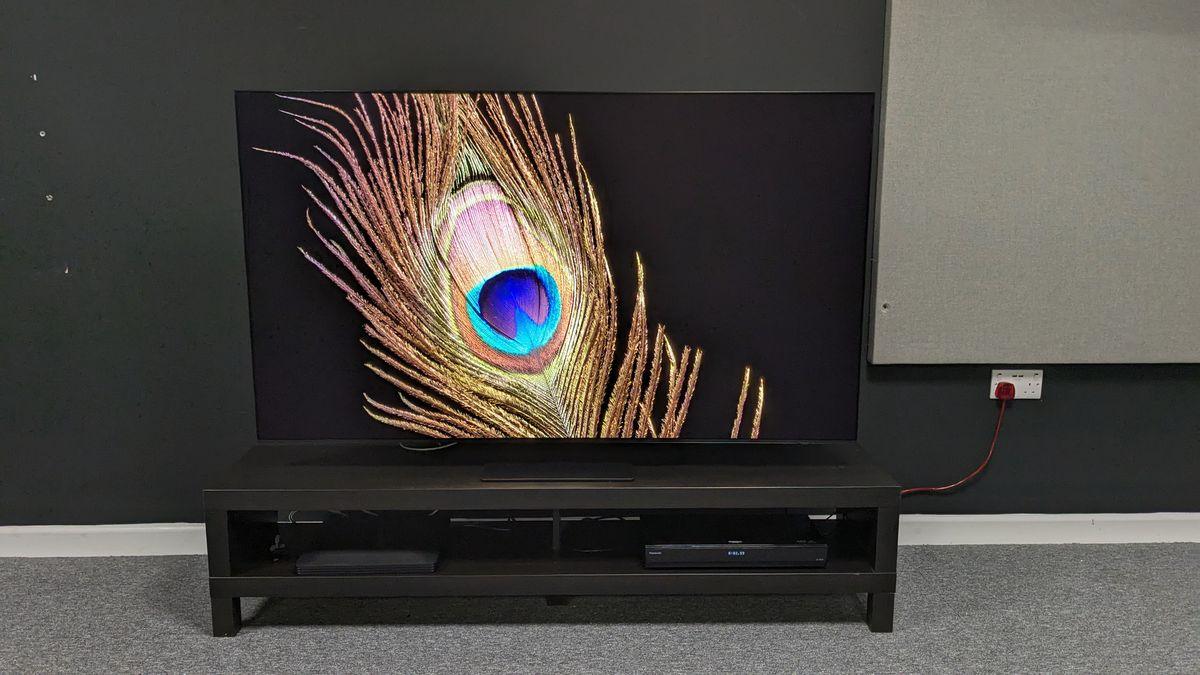
- Qd-el promises great brightness with an OLED contrast
- Samsung, Sharp, TCL and others have already shown prototypes
- Likely to go to compact monitors first
The alphabet soup of TV technology continues to grow, Samsung turning greater attention to QD-EL. This is abbreviated for the electroluminescent quantum dot, although technology is also known as Nanolated, led by QD, El-Qled and Qdel because life is not sufficiently confused. But no matter what you call it, it’s quite exciting and Samsung is invested in massively.
According to new reports in the Korean commercial press, as spotted by flatpaneseshd, Samsung accelerates the development of QD-EL screens in order to repel Chinese competitors. Businesskorea says that “Samsung has set an internal objective to market EL-QD in a few years and is fully engaged in its technological development”.
Some reports suggest that QD-El could be the future of television, and they may be right. But I think Samsung is likely to think more of monitors than big televisions at the moment. And it’s always quite exciting.
What is QD-El and why are people enthusiastic about it?
For the moment, there are two rival television technologies: backlit LED televisions and OLED TV. The former are generally brighter, but the latter have better darkness and contrast because the OLEDs are not backlit.
Qd-el promises to give you the best of both. Like OLED, it’s self-criticism, so there is no backlight. But because it uses quantum points LEDs rather than organic LEDs, it promises a longer lifespan, more efficient energy consumption and no burning.
Samsung and companies such as Sharp and TCL, have shown QD-EL prototypes during trade fairs, and the participants were really impressed. But these prototypes were quite small – that of Samsung was an 18 -inch display, and is at the end of the video below – and the technology is not yet ready for great listening hours: Businesskorea says that Samsung faces problems with the stability of quantum points and energy efficiency. Presumably, the rivals are also faced with similar challenges.
To watch
So my money is on this technology that first goes to monitors, rather than larger television screens.
There are two reasons why I think. The first is that if QD-El was about to be ready for very large screens, the manufacturers would probably show them already.
And the second is that large screens are a great risk when you talk about new technologies. It is common for new emission technologies to start small and only on the scale, as manufacturers find ways to reduce the often massive waste supplied with large panels at the start of making something new. You lose much less money on the wasted material of an imperfect result if your screen is 21 inch than if it is 65 inches.
Here is an excellent example of that: inkjet printed oled. TCL began to produce their panels at the end of 2024, and these panels are for 21.6 -inch monitors. The Techradar editor -in -chief for Entertainment, Matt Bolton, has been informed that the inkjet printed oled will not come to televisions for years for this exact reason – it will simply be profitable in the short term to risk large screens.
I think that QD-El is really exciting, but I think it will be some time before it moves from the office and in your cinema. Although I was fortunately surprised if I am wrong: after all, Samsung jumped the monitor’s scene when he launched his QD-Oled panels in 2022 and launched a range of televisions directly, then brought technology to monitors later.


