
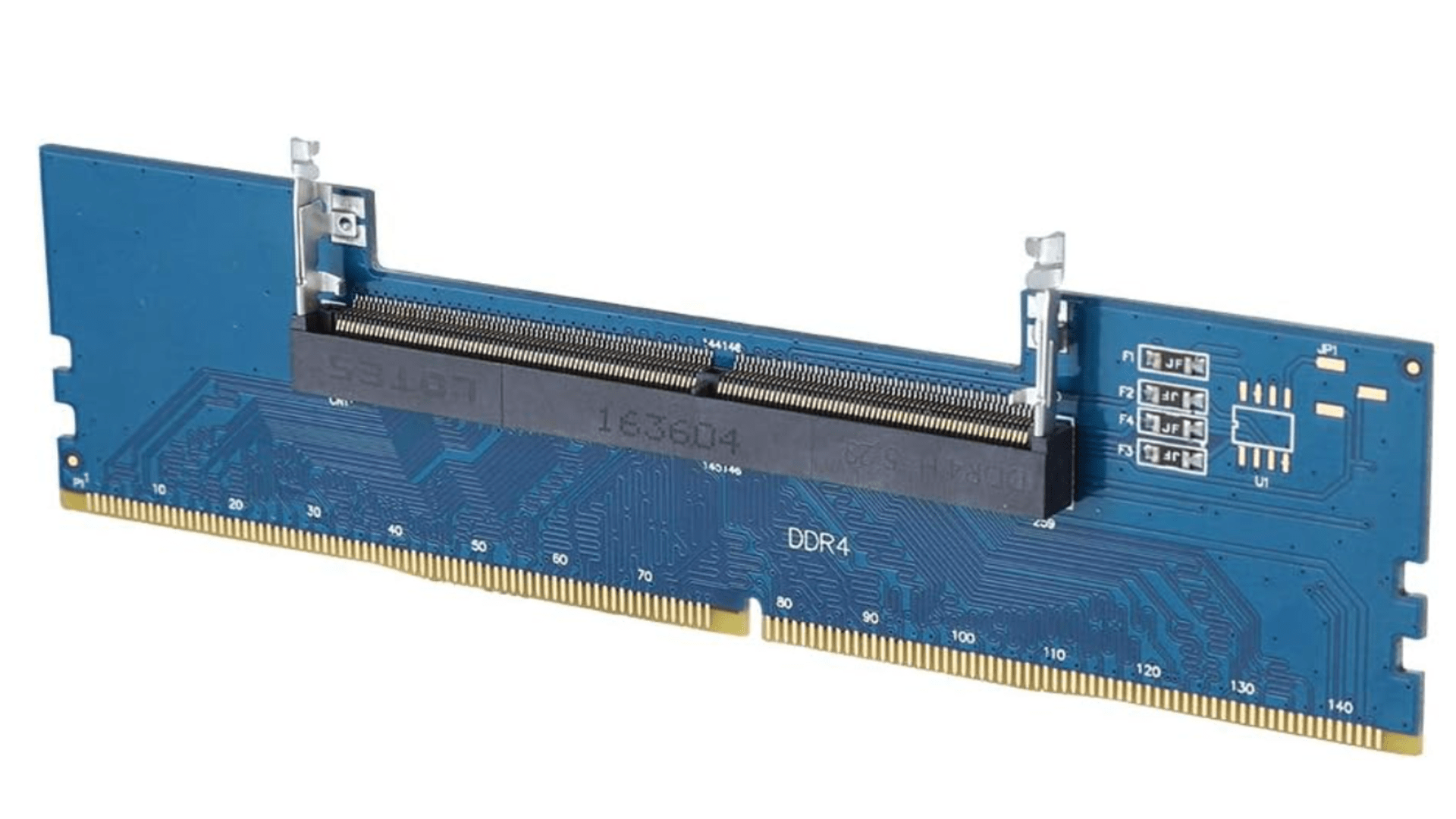
- The Ashata adapter efficiently converts old laptop DDR4 memory to desktop-compatible DIMMs.
- Users save money by reusing their existing laptop memory with this cost-effective adapter
- Mixing different brands of memory may require conservative timings and reduced speeds
Prices of desktop memory have risen sharply, sparking renewed interest in unconventional ways to reduce upgrade costs.
One such option is the SODIMM to DIMM adapter card, which allows DDR4 laptop memory modules to be installed on desktop motherboards.
The ASHATA DDR Desktop Adapter simplifies the process of using older laptop memory in desktop systems.
Simplify Desktop Upgrades with DDR4 Modules for Laptops
This SODIMM to DIMM converter is specially designed for laptop DDR4 modules and allows installation on standard desktop motherboards.
Currently listed for €13 on Amazon, it offers an inexpensive way to reuse memory that would otherwise go unused.
This adapter supports DDR4 memory modules with speeds up to 2133 MHz, although users should expect lower performance than native desktop DIMMs.
DDR4 modules for laptops operate at higher latencies and lower frequencies, and using the adapter may require clock speed adjustments to maintain stability.
Modules from different brands may require more conservative settings, meaning desktop systems will not achieve the performance levels of DDR5 memory in modern releases.
The adapter works with DDR3, DDR4 and some DDR5 laptop modules by converting the smaller form factor SODIMM to a standard DIMM interface.
The ASHATA adapter provides a cost advantage for users with unused laptop memory.
For example, a 16GB DDR5/4800 SODIMM currently costs around $100, while a comparable desktop DDR5/5600 module can cost around $148.
Adding the $13 adapter still results in a lower total cost, making it an inexpensive way to expand memory without purchasing new desktop modules.
The adapter works with a range of processors that support DDR4 memory, allowing older laptop modules to work in desktop systems.
Some recent budget systems combine Intel Core i5-13400EF processors with DDR4 memory rather than DDR5.
This shows that users can still access relatively modern CPU architectures, including Alder Lake and Raptor Lake, while using older DDR4 modules.
The ASHATA board uses a 4-layer PCB design that maintains stable electrical connections between laptop SODIMMs and desktop DIMM slots.
Its lightweight construction avoids interference with other components and the standard DIMM interface ensures compatibility with most motherboards.
This adapter is not a replacement for high-performance desktop memory.
Memory-intensive tasks such as gaming or video editing may result in lower bandwidth and higher latency compared to native DDR5 modules.
Mixing modules from different manufacturers may also require manual timing adjustments to maintain stability.
Nonetheless, it provides a convenient and inexpensive way to pair aftermarket DDR4 modules with compatible processors, extending the usefulness of older laptop memory into desktop systems.
Follow TechRadar on Google News And add us as your favorite source to get our news, reviews and expert opinions in your feeds. Make sure to click the Follow button!
And of course you can too follow TechRadar on TikTok for news, reviews, unboxings in video form and receive regular updates from us on WhatsApp Also.


