
Islamabad:
The constitutional bench (CB) of the Supreme Court observed that the court martial should not be mixed with martial law because the latter is completely unacceptable and an extracted constitutional measure,
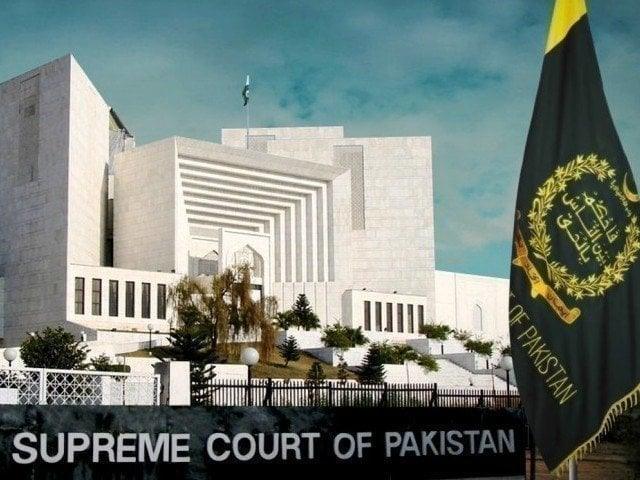
A CB of seven members led by Judge Amicin Khan resumed Thursday on hearing the intra-cost calls filed against the October 2023 ordinance of a Supreme Court bench which declared the trial of the rioters of May 9 in the zero and non-Avenus military courts.
During the procedure, the Association of the Supreme Court Bar (SCBA) submitted its written arguments to the Court. According to submissions, the SCBA held a meeting on March 5 to deliberate on its position concerning the military courts.
The association said that, in principle, civil trials should not be carried out in the military courts. He also noted that the provisions of the 1952 law of the Pakistani army have been confirmed as constitutional in judicial interpretations and cannot be declared zero at this stage.
The SCBA said that terrorism has intensified and that Pakistani citizens deserve peace and harmony. Consequently, all constitutional and legal measures should be oriented towards the eradication of terrorism.
Representing the Lahore Bar Association and the association of the bar of the High Court of Lahore, the lawyer Hamid Khan argued that the law of the Pakistani army was introduced in May 1952 when Pakistan was governed under the law on the government of India.
He said that the country’s first constitution was promulgated in 1956, introducing fundamental rights for the first time, adding that the 1952 law of the Pakistani army was changed for the first time in 1967.
He said the first conspiracy case in Pakistan, Rawalpindi’s conspiracy affair was launched in 1951.
Judge Hasan Azhar Rizvi noted that even figures like the poet Faiz Ahmed Faiz were involved in the case of a Rawalpindi plot. Continuing his arguments, Hamid Khan said that to continue the accused, the Rawalpindi Conspiracy Special Trial Act of 1951 was introduced.
The conspiracy objective was to establish a communist system in Pakistan. The accused included both military staff, such as General Akbar Khan and civilians. However, their trial was not carried out before a military court but under a special court.
At this stage, judge Jamal Khan Mandokhail questioned the relevance of these historical examples to the current case of military trial, asking what the taxation of martial law had with this case. “The Constitution does not allow martial law,” he added.


