
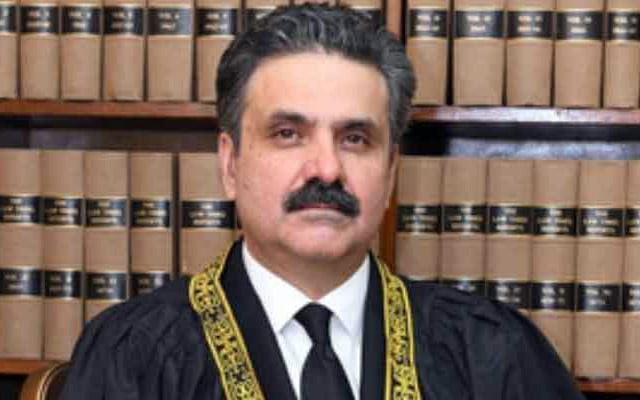
Justice Yahya Afridi. PHOTO: FILE
ISLAMABAD:
The Supreme Court of Pakistan has processed more cases than it received in the last three months, reflecting better case management and a slight reduction in the backlog, according to an official statement issued after the 10th progress meeting on judicial reforms, chaired by Chief Justice of Pakistan Yahya Afridi.
During the period, 3,600 new cases were filed, while 5,383 were decided, reducing the number of pending cases to 34,083. The meeting reviewed monthly performance, efforts to modernize judicial processes and measures to improve efficiency.
Read: CJP reviews progress of judicial reform program
CJP Afridi appreciated the improvement in clearance rate and ordered further measures to strengthen case management. The meeting also decided that all pending death penalty appeals would be heard within the next 30 days, and that cases filed through 2018 would be prioritized to ease the burden on older litigation.
However, lawyers noted that the pace of adjudication of cases in the Supreme Court and the Federal Constitutional Court remained largely unchanged after the 27th Amendment. Before the establishment of the Constitutional Court, the Supreme Court had 56,608 pending cases, of which 22,910 were transferred, leaving 33,698 before the Supreme Court. Despite this redistribution, more than 56,000 cases remain pending in the two courts.
Learn more: Lawyers question impact of 27th Amendment
Legal experts acknowledged some improvement in the handling of criminal cases over the past two years, but expressed concerns about the effectiveness of the Constitutional Court in reducing the overall backlog.
Former Additional Attorney General Tariq Mahmood Khokhar criticized the court, saying that despite having seven judges, it had failed to significantly reduce the backlog, pointing out that significant public funds were being spent without tangible help for litigants. Lawyer Hafiz Ehsan Ahmed also called for increasing the number of judges to improve judicial efficiency.


