
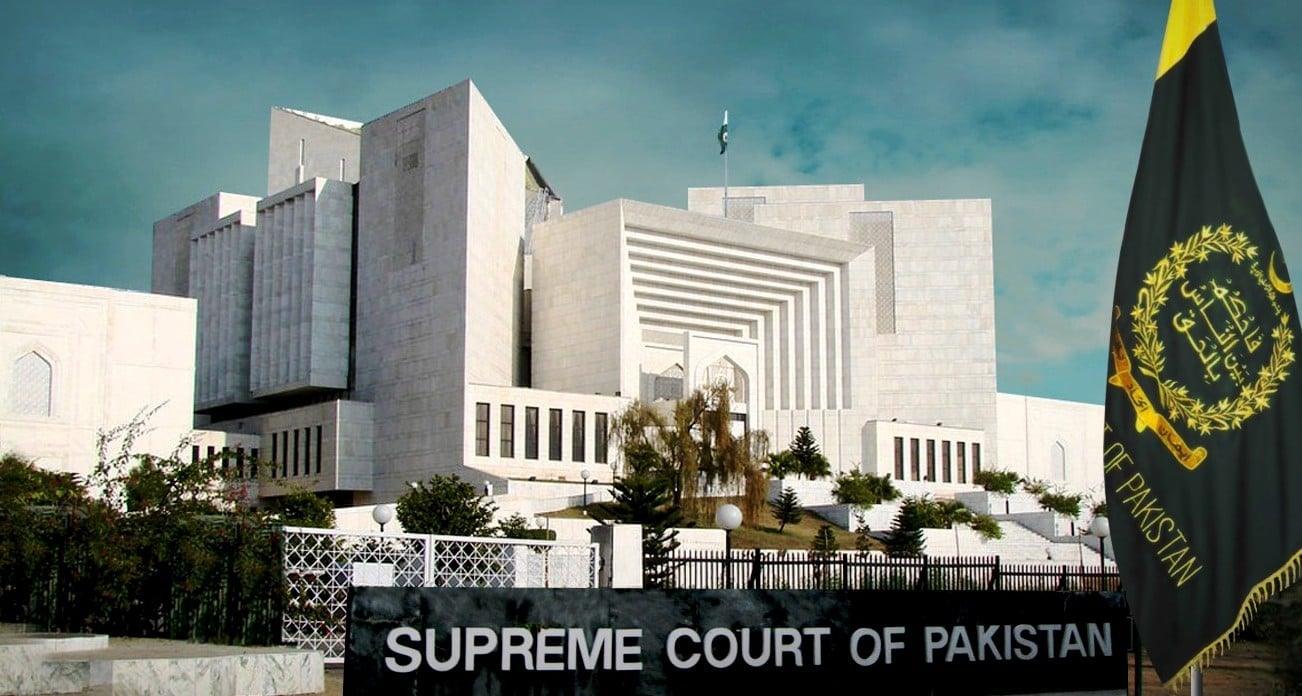
A constitutional bench of the Supreme Court resumed the hearing on Monday a set of pleadings against the decision of the Supreme Court which had declared Pakistan Tehreek-E-insaf eligible for the reserved seats, procedure live for the first time, since the adoption of the 26th constitutional amendment.
In the short -term order dated July 12, 2024, eight of the 13 judges concluded that 39 of the 80 MNA were candidates for the National Assembly.
Judge of the Supreme Court, Jamal Khan Mandokhail, said that the presidents and the return officers had not exercised their functions in accordance with the law and the constitution during the general elections of February 2024.
If the Supreme Court closed his eyes, he asked Makhoom Ali Khan, who disputed the order of July 12 in the name of certain women.
A bench of 11 members of the Supreme Court led by Judge Amicin Khan hears examination petitions against the July 12 ordinance in which it was judged that PTI has the right to obtain reserved seats. However, the SC Order has not yet implemented.
Judges Ayesha in Malik and Aqeel Ahmed Abbasi had rejected the examination petitions on the first day of the hearings.
The other 10 members of the bench are the Jamal Khan Mandokhail judges, Muhammad Ali Mazhar, Syed Hasan Azhar Rizvi, Musarrat Hilali, Naeem Akhter Afghan, Shahid Bilal Hassan, Muhammad Hashim Khan Kakar, Salahuddin Panhwar, Aamer Farooq and Ali Barsar.
Interestingly, six judges, including the author of the majority decision, are not part of this wider bench.
Judge Shahid Bilal and Judge Mussarat Hilali wondered how the reserved seats had been given to PTI when they had not left – neither before the Pakistan Electoral Commission nor the High Court of Peshwar.
Judge Amicin Khan said that it was a fact that all of PTI candidates have joined the Sunni Council of Ittehaad, who did not dispute the general elections.
The main lawyer Makhoom Ali Khan appeared on behalf of the women’s women PML-N and PPP affected by the decision of July 2024.
Judge Mandokhail said all the judges were unanimous that the reserved seats could not be allocated to the SIC because it did not contain the general elections.
“How can independent legislators join a political party that is not in Parliament?” Has the sic challenged the elections? ” Judge Malik wondered.
In response, the PPP lawyer said that the party had not participated in the elections, and even its president, Sahibzada Hamid Raza, had presented himself as an independent candidate.
Judge Mandokhail then pointed out: “The SIC is not qualified for the reserved seats. Although the Sunni Council of Ittehad could have formed a parliamentary party, it is not entitled to reserved seats. ”
Makhom also said that once reserved seats had been allocated to certain people by ECP, it could not be called in question through the jurisdiction of quo Warranto.
Makhom said that electoral disputes could be challenged under article 225 of the Constitution.
He also questioned the majority decision to exercise his competence under article 187 to allocate seats to PTI. He declared that SC had limited competence under article 185 of the Constitution.
Makhoom finished his arguments. Surprisingly, the advice of PMLN and ECP adopted its arguments.
The hearing of the case is postponed until tomorrow, when the adviser of the SIC Faisal Siddiqi will start his arguments
In its detailed verdict on the case of reserved seats, written by judge Mansoor Ali Shah, the Supreme Court criticized the ECP for its “illegal acts and omissions”, which caused prejudices to the PTI and its supporters. The court also accused the ECP of not having acted as an impartial election steward.
On September 14, 2024, the day the government did not present the 26th amendment to Parliament, the Supreme Court published a clarification, criticizing the ECP for not having applied its decision of July 12 on the case of reserved seats.
Subsequently, on October 18, judge Shah specified once again that the modification of the law of 2017 on elections, made in August, could not cancel the verdict in the case of the reserved seats.
The “Elections Act (second amendment), 2024” was considered an attempt to circumvent the SC decision by prohibiting independent legislators from joining a political party after a certain period.
A bench of six judges will hear the petition of PTI contesting these amendments in December 2024, while a distinct little plea against the decision of January 13, 2024 on its electoral symbol is also pending.


