
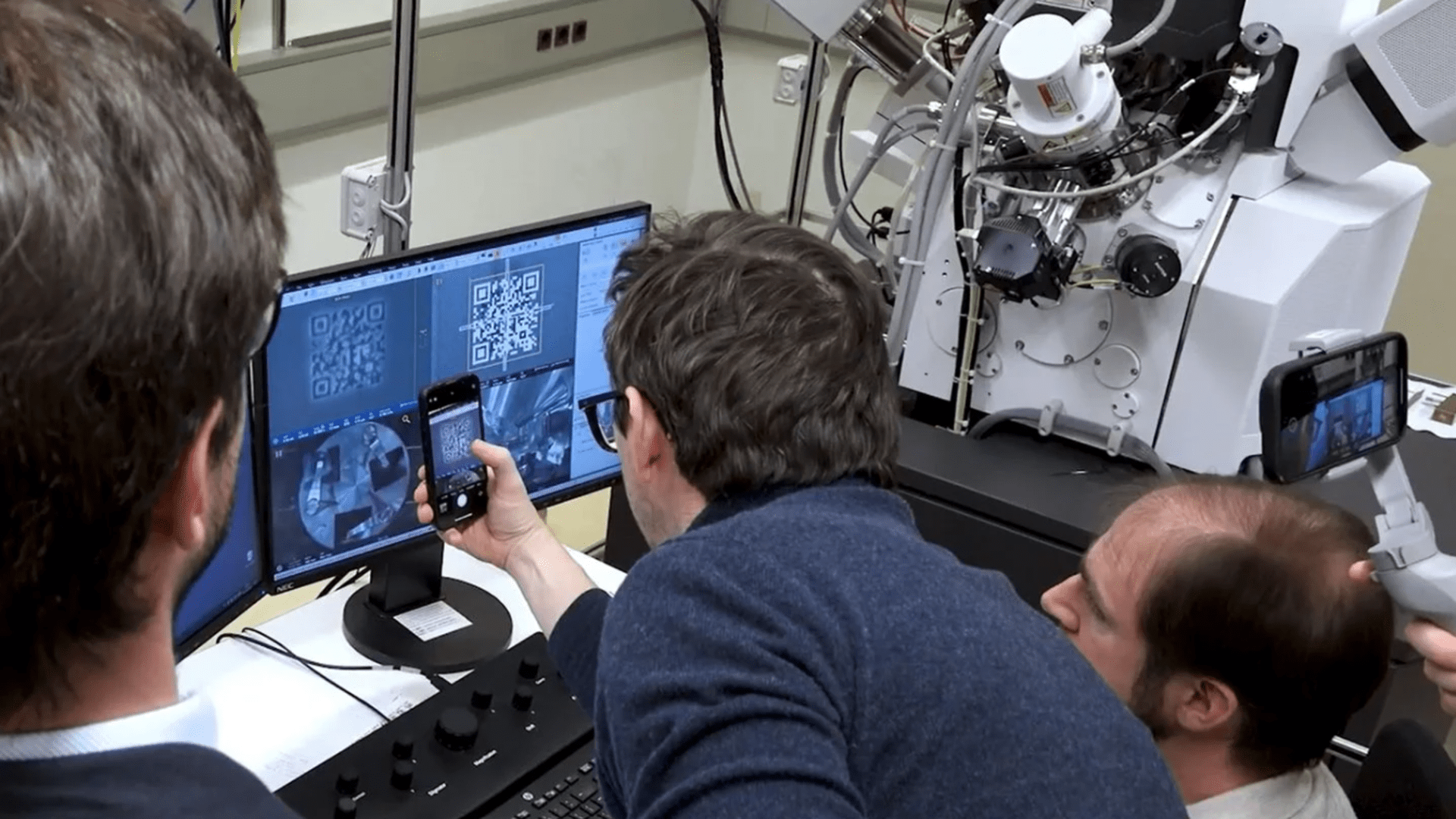
- QR codes with 49-nanometer pixels can efficiently store massive data
- Electron microscopes needed to read these smallest QR codes ever
- A single layer of A4 ceramic could theoretically hold over 2TB
The promise of storage that lasts indefinitely and consumes no power seems almost implausible in a world where data centers constantly require power and cooling.
That’s the claim now attached to a recently verified Guinness World Record, achieved by TU Wien and Cerabyte, for creating and reading the smallest QR code ever produced.
At its core, the development is less about what’s new and more about whether ceramic media can fundamentally change the way information is preserved.
Smaller than bacteria, bigger than storage limits
The record involves QR code pixels measuring just 49 nanometers, producing structures with a total area of 1.98 square micrometers.
These codes are smaller than bacteria, cannot be read with conventional optical tools and are 37% smaller than the previous smallest QR code.
An electron microscope is needed to recover the encoded information, underscoring how far this technology is from everyday scanning applications.
Using this microscopic approach to the QR code, a single A4-sized ceramic film could theoretically store more than 2TB of data on a single layer – a density that would put it well beyond many traditional archival media in terms of space efficiency.
The researchers turn the data into a thin ceramic layer that they say can remain stable without energy input or environmental control.
Unlike traditional hard drives or flash memory, which degrade over time and require managed conditions, ceramic storage is described as resistant to aging.
Comparisons have even been made to ancient stone tablets, suggesting that information engraved in durable materials can survive modern digital systems.
However, lab validation does not automatically equate to industrial readiness, and the teams behind the record are now focusing on scalable write speeds and manufacturing processes.
Work is also underway to move beyond simple QR code structures to more complex data architectures.
These steps will determine whether this remains a technical step or whether it evolves into a practical storage platform.
Working with Western Digital as an investor, Cerabyte reported progress in storage density and longevity in 2025, signaling commercial interest, although the broader implications of this latest record for earlier claims remain unclear.
The question is not simply how big the codes are, but whether that scale can translate into reliable, repeatable production.
Shrinking pixels to 49 nanometers might strike a fine balance between size and stability, but translating that balance into affordable production presents another challenge.
Whether this marks a new era for storage depends less on the brief itself and more on the execution – as if sustainability, density and energy independence could be delivered at scale, the impact could be considerable.
In the meantime, this achievement constitutes a technical advance with ambitious promises that still await practical proof.
Via Tom’s material
Follow TechRadar on Google News And add us as your favorite source to get our news, reviews and expert opinions in your feeds. Make sure to click the Follow button!
And of course you can too follow TechRadar on TikTok for news, reviews, unboxings in video form and receive regular updates from us on WhatsApp Also.


