
Islamabad:
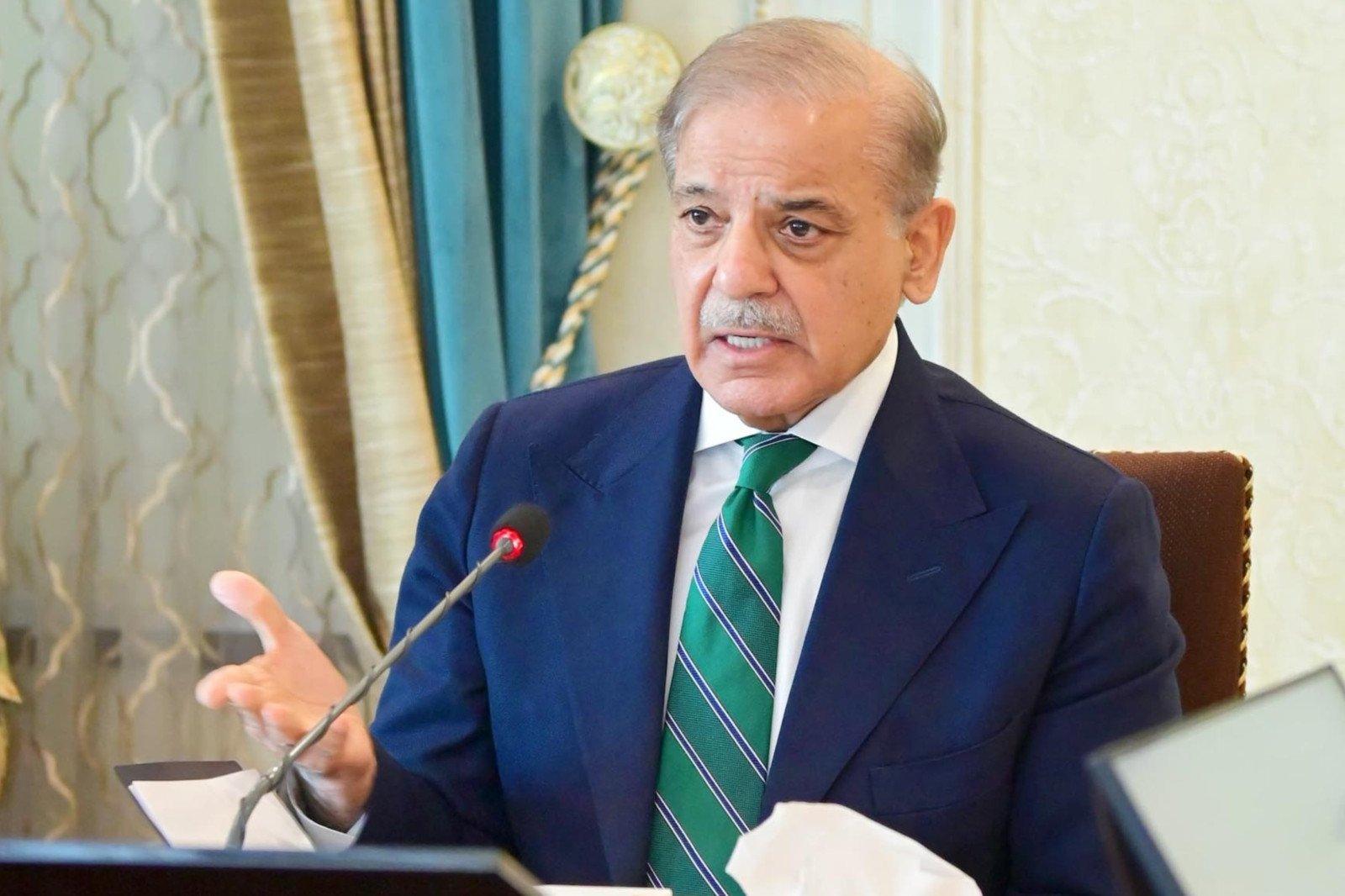
Prime Minister Shehbaz Sharif was a high -level political committee to supervise the implementation of the national tax pact. The Committee will also strive to create a consensus on the sharing of the debt burden between the federation and the provinces, and coordinate the development of a critical water infrastructure in the middle of the Indian aggression.
Vice-Prime Minister Ishaq Dar of Pakistan Muslim League-Nawaz (PML-N) and the Pakistan Peoples Party President (PPP), Bilawal Bhutto Zardari, will be the co-chairs of the eight-members committee, according to the instructions published by the Prime Minister’s office.
According to the decision made after a meeting between the PML-N and the PPP in Lahore on Sunday, the other members include ministers for the defense; planning; finance; Economic affairs and law, as well as the Attorney General of Pakistan (AGP).
In particular, the government has not included any opposition representative Pakistan Tehreek-e-insaf (PTI), which governs Khyber-Pakhtunkhwa (KP). Without the involvement of PTI, the achievement of a consensus on the national tax pact and the achievement of the budgetary objectives agreed with the International Monetary Fund (IMF) can be difficult.
The tax pact had been signed by the finance ministers of the federal and provincial governments in September 2024 as the Condition of the IMF. But the implementation remains slow because the provinces, in particular the Sindh, have concerns about taking expenditure responsibilities.
The tax pact aims to rebalance the responsibilities of expenses and better align provincial and federal tax policies. The provinces have agreed to the devolution of specific expenditure of federal governments in accordance with the 18th constitutional amendment, but the implementation could not begin.
“From exercise 2026, all new PSDPs [Public Sector Development Programme] The projects impacting a single province should be funded directly from provincial budgets “reads the new IMF staff level report on Saturday.
“The Prime Minister had the pleasure of constituting the high level committee to supervise, coordinate and ensure the effective implementation of the national tax pact,” said the instructions issued by the Prime Minister’s office.
The finance division will inform the committee and serve as a secretariat, according to the decision. The Committee will share the proposals requiring consideration in the federal and provincial budget within 10 days.
One of the most important reference conditions of the Committee is to constitute a consensus and a way to follow on the questions and challenges of national importance, in particular, the burden of debt, the development of critical infrastructures and water safety.
The cost of debt service should be 8.7 rumber’s billions or half of the new budget for the financial year. There was a reflection in the federal government to transmit part of this cost to the provinces. However, under the Constitution, the provinces are not obliged to share these responsibilities.
Pakistan must also build new war storage installations in war to cope with the illegal act of India to block the Pakistani share of water within the framework of the Industry Basin Treaty (IWT) guaranteed by the World Bank.
According to the Prime Minister’s office, the high -level committee will provide strategic surveillance and orientation to ensure effective and timely implementation of all commitments within the framework of the national tax pact by federal and provincial governments.
The Committee will monitor the implementation of income measures, in particular the alignment of agricultural income tax with the FBR income tax regime, the transition of TPS services to a negative list, the development of a common framework for land tax and efforts to improve compliance and global tax administration.
Although provincial governments have adopted the respective laws of agriculture tax, their implementation remains difficult. As a result, the IMF has imposed a new condition as part of the $ 7 billion package for the development of a delivery mechanism.
“Implement the new laws has via a full plan, in particular the creation of an operational platform for the processing of yields, the identification and registration of taxpayers, a communication campaign and a compliance improvement plan,” said the second on 11 new conditions.
The Prime Minister’s office said that the high -level committee will oversee the implementation of expenses, including provincial contributions increased to higher education and social protection, the Benazir income support program (BISP), the realignment of the PSDP responsibilities and the elimination of provincial support price schemes.
The Committee will also follow progress on governance measures such as the deployment of the electronic acquisition and elimination system of Pakistan (E-PADS), the adoption of the green budgetary marking, the digitization of payments and government files, and coordination on money laundering and the fight against terrorist financing with relevant agencies.
The IMF report said that Pakistan Public provides Regulatory Authority (PPRA) extends E-PADs to federal agencies and provincial governments. At the end of the end of the end of 2025, a total of 623 purchasing agencies, belonging to 51 ministries and federal departments are already integrated into the system.
In accordance with national tax pacts, two provinces continue to develop their use of E-PADs; Another province already piloting their use in 2025 and the fourth province by examining their current integration system with E-PADs, the IMF said.
Until now, out of the 32,59 planned purchase contracts worth 821.1 billion rupees at the federal level in E-PADS, 21,339 contracts costing 74.5 billion rupees have been completed.
The high-level committee will also serve as a platform to resolve the challenges of implementation and facilitate consensus between the federal and provincial governments and the stakeholders concerned, according to the decision.
The IMF report said that it “recommended that the authorities were to develop a framework to guide provincial investment in their cash surpluses accumulated in government securities through non -competitive calls for tenders”.


