
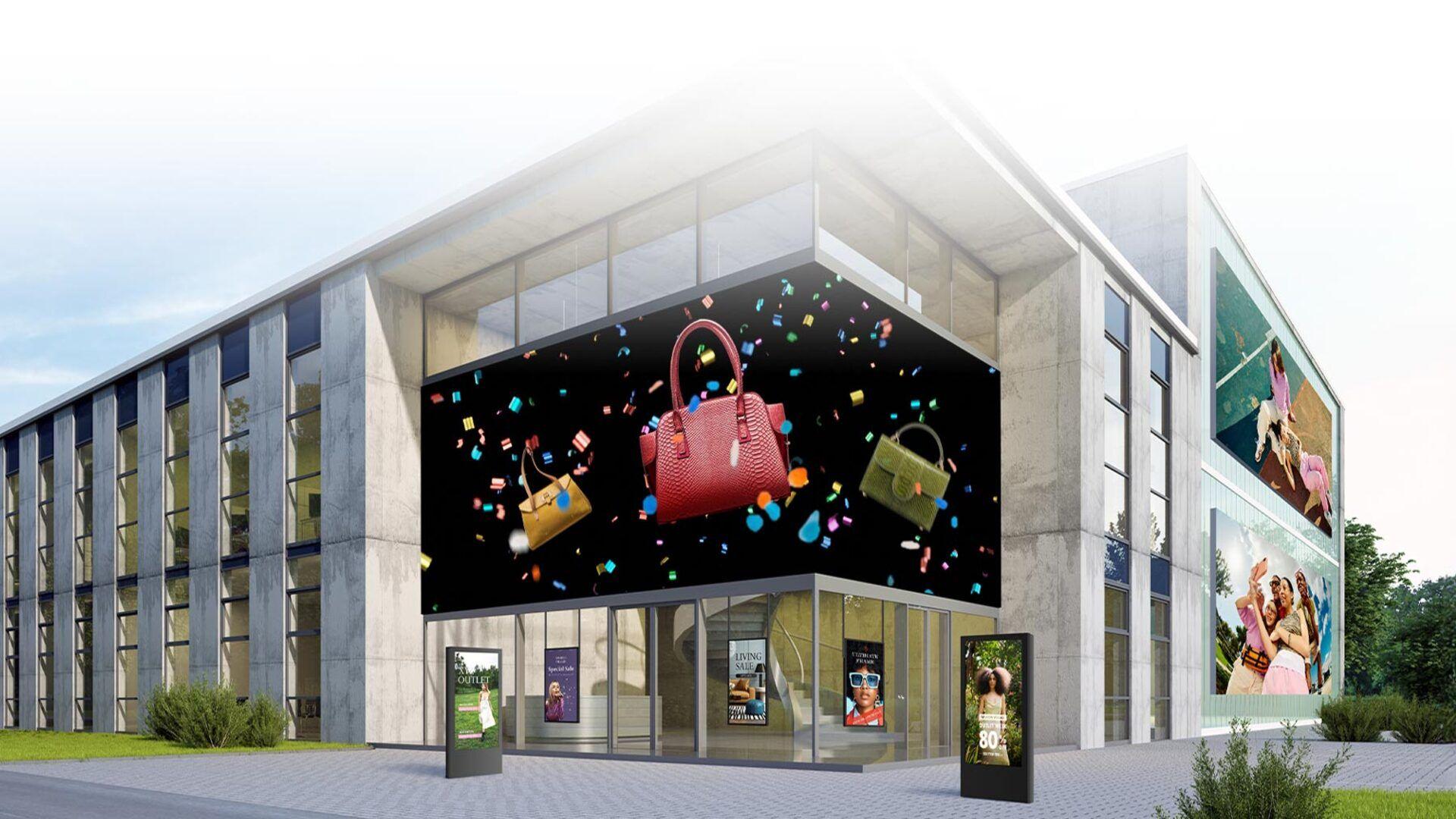
- Shopping centers are moving from static signage to centrally managed digital display networks
- LG offers a unified system to manage displays, content and performance data
- Micro LED signage is designed to fit large commercial environments
Large shopping centers are increasingly relying on corporate display systems rather than standalone screens, and LG’s 1,184 square meter ISE 2026 booth reflects this shift.
At the show, LG demonstrated how commercial monitors combine with management software and automation tools in retail, hospitality, education and operational environments.
Although the exhibition is business-oriented, many schemes target public spaces such as shopping malls, supermarkets and branded stores.
Software platforms behind physical screens
LG Electronics introduced a range of display services and software for businesses, aiming to standardize the way displays, content and analytics are deployed at scale.
One of the central themes was LG Business Cloud, which connects signage hardware with remote monitoring, content control and data collection.
Retail scenarios presented at ISE include centralized management of signage across multiple locations, energy monitoring and predictive alerts for hardware issues.
LG demonstrated these tools in simulated retail stores that look like real stores, rather than technical control panels or complex software interfaces displayed on screens.
The company also announced new hardware, including the LG MAGNIT Micro LED signage system and the LG E-Paper display.
The LG MAGNIT uses modular Micro LED cabinets that assemble at different scales, focusing on color consistency, dark scene accuracy, and fault isolation using Line to Dot control technology.
The E-Paper display takes a different approach, relying on electrically charged particles to maintain static images without continuous energy input.
It comes in a slim form factor and measures 17.8mm at its thickest point and tapers to 8.6mm.
LG suggests this device will be suitable for shelf labels, promotional signage and information boards where access to power is limited.
The company has also collaborated with consumer brands to demonstrate how the displays work in themed commercial environments, including an entrance featuring a 4.2 x 5.6m LED tower and suspended transparent trellis, T-Mesh and LED elements that convey aspects of Korean heritage using modern display technology.
Transparent OLED panels, kiosks and digital shelves work alongside sound synchronization and smartphone interaction systems.
“We are redefining commercial spaces with integrated ecosystems that go beyond hardware,” said Park Hyoung-sei, president of LG Media Entertainment Solution Company.
“By continuing to strengthen our software solutions and technology, we are well positioned to maintain our leadership in the global commercial display market, enabling us to deliver tailored value that drives customer business growth.” »
For shopping centers, the technologies on display suggest a future with fewer static displays and more networked displays that update remotely and enable continuous measurement.
However, the practical benefits will depend on long-term reliability, operating costs and the degree of control retailers are willing to entrust to centralized platforms.
Follow TechRadar on Google News And add us as your favorite source to get our news, reviews and expert opinions in your feeds. Make sure to click the Follow button!
And of course you can too follow TechRadar on TikTok for news, reviews, unboxings in video form and receive regular updates from us on WhatsApp Also.


