
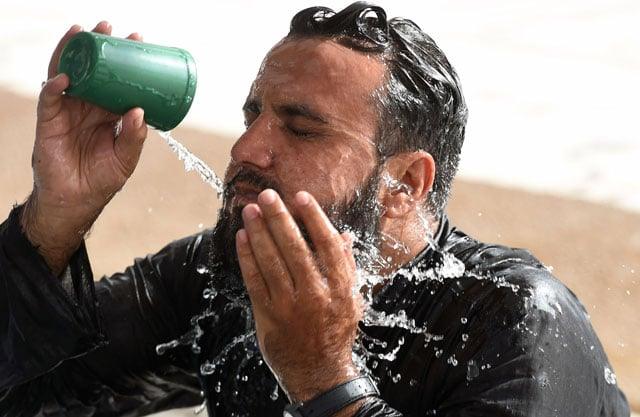
The Pakistan Meteorological Department (PMD) has published an alert of heat waves, providing unusually high temperatures in a large part of the Sindh province until April 18.
Under current conditions, maximum daytime temperatures in districts such as Dadu, Shaheed Benazirabad, Jacobabad, Larkana and Sukkur should remain 6 to 8 ° C above normal, said Express News.
Similarly, in the districts of Badin, Tharparkar, Umerkot and Hyderabad, temperatures can exceed normal beaches from 4 to 6 ° C, according to the ministry.
The PMD also predicted occasional winds in mind in the districts of Karachi, Thsta, Sujawal, Badin, Tharparkar, Umerkot, Sanghar, Hyderabad and Jamshoro during this period.
Given the heat wave in force, residents – especially children, the elderly and women – were invited to take precautions.
The public is invited to avoid direct exposure to the sun during rush hour and to remain hydrated.
Karachi weather prospects for the next 3 days
Karachi humidity levels should increase, intensifying the perceived temperature. Relative humidity can vary between 70% and 80% in the morning and between 50% and 60% in the evening.
Over the next three days, the weather should sometimes remain hot and humid with hot winds. Maximum temperatures in Karachi could vary between 35 ° C and 37 ° C.
In light of extreme weather conditions, experts recommend breathable and light -colored tissue such as cotton and linen as the most suitable clothing to help manage thermal stress.
For men, loose cotton shirts in pale colors such as white, beige and pastels are suggested to reflect sunlight and improve air circulation.
Polos associated with linen pants or light chinos are recommended for those looking for both comfort and a more polite look. Heavier tissues such as denim must be avoided because they trap heat and reduce ventilation.
Women have been advised to continue wearing a traditional lawn fabric – a light cotton material widely used in summer clothes in Pakistan.
Fluid dresses, palazzo pants and high -managed highs made from natural fibers offer necessary ventilation while maintaining cultural modesty.
Accessories such as cotton scarves and muslin dupattas offer additional protection against direct sunlight without adding heat.
Children, who are particularly vulnerable to heat -related diseases, need particular consideration. Experts recommend soft and breathable cotton clothing with tight weaving to help block harmful UV rays.
Long -sleeved shirts and loose pants offer better sun protection than short clothes, and wide -edge hats are encouraged to protect the head, face and ears.
During hot nights, children can benefit from the wearing of minimum clothes, such as layer or light pajamas, with a thin leaf of cotton in place of heavy bedding.


