Andong: Forest fires rage in South Korea have doubled in size Thursday compared to a day earlier, while the authorities called the flames of the worst natural fire disaster with at least 28 people killed and incinerated historical temples.
More than 38,000 hectares (93,900 acres) were charred or still burned in the largest fires that started in the central county of Uiseong, which makes it the largest unique forest fire in the history of South Korea. The previous record was 24,000 hectares (59,000 acres) in a fire in March 2000.
“We are nationally in a critical situation with many victims due to the unprecedented rapid propagation of forest fires,” said acting president Han Duck-Soof, during a government intervention meeting.
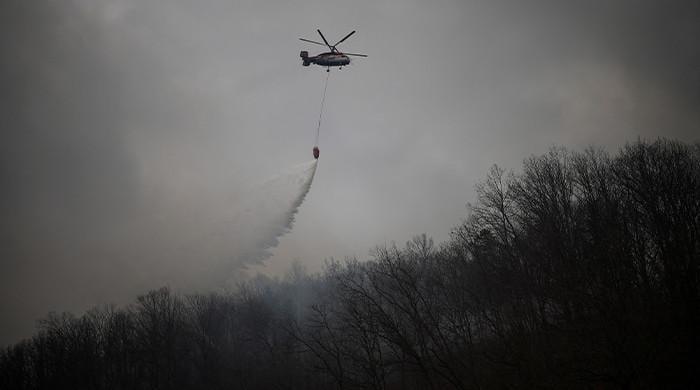
The soldiers released stocks of aviation fuel to help maintain the fire-fighting helicopters flying towards flames watered in the mountainous regions of the south-east of the country where fires have been burn for almost a week.
More than 120 helicopters were deployed in three regions fighting against the flames, the Ministry of Security said. South Korea is based on helicopters to fight forest fires due to its mountainous land. A helicopter pilot died Wednesday after rushing while he was trying to tackle a fire.
Forest fires from Uiseong quickly move east, spread almost on the coast, carried by burst winds and with dry conditions aggravating the situation.
The Uiseong fire began to spread quickly on Wednesday, reaching the coastal county of Yeongdeok at around 50 km (30 miles) in just 12 hours, said Myung-Soo, director of satellite images analysis for the National Forestry Service.
Thursday evening, it was briefly raining in certain parts of the affected region. The precipitation of about a millimeter was too little to extinguish the main fire, but will help contain it, officials said.
Friday, the same amount of rain is expected for certain areas.
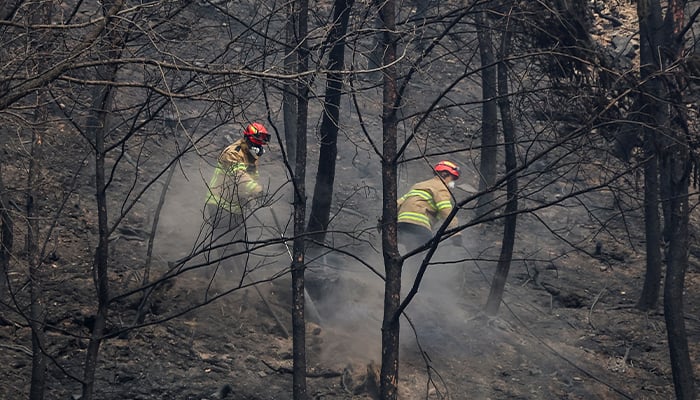
Experts have said that the Uiseong fire has shown extremely unusual spread in terms of scale and speed, and that climate change should make forest fires more frequent and fatal on a global scale.
Higher temperatures amplified by climate change caused by humans have contributed to the existing conditions of the season, “transforming dry landscapes into dangerous fuel” in the region, the central climate group, an independent body made up of scientists and researchers, in a report.
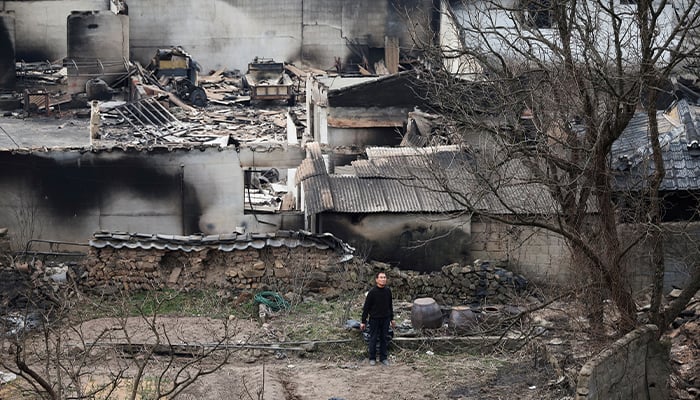
Forest fires have cut a trace of devastation through an area equivalent to about half of Singapore, ravaging everything on their way, including historical temples and houses in the mountain forest of the northern province of Gyeongsang.
Fire teams are pending to protect UNESCO World Heritage sites from the village of Hahoe and Byeongsan Confucian Academy in the city of Andong, if a fire jumps the stream flowing around them.
The picturesque popular village has traditional Korean houses, many with thatched roofs, while the Confucian academy dates back over 450 years.
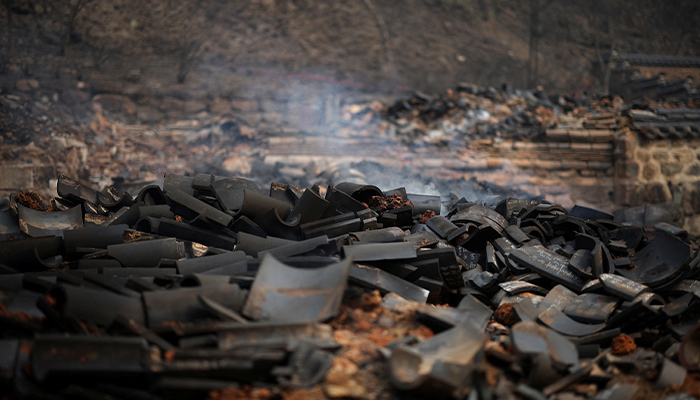
The fires have already seriously damaged other historic sites, including a large part of the Gounsa temple in Uiseong, which was built in 681.
“The buildings and the remains of what the Buddhist monks have left more than 1,300 years have now all left,” said Deungwoon, the chief of the Gounsa temple.