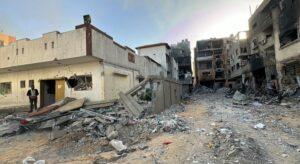
The teaching hospital in Al Deain, the capital of East Darfur, was struck on Friday evening, a new low point in the brutal conflict between the Sudan Armed Forces (SAF) and the paramilitary Rapid Support Forces (RSF) which erupted in April 2023.
According to the World Health Organization (WHO), the number of people killed rose to 70, including seven women and 13 children, following the research.
Health workers – a doctor and two nurses – were also among the victims, while the injured numbered 146 people, including patients and their accompanying family members.
Health care, a frequent target
Since the start of the conflict, the total number of deaths linked to attacks on health facilities has exceeded 2,000 according to the WHO.
“An attack on a hospital is not just an attack on a building, it is an attack on people who need care, on health workers who risk their lives to save others, and on the very possibility of survival in times of crisis,” said WHO Deputy Representative in Sudan, Dr Hala Khudari.
“Sudan is approaching its third year of armed conflict, but attacks on health care continue,” she lamented, stressing that health facilities, ambulances, health workers and patients have been “repeatedly targeted.”
The attack on the university hospital effectively closed it and patients “may have to travel more than 160 kilometers to reach the next referral hospital, which is very difficult for patients requiring specialized services”, the head of the UN health agency said.
She noted that Al Deain served as a referral hospital for more than two million people in the city as well as nine other localities in East Darfur State.
Hunt for criminals
When asked who was responsible for the Al Deain attack, UN Office of the High Commissioner for Human Rights (OHCHR) spokesperson Marta Hurtado said that although the perpetrators have not been identified, both sides in the conflict are using drones extensively.
“Our call is for both sides to immediately stop using these types of weapons,” she said.
Ms Hurtado warned of an increase in the use of drones to carry out airstrikes this year in Sudan, which “underscores the devastating impact of high-tech and relatively cheap weapons in populated areas”.
More than 500 civilians were killed in the strikes between January 1 and March 15, she said, the vast majority in three states in the Kordofan region.
Deadly attacks continued last week, culminating in the Al Deain attack at the end of the month of Ramadan, on the occasion of Eid Al-Fitr.
Strike in Chad condemned
The spokesperson for the UN human rights office also said that “drone attacks are increasing across Sudan.”[’s] borders, with a serious risk of further escalation, with regional consequences.”
She spoke of deadly drone strikes last week on the town of At Tina near the Sudan-Chad border and in the border town of Tine in Chad, “after previous ground attacks by the RSF”.
“The persistence of such attacks hitting civilians and destroying civilian infrastructure raises serious concerns about respect for international humanitarian law, the fundamental principles of distinction, proportionality and precaution, and may constitute war crimes,” concluded Ms. Hurtado, calling for an end to “arms transfers that fuel the conflict.”