
Pakistan says terrorism from Afghanistan poses major challenge to region
ISLAMABAD:
Senior officials from Afghanistan’s immediate neighbors, as well as Russia, met in Tehran on Sunday to discuss the current situation in Afghanistan.
However, according to diplomatic sources, the high-level meeting ended without a joint statement, highlighting continued divisions over the Taliban regime’s approach and regional security.
Hosted by Iran, the meeting of special representatives from Afghanistan’s neighbors and Russia was attended by envoys from Pakistan, China, Russia, Tajikistan, Uzbekistan and Turkmenistan.
The Taliban regime, however, declined the invitation, further complicating efforts to coordinate a unified regional strategy.
Although the discussions reportedly concluded with consensus on one point that terrorism emanating from Afghan soil remains a significant threat to the region, participants were unable to reconcile their positions on other issues, preventing the issuance of a joint statement.
Iranian Foreign Minister Abbas Araghchi opened the meeting with a keynote speech, emphasizing the strategic importance of Afghanistan’s stability for regional security.
“The security of Afghanistan is directly linked to the interests of all neighboring countries,” he said. Araghchi stressed that regular dialogue mechanisms among Afghanistan’s neighbors are essential to avoid misunderstandings, coordinate policies and promote economic, border and humanitarian cooperation.
“No extra-regional plan can resolve regional problems and crises,” he added, warning against relying on external actors to bring stability.
Araghchi also highlighted Afghanistan’s economic potential, noting that improved conditions could enable the country to serve as a vital corridor connecting Central and South Asia, as well as West Asia and the Asia-Pacific, facilitating trade and energy transit.
Before the Tehran meeting, Iran facilitated talks between Afghan anti-Taliban political groups, which resulted in the declaration of “National Solidarity of Afghan Political Parties and Movements.”
Political factions have called for a resolution of the Afghan crisis through dialogue, signaling the limits of the Taliban’s engagement in multilateral diplomacy.
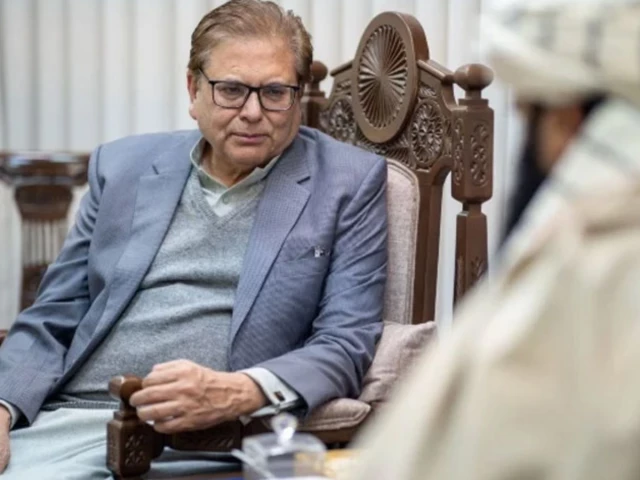
Pakistan, represented by its Special Representative for Afghanistan, Ambassador Muhammad Sadiq, made its position clear during the meeting.
In his statement, Sadiq stressed that terrorism from Afghanistan continues to pose a “great challenge for the region.”
He stressed that the Afghan people have already endured enough hardship and that the de facto Taliban authorities must take concrete steps to improve the situation.
“The first step in this regard would be to indiscriminately rid Afghan soil of all types of terrorists,” Sadiq said.
He added that only an Afghanistan free of terrorist networks could inspire confidence in neighbors and enable meaningful engagement, helping the country realize its “immense economic and connectivity potential.”
The Pakistani delegation also highlighted Islamabad’s security concerns and its desire to promote peace, development and stability in the region.
Ambassador Sadiq and Pakistan’s Ambassador to Kabul, Obaid Nizamani, participated in the discussions, reaffirming Islamabad’s commitment to regional cooperation despite strained ties with the Taliban.
“The Afghan people deserve better,” Sadiq said, emphasizing that any meaningful engagement with Kabul depends on the Taliban’s willingness to take decisive action against terrorist groups operating on its territory.
Pakistan’s position reflects both its immediate security interests and its broader regional ambitions for a stable and connected Afghanistan.
Iranian officials also held bilateral talks with Pakistani representatives. During a courtesy visit, Ambassador Sadiq met with Foreign Minister Araghchi, who reaffirmed Iran’s commitment to deepening ties with Islamabad.
The talks reportedly reflected growing coordination between the two countries, particularly regarding Afghanistan, as well as a mutual interest in trade expansion, energy cooperation and regional stability.
Although the meeting allowed for frank dialogue, the lack of a joint statement underscores continuing differences between Afghanistan’s neighbors over the Taliban and the broader approach to the Afghan crisis.
Observers noted that the Taliban’s refusal to participate complicated the search for consensus and limited the immediate diplomatic impact of the meeting.
Analysts suggest that Pakistan’s focus on combating terrorism reflects Islamabad’s ongoing security concerns, particularly cross-border attacks and militant networks using Afghan territory as a safe haven.
Meanwhile, China, Russia and Central Asian neighbors would focus on broader regional stability and economic integration, highlighting different priorities among stakeholders.
Iran’s role as host underscores Tehran’s desire to position itself as a mediator in Afghan affairs, even if the lack of a common outcome demonstrates the limits of such regional initiatives when key players, particularly the Taliban, are unwilling or unable to engage.
Despite the absence of an official communiqué, the Tehran meeting showed the desire of regional actors to maintain dialogue, exchange points of view and coordinate on security and development issues. Pakistan’s strong message on terrorism and the need to hold the Taliban accountable will likely remain at the heart of future regional discussions.


