
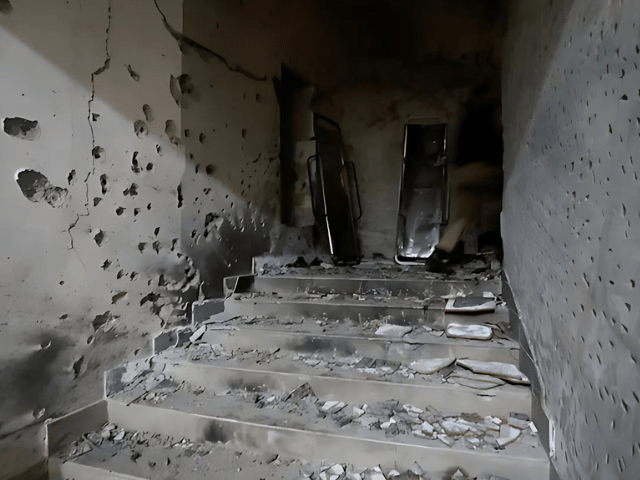
Pakistan was classified as the second most affected country in the World Terrorism Index (GTI) 2025, Pakistan Tehreek-E-Taliban (TTP) emerging as the fastest growth terrorist organization in the world, with a 90% increase in deaths related to its attacks.
Pakistan recorded its greatest increase in annual shift in terrorism -related deaths in a decade, deaths being up 45% and attacks more than doubled from 517 in 2023 to 1,099 in 2024, which exceeded 1000 for the first time since the creation of the index.
The World Terrorism Index (GTI) 2025 class 163 countries, covering 99.7% of the world’s population, based on terrorist incidents, deaths, injuries and hostage situations.
The number of countries affected by terrorism increased from 58 to 66, reversing almost a decade of improvements, 45 nations deteriorating. The four deadliest terrorist groups – Daesh, Boko Haram, Al -Shabaab and TTP – have an 11% increase in deaths. In the West, solitary wolf attacks now dominate, representing 93% of fatal incidents in the past five years.
The GTI report highlights the growing influence of TTP, in particular in Pakistan and Afghanistan, with 558 deaths assigned to the group in 2024 only.
Founded in 2007, TTP is a coalition of militant factions engaged in an insurrection against the Pakistani government, pleading for strict Sharia law and the withdrawal of the military forces of the tribal areas. With long-standing links with Al-Qaeda, the group has intensified attacks on security forces, civilians and government facilities. Experts warn that the Taliban’s control in Afghanistan provided TTP a safe refuge, allowing it to extend its operations through the Pak-Afghan border.
The group has intensified attacks on the Pakistani security forces, civilians and government facilities, while targeting the border region of Pak-Afghan.
Experts warn that the resurgence of TTP has been activated by the control of the Taliban in Afghanistan, allowing the group to use Afghan territory as a safe refuge to plan and launch attacks.
Trends of terrorism: global increase in attacks
The GTI 2025 reveals that the number of countries affected by terrorism has increased from 58 to 66 years in the past year, reversing almost a decline. The main conclusions include:
- The Sahel region remains the world epicenter of terrorism, Burkina Faso recording the greatest number of deaths in the world.
- Daesh remains the deadliest terrorist organization, responsible for 1,805 deaths in 22 countries.
- Terrorist attacks in Western countries increased by 63%, solitary wolf attacks representing 93% of all deaths.
- Iran has seen an increase in death -related deaths, mainly due to attacks by the province of Daesh Khorasan (ISK).
Western countries are faced with growing safety challenges
While terrorism remains strongly concentrated in conflict areas, the West has increased by attacks by radicalized individuals. Countries like Germany, Sweden and Australia have recorded their first major terrorist incidents over the years.
A notable trend is the growing participation of minors in terrorist activities. In the United Kingdom, those under 18 represented 42% of terrorism arrests last year, reflecting a broader change towards online radicalization via social media, encrypted messaging applications and game platforms.
Regional instability fuels extremism
The Middle East and North Africa region (MENA) has recorded a 7% decrease in terrorist attacks, but climbing tensions in Gaza and Syria continues to stimulate instability. The Israeli war against Palestine was linked to an increase in anti-Semitic and Islamophobic incidents in the West, hatred crimes increasingly increasing in the United States and Europe.
In South Asia, Pakistan and Afghanistan remain major hot spots for terrorism. Taliban governance in Afghanistan has embarked on TTP and ISK, the two groups increasing their attacks in the region.
A changing terrorist landscape
The GTI 2025 highlights the evolutionary nature of terrorism, with groups quickly adapting to new technologies, using propaganda improved by AI, encrypted communications and cryptocurrency for funding. The rise in solitary wolf attacks in the West and the resurgence of extremist groups in conflict areas pose current security challenges for world decision -makers.
While TTP expands its operations, its growing influence in Pakistan and Afghanistan remains a key concern for regional stability, raising urgent issues about the way governments will react to the evolution of the landscape of threats.


