
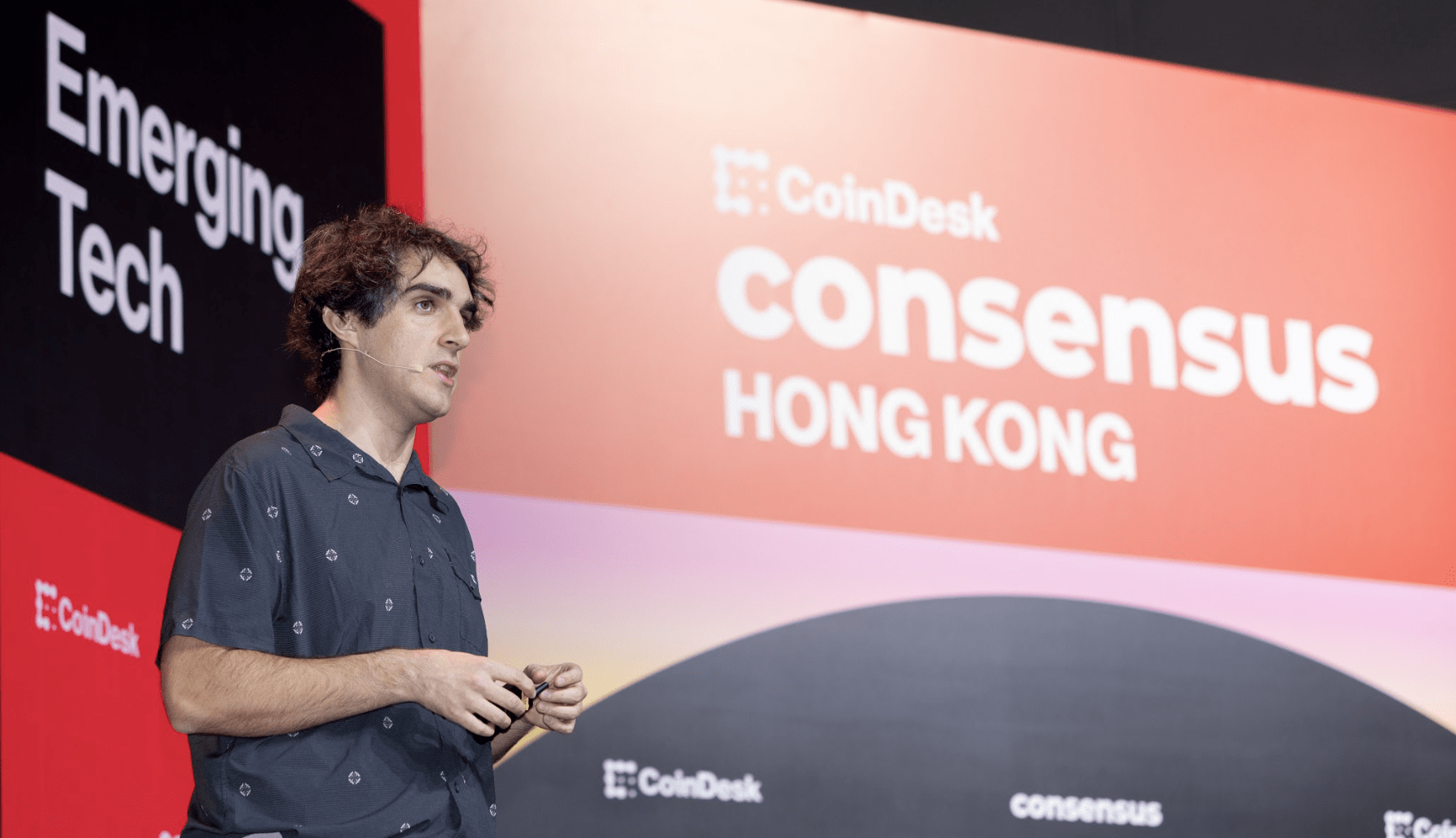
Artificial intelligence tokens have a long-term power and will not be another crypto fashion like non-butties (NFTS), even if the industry has already seen its share of flops, said the co-founder of Kava Labs Scott Stuart in an interview with Coindesk.
“We had this first wave of AI, but this wave was projects like Fetch saying:” We are going to make a merger “, but producing nothing of it, or projects like virtuals or AI16Z, being well well, then depositing 80% or 90%. It was an unfortunate result,” said Stuart Coindek in an interview.
Market data show that since January, virtuals, the native token of the virtual protocol linked to AI, is down by almost 85%. Fet, the Fetch.ai token, the artificial intelligence alliance, is down 60%.
Kava, for its part, is a fairly well fairing, down 5%, beating the Coindesk 20, a market index, which is down 29%.
Kava did not start as an AI project. Initially known for decentralized finance (DEFI) based on the cosmos, began as another DEFI project, but pivoted a decentralized AI as a differentiating in the middle of the continuous consolidation of the cryptography market.
Since his pivot, Kava has sent his Kava platform and market, a native chatbot of the Blockchain resembling Chatgpt propelled by the Grand Language R1 model of Deepseek, the AI autonomous Oros agent and the decentralized GPU infrastructure.
Stuart said that this pivot was necessary because altcoins are faced with increased challenges without convincing account, which makes clarity and the value of the decentralized AI.
“Unlike speculative bubbles such as NFT, the fundamental utility of decentralized AI guarantees its resilience. NFT or similar trends are essentially memes built on memes. Anything beta will inevitably rise and fall with media threshing cycles,” he said.
The company builds an infrastructure of decentralized artificial intelligence (IA) designed to be real, transparent and open-source. Given its performance compared to the rest of the market, they are clearly on something.
“When you consider AI as a technology, it’s just another way for companies to present you information,” said Stuart. “With Openai, there is a component of secret sauce, and at any time in the future, they can modify this model to serve you what they want.”
Stuart maintains that the issues are substantial in the separation of AI of this black box as technology becomes more and more integrated into daily life.
“The closed source AI can modify the models in a way you cannot see. You do not know if it is optimized to your advantage or to the interest of a company or even a national state,” he said.
And he is not the only one to have these concerns. In an anterior interview with Coindesk, Simon Kim, CEO of South Korea Hashed, the country’s main web3 fund, said that the closed source had made a “god” of a machine. Its internal functioning remains unknown and incomprehensible, but it has established itself as a pillar of society.
On the other hand, Kava Labs promotes an “open” approach, allowing anyone to check the parameters of the AI model, as well as the transparent intelligent contracts of Ethereum.
Recognizing how regulators are increasingly considering AI’s transparency as a strategic American interest, Stuart considers an opportunity to build a decentralized AI infrastructure which is certainly “manufactured in the USA” and supported by open source financing initiatives.
“During the last administration, the trend was to relocate everything,” he said. “Now it seems that they are serious about inversion, and we use this change as an opportunity to strengthen infrastructure based on the United States.”
And under this infrastructure will be open source technology.
“The future of AI is not controlled by companies,” he concluded. “It is open, transparent and decentralized. Kava aims to direct this transformation.”


