
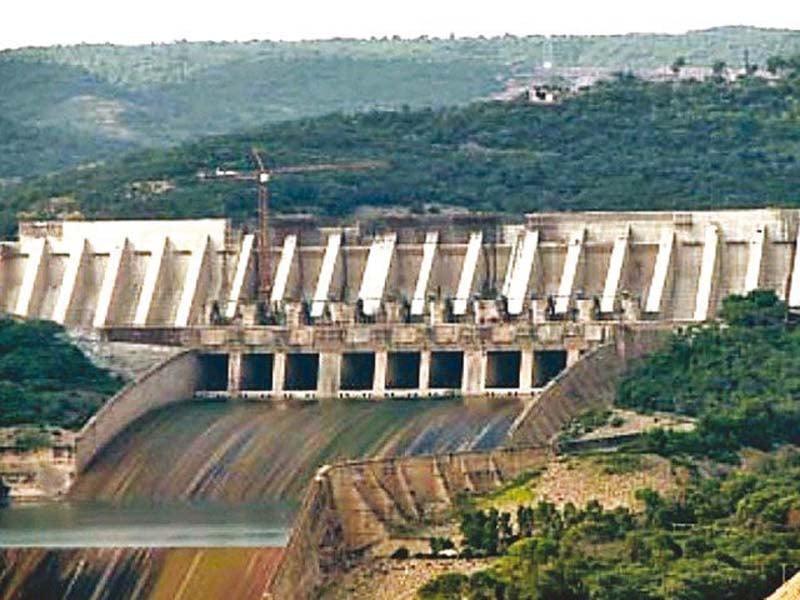
Islamabad:
An official survey has not set responsibility for an “astronomical increase” of 240% of the cost of the DASU hydroelectric project at $ 6.2 billion on a single entity or individual, but figures pointed out among Chinese entrepreneurs, WAPDA and the planning commission.
The three -member committee also blamed the local administration of the Kohistan district for a delay in land acquisition. He said the cost was increased by 48 billion rupees due to improved security agreements after two deadly attacks against Chinese entrepreneurs. The impact of the security provision was hardly 3.8% in total costs of costs.
The report indicated that “the complex interaction of the factors and unforeseen challenges” caused the period of 10 years and Rs1.3 Billions or 240% of the cost of the DASU hydroelectric project to Rs1.74 Billions. In dollars, the cost was equal to $ 6.2 billion – an unreasonable price for a hydroelectric project of 2,160 megawatts.
The Committee said that the Chinese entrepreneur had ignored the consultants’ instructions, the local administration could not timely acquire the land and, more importantly, Wapda has awarded construction contracts “without guaranteeing the availability of the land required by entrepreneurs, which led to inactive delays and complaints”.
The committee has not set the responsibility of any of the presidents of the WAPDA or of any higher officer by name, despite the fact that he had granted contracts without having a land in hand.
The planning commission was held responsible for the underestimation of the problems of acquisition and resettlement of land.
Directed by the Minister of Planning Ahsan Iqbal, the central development party of development recommended under condition the DASU hydroelectric project for the approval of the Executive Committee of the National Economic Council.
“This is an opinion considered that delays in the DASU hydroelectric project (stage 1) are the result of a complex interaction of factors” reads the results of the three -member committee.
In December, the government ordered the investigation to identify the reasons and set responsibility for the inability to complete the project after the first revision carried out in the cost in 2019.
The investigation committee was led by civil engineer ather Hameed. Other members were Syed Ayaz Muhammad Haider, supervisory director of the Ministry of Water Resources and Expert in Purchase of Imran Najam from the Ministry.
The investigation concluded that construction delays have been aggravated by significant administrative challenges and processed bottlenecks in the acquisition of land, the payment and resettlement processes “.
The unforeseen technical challenges have more distracted the schedule for implementing the project. Social problems, including community grievances and resistance, have further slowed down progress, according to the committee.
The investigation committee also said that the lack of transparent coordination between entrepreneurs and consultants, security challenges in the project area and natural causes such as difficult terrains, unforeseen geological conditions and sudden floods added to delays.
“These questions are interconnected, clearly indicating that no stakeholder or entity can be held only responsible,” concluded the investigation committee.
When he was contacted, the secretary of the Ministry of Water Resources, Syed Ali Murtaza, said that the investigation had been carried out by the engineering chief advisor, who is an independent entity and is intended to undertake such surveys.
The secretary also declared that the survey committee discovered that the 85% increase in the cost was due to the increase in prices and that the remaining 15% was due to variations in the scope and the design of the project.
The investigation committee said that the success of the project depends on a collaborative approach which promotes alignment and cooperation between the federal government, the provincial government of Khyber-Pakhtunkhwa, the district administration of Kohistan, Wapda, entrepreneurs, consultants and local communities.
The survey has recommended that the coordination of stakeholders, to rationalize remuneration and resettlement processes. He also proposed to proactively solve social problems in particular on the transmission line of 132 kV and the implementation of a robust management strategy to manage technical, social and security challenges.
But it was the problems that should have been taken care of in 2014. The project has already been delayed from 10 years to 2029.
The original PC-I cost 486 billion rupees had been approved in 2014 in order to generate 2,160 MW of electricity and the completion date was in 2019. Due to the increase in land rate, the cost was revised at Rs511 billion in October 2019 and the implementation was extended to June 2024.
The main civilian work entrepreneur for scene I is M / S China Gezhouba Group Company (CGGC) while supervision is provided by a joint venture of Japanese Nippon Koei of Japan and M / S Dolsar of Turkey in combination with local sub-consultants, including M / S DMC, M / S NDC and M / S PEES, according to the search report of January 2025.
In January, overall physical progress was 23.3% and 23% financial progress said the investigation report on the second revision. The project is mainly funded by the World Bank, local and foreign commercial banks and via Wapda Equity. So far, 317 billion rupees have been spent on the project.
The total cost of 1.73 billion of rupees included 479 billion rupees of interest on the loans to be contract for the completion of the project.
The World Bank had given $ 517 million and in December, $ 385 million had been used. Credit Suisse Bank also granted a loan of $ 350 million. The local bank consortium led by M / S Habib Bank Limited also provided a loan of 144 billion rupees compared to the initial cost of the project.
The World Bank is also ready to pay another costly loan of $ 1 billion for the project.
Cost climbing break
The investigation report indicated a comparison of the increase in costs of 511 billion rupees to RS1.73 Billions. The cost of civil work has increased from 224.5 billion rupees to 771 billion rupees – an overvoltage of 547 billion rupees or 243%. The cost of electrical and mechanical labor increased from 54.3 billion rupees to 87.3 billion rupees – an increase of RS33 billion or 61%.
The cost of social resettlement increased from 57.5 billion rupees to Rs 140.3 billion – an increase of RS82 billion or 144%.
The security cost has increased from RS1.5 billion to 50 billion rupees – an increase of RS48.2 billion or 3136%. The project was faced with two suicide attacks, which led to murders of 15 Chinese nationals and four Pakistanis.
The cost of administration of the project has increased compared to 13.5 billion twists of twisted roasters54.4 billion – an increase of 41 billion rupees or 304%. The cost of consultants increased from 8.3 billion rupees to 56.5 billion rupees – an overvoltage of 48.2 billion rands or 580%. Since the quantum of loans has jumped, the cost of interest too. The cost of interest has increased from 107 billion rupees to 479 billion rupees – an increase of RS372 billion or 349%.
The eventualities increased from 44 billion rupees to 99 billion rupees – an increase of RS55 billion or 124%.
The investigation committee said there was a significant delay in acquiring 9,875 acres land. But the impact of land costs had already been included in the first revised project, and this is not the reason for climbing costs in the second revision.
The Committee noted that the design of the relocation of the 52 -kilometer Karakoram motorway has undergone significant changes due to the delays in land acquisition and geological conditions. However, the Committee did not set the responsibility to ignore the geological conditions at the time of planning first in 2014, then in 2019, when the project was revised.
The Committee validly identified security as a reason for delay, but it only increased the cost by 48 billion rupees on the total additional increase in the cost of RS1.27 Billions.
Fix the responsibility
The investigation committee has identified the lack of coordination between the entrepreneur and the engineer. He indicated that delays occurred due to “non-compliance with the entrepreneur to subject activity plans, frequent contempt for consultant’s instructions, insufficient deployment of resources despite repeated directives and inadequate coordination between the entrepreneur and the engineer”.
He also indicated that the entrepreneur’s reports indicated that the resources currently available on each site are inadequate to reach the target completion dates.
The Committee said that the District Administration was responsible for the acquisition of the land, that it could not acquire in a timely manner. The Committee said that WAPDA had granted contracts without guaranteeing the availability of the land required by entrepreneurs, which led to inactive delays and complaints.
The slow pace of the local development program has eroded community confidence and exacerbated local resistance, reflecting a lance of WAPDA’s responsibility for an effective community agreement.
“The WAPDA and the planning commission have not only clearly underestimated the acquisition and resettlement of land, but have also shown a lack of cognitive approach concerning planning and planning of the project without substantial completion of the process of acquisition and resettlement of land”.
The investigation committee said that the Chinese entrepreneur is also responsible for a slow progression in the construction of the dam and power work due to the mobilization of inadequate resources.
The Committee said that DASU Hydropower Consultants consultants, design and supervision consultants were responsible for “frequent design changes, which highlight the gaps on the part of the design consultant.
The absence of a dedicated PC-I approved for the acquisition of fields recommended by the planning commission, indicates political surveillance which has contributed to the delays of the project.


