
Islamabad:
The Ministry of Foreign Affairs said Thursday that the Torkham border was only temporarily reopened, both parties, the negotiations to set up a “permanent system” would ensure a transparent operation in key border crossing.
The border was reopened Wednesday after being closed for 26 days. It was closed on February 21 after a dispute occurred on a check position that the Afghan side built on Pakistani territory.
The decision to reopen the key crossing occurred following a series of jirgas and a flag meeting between the two officials.
But the spokesman for the Ministry of Foreign Affairs said that the current arrangement would only be intended for the coming weeks.
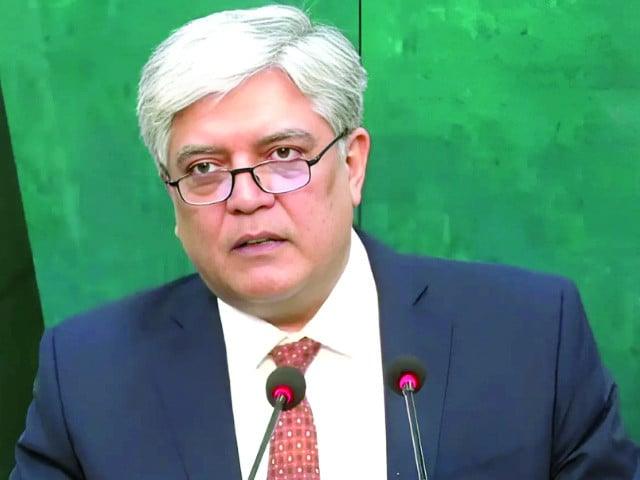
“Torkham opened its doors yesterday, and I think that tomorrow, pedestrian traffic will also be authorized. So the current arrangement has arrived thanks to mutual consultations, and it is a good positive development which is on April 15,” Shafqat Ali Khan told a weekly briefing.
“At that time, we expect new negotiations and consultations to be designed to set up a permanent system that could ensure the continuous operation of the Torkham border in a transparent way,” he added.
Official sources have said that both parties still needed the problems. According to sources, Pakistan wanted permanent guarantees that the Afghan side would again not build any structure on the border without correctly consulting the other side.
The border has been reopened to alleviate the pressure and allow stranded trucks and people to rush between the two countries.
The spokesman for the Ministry of Foreign Affairs suggested that the border could be closed again if the problems were not resolved by April 15.
The spokesman, however, said that the reopening of the border was a positive development adding: “We want to make it lasting and permanent.”
The spokesperson clearly indicated that Pakistan would not extend the deadline for the repatriation of all the card holders of Afghan citizens. All these Afghans were given until March 31, time to leave Pakistan or to face the expulsion.
Regarding consulting the UNHCR, the spokesman said that Pakistan was not required to consult the UNHCR. “We are not required to consult the UNHCR. First of all, Pakistan is not a member of the refugee convention. So, everything we have done for Afghan refugees has been voluntarily done in the past 50 years. So, with regard to international obligations, we have fulfilled more than our share, offering this type of hospitality to Afghans and we continue to welcome them.”
“But they should have Pakistani visas on their passport, and then they will be more than welcome. In addition, there is a large body of Afghans living here with appropriate documentation,” he added.
Shafqat also confirmed that the Afghan CDA had been summoned to the Ministry of Foreign Affairs earlier this week to record a protest regarding the use of Afghan soil during recent terrorist attacks.
“This is part of routine diplomatic activity. We do not announce it in the media. There is a regular interaction in progress between the embassies based in Islamabad and the Ministry of Foreign Affairs, it is a regular activity. So, nothing exceptional or unusual on this subject. We must keep this in sight,” he said.
The spokesman said Pakistan had regularly expressed his concerns in Afghanistan. “For example, the special representative, the Sadiq ambassador is also in actively in contact. So our position on this question has always been transmitted to the Afghan authorities by a certain number of channels. Indeed, the terrorist threat against Pakistan from terrorist entities, in particular TTP, Bla and Iskp, is our concern above all.”
“We continue to impress the interim authorities to take visible and verifiable measures against them, keeping in sight their commitments given to the international community to dismantle terrorist infrastructure and Afghan soil groups,” he said.
India
The Ministry of Foreign Affairs reiterated that India’s fictitious account on the victim could not hide his involvement in the soil of Pakistan soil and the oppression sanctioned by the State in Jammu and Kashmir (IIOJK).
The spokesman for the Ministry of Foreign Affairs said that the participation of the Indians in the Flanning of Terrorism in Pakistan and the destabilization of Balutchistan was clear.
Referring to Indian involvement in world assassination plots, he said that not only in Pakistan, India had sponsored so illegal activities throughout the region.
“Instead of blaming the others, India should reflect on its own orchestration file for targeted assassinations, subversion and terrorism in foreign territories,” he noted and stressed that India had not condemned the recent attack on Jaffar Express in Balutchistan.
The spokesman said Pakistan was alarmed by the increased frequency of unjustified statements of Indian leadership on Jammu-et-Cachemire.
He said that it was India that took the question of Jammu and Kashmir to the United Nations in 1948, he therefore had the right to blame the Security Council and his former members for the resolutions which were then adopted.
“The repetition of baseless complaints cannot deny the fact that Jammu-et-Cachemire is an internationally recognized contested territory, the final status of which must be determined by its people through an unopensed plebiscite, as stipulated in the relevant resolutions of the United Nations Security Council.”
Reiterating Pakistan’s plea for constructive commitment and dialogue focused on results to solve all pending problems, including the basic dispute of Jammu-Cachemire, he said that peace and stability in South Asia had remained hostage to the rigid approach of India and hegemonic ambitions.
“The anti-Pakistan account, emanating from India, vicit the bilateral environment and hinders the prospects of peace and cooperation. It must stop,” he noted.
Invited to comment on the reports on the visit of certain Pakistani people in Israel, he said that the Ministry of Foreign Affairs had nothing to do with that because the information on the issue was collected.
However, he categorically explained that Pakistan’s position on the recognition of Israel and the rights of the Palestinian people was unshakable and unchanged.
With regard to the inclusion of Pakistani nationals in certain categories of visa restrictions, the spokesman said that the State Department and the Ministry of Foreign Affairs had refuted speculative reports on social networks.
He condemned vicious attacks of Israel against the inhabitants of the West Bank and Gaza, describing it as a blatant violation of the cease-fire agreement; international humanitarian law; The Charter of the United Nations; And hinders confidence and faith in the world community and international law.


