
He noted that Pakistan currently had a relatively better trajectory in its bilateral relations with the United States.
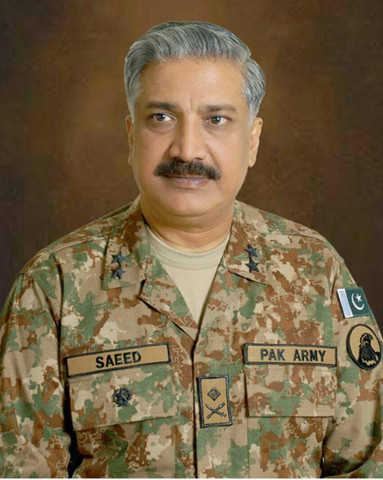
DG Rangers Sindh, Major General Muhammad Saeed. PHOTO: FILE PHOTO
ISLAMABAD:
Former Chief of the General Staff (CGS) Lt. Gen. (Ret.) Saeed said there was an “intense debate in Pakistan” over a recent statement by US Director of National Intelligence (DNI) Tulsi Gabbard, noting that public reaction on social media suggests that “Pakistan is being touted as the next target, after Iran, with denuclearization the ultimate goal.”
In a detailed statement on
He added that an important point to note here was that Gabbard “did not choose Pakistan” and instead listed it alongside Russia, China, Iran and North Korea.
Lt. Gen. (Ret.) Saeed said this was not the first time Pakistan’s missile and nuclear programs had been viewed with concern by U.S. officials, adding that since the Pressler Amendment in 1985, “much more dangerous, offensive and targeted allegations” had been made by U.S. presidents, vice presidents, secretaries of state, CIA directors and members of Congress.
There is “nothing new to worry about” in the current discourse, he stressed.
The former CGS further said that private companies maintaining even “mundane business dealings” with Pakistan’s strategic organizations had been repeatedly subjected to sanctions, adding that such measures had been used aggressively over the past five decades.
He said the list of affected companies was “too long” and added that, alongside these developments, “sophisticated and relentless massively funded propaganda campaigns” had helped shape two dominant narratives in Pakistan.
The first argument, he said, was that “nothing happens in this country without a nod from Uncle Sam,” while the second was that political and military leaders had been “presented as compromising on the nuclear program.”
He rejected these notions, saying that if they had been true, Pakistan would not have been able to develop its current nuclear and ballistic capabilities. All leaders over the past five decades, he said, have treated the strategic agenda as a matter of survival and handled U.S.-led Western pressure “resolutely and intelligently.” “We should be proud of them all.”
Referring to the broader geopolitical situation, he cautioned against any comparison between Pakistan and the fate of nuclear programs in Syria, Iraq, Libya and Iran, saying these countries were “barely at the starting point” while Pakistan was an “established and recognized nuclear power.”
He said no established nuclear power with various launch systems had ever been denuclearized and added that “no power on earth can do so against Pakistan.” He stressed the need to trust the country’s strategic community and national resolve.
Returning to Gabbard’s remarks, he said that compared to past statements, “what she said is insignificant, so we can easily dismiss it.” He said there was no need to respond publicly to every statement on such complex geostrategic issues, adding that if a response was necessary, it should first be considered alongside reactions from Russia, China and North Korea.
He noted that Pakistan currently had a relatively better trajectory in its bilateral relations with the United States, although he described recent developments as potentially transitory, saying that American leadership remained “unpredictable and unreliable.”
Lt Gen (retd) Saeed questioned the urgency of any response, saying: “What is the urgency? He added that those responsible for safeguarding Pakistan’s strategic agenda would review the statement in detail and determine whether a response was necessary, concluding that “we have to trust them.”


