

A revolution in wearable technology is now on the horizon. Soon, we’ll see a legion of smart glasses that combine AI-driven audio and visual information on demand and as needed, delivered with or without your smartphone nearby, and all without imposing bizarre appearances or physical discomfort. However, the revolution must still be built on “aha!” moments (and maybe some FOMO).
That’s the conclusion I reached after speaking with Juston Payne, Google’s senior director of product management for XR. We were chatting for a few moments after I had my own “aha!” moments with monocular and dual-screen Android XR dev kit-level smart glasses. You can read more about this impressive first look here.
Arriving at the tipping point
However, there is still a long way to go from the “aha!” » from the Payne family. moment towards true fear of missing out (“FOMO”), that moment where the availability and ubiquity of Android XR smart glasses generates FOMO among other consumers and drives their adoption.
Google and Android XR partner Samsung has already announced partnerships with eyewear makers Warby Parker and Gentle Monster. I pointed out, however, that most people probably still buy their glasses from places like LensCrafters and Visionworks. Payne highlighted the announcement of a partnership with Kering Eyewear, but it remains a luxury eyewear supplier.
Payne acknowledged that the vision is much broader availability.
“So the idea is that over time we want to get to the vision that you talked about, which is that anyone can walk into a store and make the choice to get a smart version, powered by Android XR and Gemini. And that’s going to be a really exciting future to reach for.”
The key, he told me, is to make sure the industry delivers the right form factors, and more importantly the right price points. Lens options, he added, should “take into account people’s different visual needs.”
A big moment for Android XR
Payne and I spoke as Google and its partners prepared to launch an Android Day:
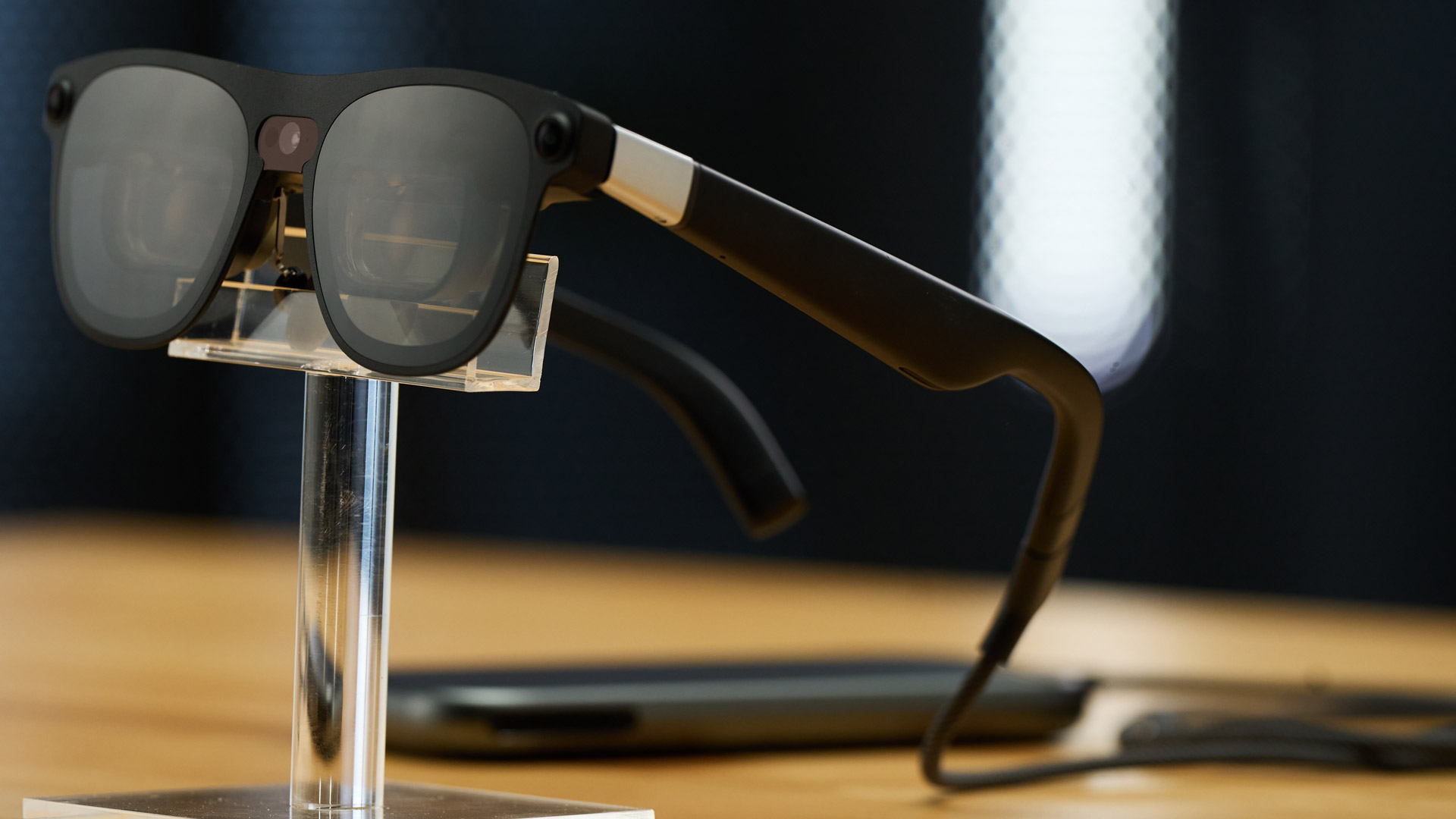
Glasses, while not entirely ready for prime time, is the clearest indication of Android’s plans and aspirations for Android
The single and dual screen glasses, along with the Xreal Aura (revealed at the same event) and the Samsung Galaxy XR mixed reality headset that I recently reviewed, now represent the full spectrum of Google’s current Android XR ambitions.
Although they are all built based on Gemini intelligence, I noticed some differences during my hands-on demonstrations. I was curious if Google dictates, for example, the display style, which ranges from the Sony Micro OLED screens and prisms found on the Xreal Aura (which actually attaches to a handheld computing package) to the high-resolution wide FoV of the Galaxy
It turns out that while Google doesn’t dictate viewing experiences, it does have an “opinion” on this topic. There are, Payne explained, reasons for all these differences.
“It’s actually helpful to think here in terms of what kind of use we expect the products to be, and then we work with the partner companies on the right solutions,” he said.
Use cases define views

Products used “episodically”, such as the Aura or the Galaxy XR, require optical systems favoring a wide field of vision. For these products, partial or even total occlusion of your actual field of vision is acceptable, since you are often seated and, for example, playing a game or watching a video.
Obviously, the requirements are different for glasses where you cannot afford to have the lenses removed or significantly obstructed. “For those, you need a completely clear lens. Like a nice crystal clear lens where you have a screen built right into the lens. Those will be waveguide solutions.”
We actually think that the same person will likely have multiple XR products in their lifetime.
Juston Payne, Senior Director of Product Management at Google for XR
Not only is the idea of Android XR not “universal,” but Payne envisions a future in which people own more than one XR device. “We actually think that the same person will probably have multiple XR products in their life. Kind of in the same way that someone doesn’t have a laptop and a phone; they have a laptop and a phone.”
Of course, that means even lighter and thinner glasses and, in general, cheaper and more easily accessible smart frames, and there will be an ecosystem and apps to support smart glasses. Payne is excited about the future and sees a parallel with at least one other technological era.
“We think it’s actually a very early space, and the story’s not yet written. So it’s great to see that there’s momentum, it’s great to see that there’s some traction. But, you know, contextualizing that: there are no glasses yet that have an app ecosystem. So, in that way, it’s almost like the launch of the iPhone, and there wasn’t from App Store; it was like that little period of time.
Follow TechRadar on Google News And add us as your favorite source to get our news, reviews and expert opinions in your feeds. Make sure to click the Follow button!
And of course you can too follow TechRadar on TikTok for news, reviews, unboxings in video form and receive regular updates from us on WhatsApp Also.


