
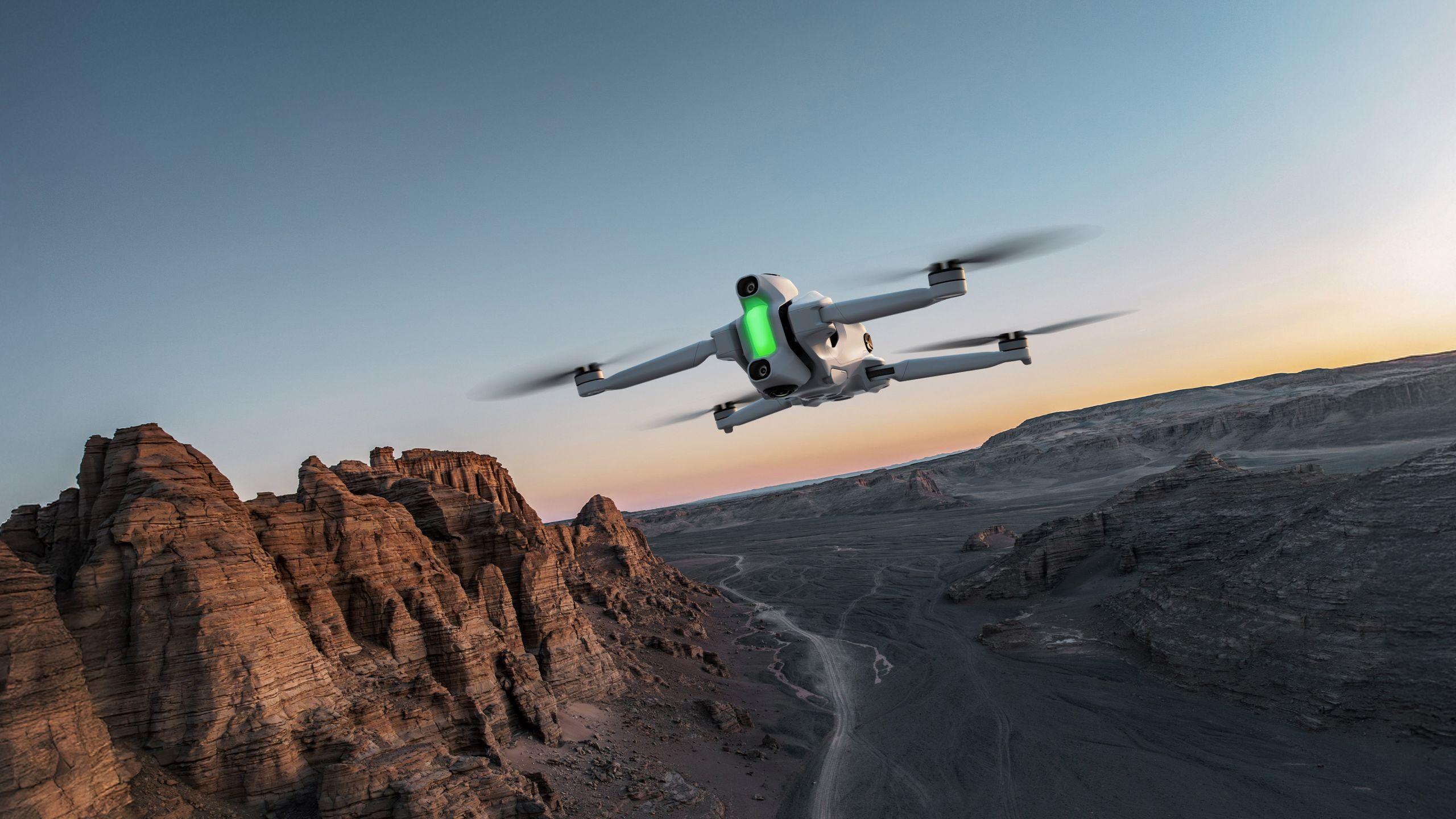
- Pentagon Launches $100M Autonomous Drone Swarm Challenge
- The real military swarming remains largely to be proven in combat
- Voice commands must coordinate multiple autonomous systems simultaneously
The US Department of Defense has opened a six-month competition promising a $100 million reward to teams capable of building swarms of voice-controlled autonomous drones.
The initiative is part of a broader AI acceleration strategy that calls for its expansion into military planning, logistics and combat systems.
At its core, the program seeks technology that can translate voice commands into coordinated actions across multiple unmanned systems working together.
From strategy to application on the battlefield
This effort is being carried out with the participation of the Defense Innovation Unit and the Defense Autonomous Warfare Group under the United States Special Operations Command.
It also continues elements of earlier autonomous systems initiatives intended to increase production of consumable platforms.
The stated objective is to move from software development to real testing in a framework structured in several phases leading to operational demonstrations.
Despite years of discussion, a real military attack has not yet evolved into a reliable battlefield capability.
Oft-cited public displays – including elaborate aerial light shows – rely on pre-programmed routes and centralized control systems that lack resilience in hostile conditions.
These displays do not represent decentralized cooperation between autonomous machines operating under electronic attack.
In military terms, a swarm requires each drone to share information, adapt to losses, and make distributed decisions without any single point of failure.
Some units can conduct reconnaissance, others jam radars, while additional platforms transmit data or carry out strikes.
Achieving this coordination in environments where GPS is denied or heavily jammed remains technically challenging, as bandwidth constraints, a contested electromagnetic spectrum, and the need for powerful onboard processing complicate real-time cooperation between dozens or hundreds of systems.
According to Bloomberg, SpaceX and its artificial intelligence subsidiary xAI are competing to meet the Pentagon’s challenge.
Elon Musk’s involvement adds an additional level of oversight, as he has previously argued that AI should not become a new tool for lethal autonomy without significant human oversight.
Participation in a competition explicitly linked to offensive applications suggests a change of direction, even if the full conditions of engagement remain confidential.
The Pentagon framework clearly shows that human-machine interaction will influence the effectiveness and lethality of the system.
It remains unclear whether voice typing significantly improves the speed of commands or simply adds another layer of interface.
What is clear is that translating a spoken order into coordinated swarm behavior under the stress of the battlefield is far more complex than programming a drone to follow a fixed route.
The competition could accelerate development, but turning the theory into a reliable combat capability remains an open technical question.
Via Global Aerospace News
Follow TechRadar on Google News And add us as your favorite source to get our news, reviews and expert opinions in your feeds. Make sure to click the Follow button!
And of course you can too follow TechRadar on TikTok for news, reviews, unboxings in video form and receive regular updates from us on WhatsApp Also.


