
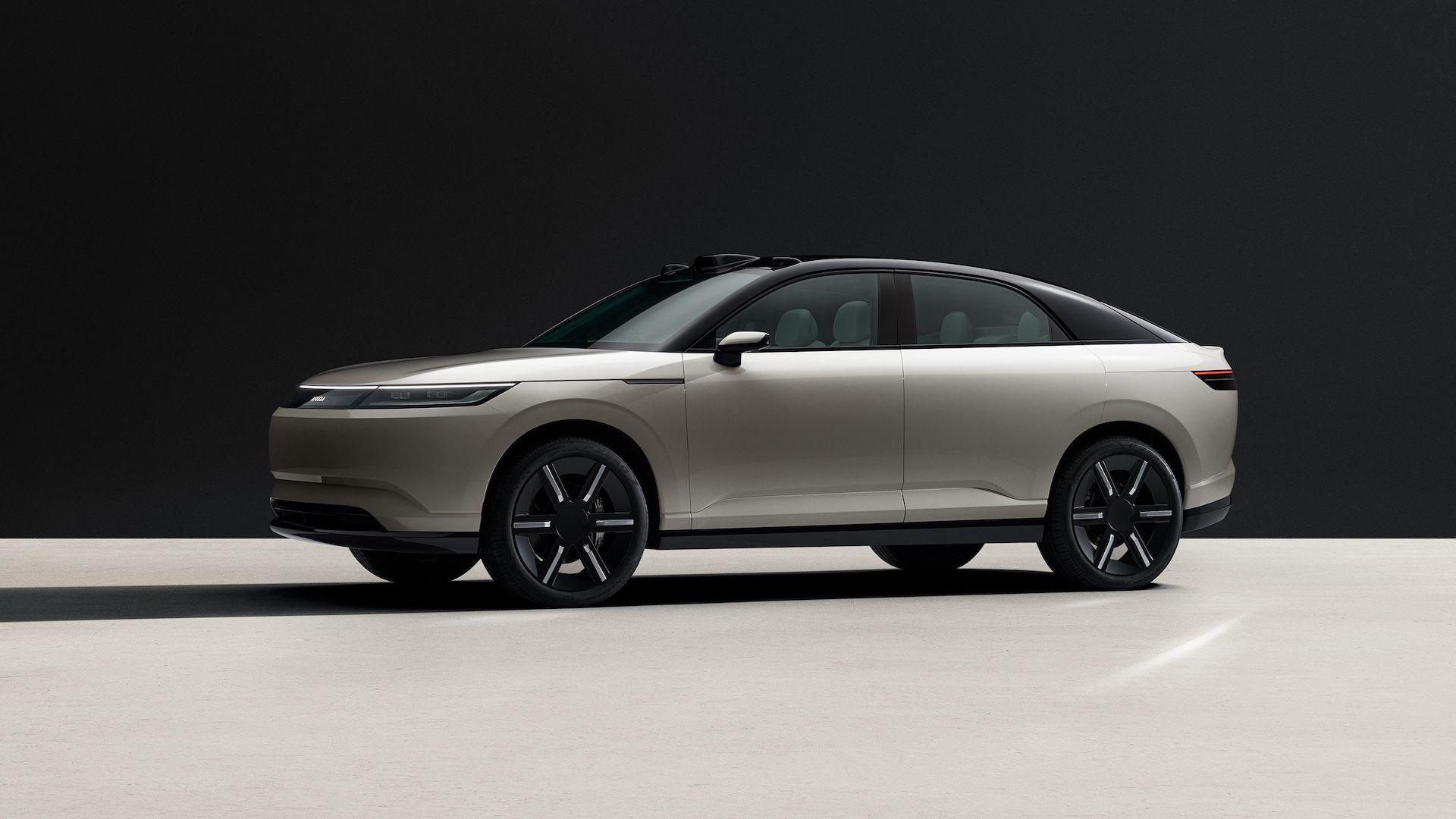
- Sony Honda Mobility abandoned the Afeela EV project
- “There is no viable path forward,” new statement reveals
- Pressure mounts on Honda to stem losses
Anyone who has attended the Consumer Electronics Show over the past decade will have known the hype around Sony Honda Mobility – but that bubble has unfortunately burst with the joint venture abandoning its long-awaited Afeela project.
The company was officially announced in 2022 and came about after Sony launched its Vision S concept vehicle that made headlines at the turn of the decade.
Although relatively generic from the outside, the EV promised Sony’s computing power inside, effectively transforming the cabin into a movie-and-button paradise for fans of Triple-A titles.
Article continues below
Over the next few years, the project grew, and Sony Honda Mobility (SHM) eventually announced two electric vehicles in the original Afeela 1 sedan, worth around $100,000, and a more conventional SUV in the equally expensive Afeela 2. The first was expected to be delivered to California customers later this year.
But the joint venture announced it would not pursue the project given that Honda has recently scaled back its electric vehicle business. Honda said earlier this week it would require a writedown of up to 2.5 trillion yen ($15.7 billion) to scale back its electric vehicle plans, pushing the company to its first annual loss in nearly 70 years, according to PK Press Club.
In a statement released by Sony Honda Mobility, the joint venture said that due to Honda’s reassessment of its electrification strategy, it will not be able to “utilize certain technologies and assets that were originally planned to be supplied by Honda at the time of SHM’s initial business planning.”
However, Sony, Honda and SHM will continue to “discuss and evaluate the future of SHM”, with a new announcement on the future direction of the joint venture coming.
But for those who make advance deposits for the Afeela 1, SHM has announced that it will fully refund the reservation fees received.
Analysis: Honda was left behind
The Sony Honda Mobility project has become something of a joke among those who regularly cover the latest tech trends at CES, given that it was shown almost every year with a slightly different exterior hue or subtly updated styling.
By the time the joint venture was ready to take deposits for its oddly named sedan, the EV technology powering the vehicle was already obsolete and a 300-mile range for over $100,000 simply wasn’t competitive.
Some were even harder. According to PK Press Club, Travis Lundy of Quiddity Advisors said shortly before the announcement that the Afeela was “doomed to fail”, calling it a “weird vanity project” unlikely to become central to Honda’s future.
For all the talk of PlayStation 5 games inside and the ability to watch high-definition movies, very little was known about how it drove, the capabilities of its self-driving feature, and what it lived with.
We know that it supported relatively slow charging speeds of 150kW – a disappointing figure given that a Kia costing a fraction of the asking price can charge at 350kW – and that its 0-60mph acceleration time was a relatively slow five seconds.
Add to that the fact that the current Trump administration has removed most support for electric vehicles and imposed tariffs on most imports, and the joint venture’s decision to end the project isn’t particularly surprising.
It probably would have lost money and been left in the dust by the latest battery, autonomous driving and car technologies coming from China and elsewhere.
The rate at which electric vehicle technology is improving is relentless, and many traditional automakers are struggling to keep up. RIP Afeela.
Follow TechRadar on Google News And add us as your favorite source to get our news, reviews and expert opinions in your feeds. Make sure to click the Follow button!
And of course you can also follow TechRadar on YouTube And TikTok for news, reviews, unboxings in video form and receive regular updates from us on WhatsApp Also.


