
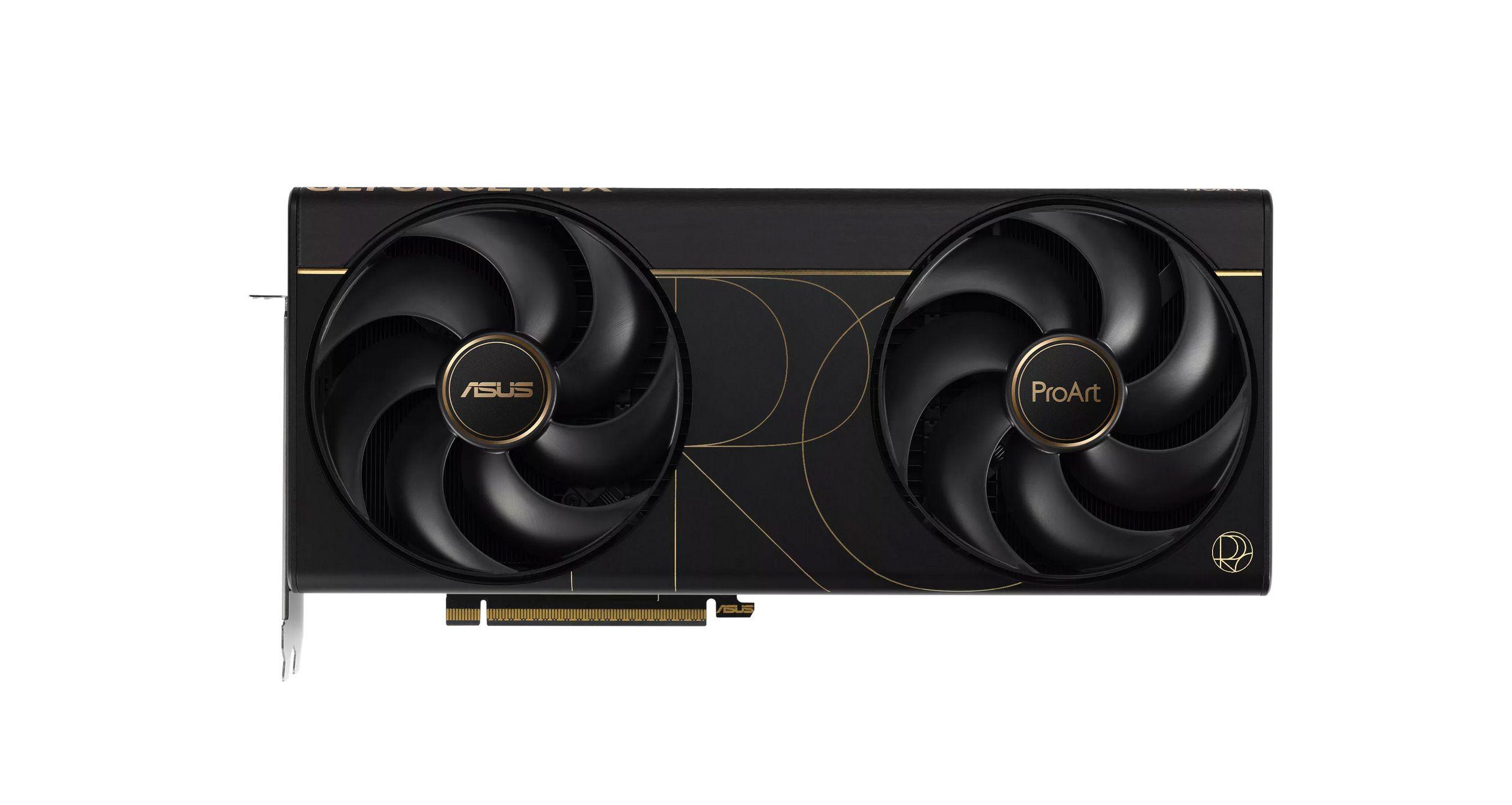
- Compact RTX 5090 targets creators needing high AI performance in smaller systems
- An unusual audio jack and USB C port set it apart from other flagship GPUs
- Removes wood trim and SSD ideas seen on previous ProArt RTX 5080
Asus introduced the ProArt GeForce RTX 5090, a compact version of Nvidia’s flagship consumer GPU aimed at creators and workstation users.
The card focuses on high AI throughput while maintaining a slimmer physical profile that accommodates small form factor systems and multi-card configurations.
It packs 32GB of GDDR7 memory, 21,760 CUDA cores, and a quoted figure of 3,352 AI TOPs, putting it firmly at the top of Nvidia’s current lineup.
Is it a headphone jack?
The ProArt RTX 5090 is based on the Blackwell architecture and supports DLSS 4, including multi-frame generation and updated ray reconstruction features.
Unlike many large flagship cards, it uses a 2.5-slot design, leaving room for additional PCIe cards or a second GPU in supported systems.
Cooling follows the Founders Edition layout with a vapor chamber, heat pipes, and two 115mm axial fans pushing air through a dual-flow backplate.
Asus uses liquid metal between the GPU die and the heatsink, a choice normally reserved for more high-end designs due to its handling requirements.
This approach would improve thermal efficiency while reducing the overall size of the card compared to bulkier three-fan designs.
One of the more unusual features is an integrated 2.5mm headphone jack, something rarely seen on modern graphics cards.
Audio output sits alongside DisplayPort and HDMI connections and is joined by a USB Type C port for displays and peripherals.
This USB C port replaces one of the usual DisplayPort outputs and is aimed at creators using portable or daisy-chained monitors.
Visually, the card maintains a simple industrial look without heavy RGB styling or decorative materials.
This marks a clear change from the previous ProArt RTX 5080, which relied heavily on wood-effect trim and even incorporated an M.2 SSD slot.
These features are not found here and are unlikely to be mourned by many users.
There’s no word yet on pricing or availability, but the ProArt RTX 5080 GPU with the faux wood frame cost $1,469 at launch, a nearly $500 premium over the standard RTX 5080 cards.
Given that it’s aimed at the creator market and factoring in the added costs of its compact design and custom cooling, you can expect to pay a lot more for the RTX 5090 model.
Follow TechRadar on Google News And add us as your favorite source to get our news, reviews and expert opinions in your feeds. Make sure to click the Follow button!
And of course you can too follow TechRadar on TikTok for news, reviews, unboxings in video form and receive regular updates from us on WhatsApp Also.


