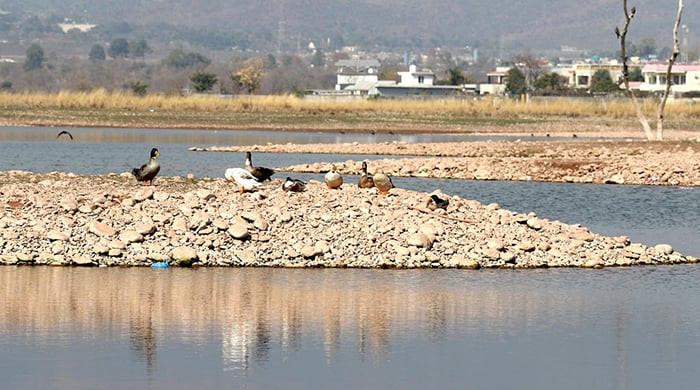
- The Tarbela dam does not hold hard storage.
- The mangla dam contains only 0.088 MAF.
- The IRSA has planned a water shortage of 30 to 35%.
Islamabad: The Punjab government said that the situation of the water shortage had been aggravated due to the growing losses of Indus Stem water and the downstream versions of Kotri.
The letter of March 21 of the Punjab irrigation department at the Industry System Authority (IRSA) has identified that surprisingly significant losses in the Indus stems and an increase in downstream flows in Kotri have worsened the situation, The news reported.
According to the irrigation service, “this led to shortages which exceeded the water deficit provided by the water regulator”.
To provide water to the Thal and Panjnad channels, the Punjab government has urged the IRSA to open the TAUNSA-PUNJNAD (TP) link in the Indus.
The irrigation service said Punjab currently did not receive any water release from TP Link, Muzaffargarh or Dera Ghazi Khan.
The Director’s regulation irrigation department argued that the water deficit was greater than that determined by IRSA due to actual water losses in the Indus water flows and downstream from Kotri on March 21.
According to the letter, actual water losses in the Industry rods increased by 33% to 1.60 million acres (MAF) compared to the predity loss of 1.20 MAF.
The outings downstream of Kotri during the current Rabi season were developed by the IRSA at 0.065 MAF. But the real versions amounted to 0.47%, showing an increase in water versions by 623%.
If said losses of the Indus rods and the surplus downstream of the Kotri flows (0.805 MAF) had been avoided, the resulting water shortage would have corresponded or fell below the planned levels of the IRSA, according to the letter.
This is why Punjab wishes to supply water from the canal to Thal and Punjnad canals via TP Link, in accordance with the implementation of the integrated management of water resources, the letter said. The Punjab irrigation department has asked IRSA to take immediate and decisive measures to limit increased losses in Indus stems and downstream flows in Kotri.
The letter also mentioned that the IRSA had declared a water shortage of 16% for the Rabi 2024-25 season, allocating 16,680 MAF in the total of 19,846 MAF for Punjab.
A complete examination of river losses in the rods of the Indus, the current situation of entries in the main rivers and tanks reveals trends different from those planned at the time of distribution.
As of March 21, the entries in the Kabul and Industry rivers are clearly superior to anticipation, while the mangla and marala entries are significantly lower than the projected levels. The entrances to the Kabul and Industry river are 12% and 6% respectively above anticipation. The entries of the Mangla dam and the Chenab river are 36% and 15% below anticipation respectively.
This difference highlights the need for cautious management of water management and reallocation to optimize the available resources and mitigate the impact of the shortage in the Punjab agricultural sector.
The Tarbela dam has almost no storage, while the mangla dam contains only 0.088 MAF, constituting only 1% of its capacity. The gap between projected entries and real tank levels has a serious concern concerning the availability of water.
The IRSA recently planned an overall water shortage of 30% to 35%. Punjab used 20% less water than its share allocated, while Sindh drew 17% lower than its law.