
- Rumors suggest that a cannon Powershot V1 is on the way, with a 24 Mp sensor which is “close to Micro Four Thirds”
- He could be joined later this year by a successor Powershot SX70 HS Bridge Camera
- These two additions would make an extremely varied Powershot V-Series range
There is a lot of overhaul at the moment on the Canon Powershot V1 of the rumor. The new points and shooting camera should land in March and report a renewed commitment of the barrel to the manufacture of compact cameras – which could be an intelligent decision, since compacts appreciate something of a return.
We do not have too much information on the products to leave at the moment, but the size of the suggested sensor will only make fans of compact cameras more excited. According to Canon rumors, the Powershot V1 will include a 24 MP sensor which is “close to Micro Four Thirds”, as well as a 3X optical zoom lens.
For the perspective, this sensor size is a little larger than the type of 1 inch used in existing points such as the Powershot G7x Mark III, and other models such as the Powershot G5X Mark II. However, it is not the biggest sensor that Canon opted for its compact cameras – this price goes to the APS -C sensor used in the Powershot G1 x Mark III.
So what size of the sensor is the Sweet Spot? I think Canon is on a winner if he indeed takes the central option of Micro Four Thirds for his next point and shoot – here is why.
Not too big, not too small
The size of the sensor has a great impact on the quality and design of the image, in particular with the sharp compacts which have an integrated lens. The larger the size of the sensor, the more global the image quality, but there are also design drawbacks.
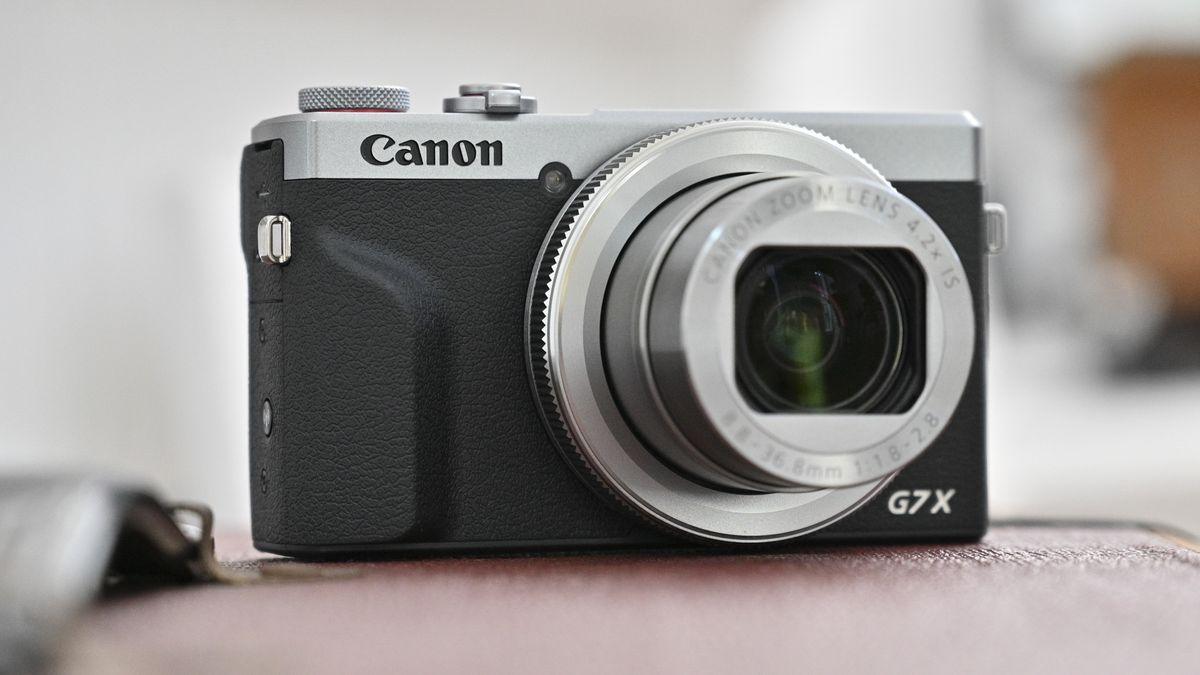
The Powershot G7x Mark III has a 1 inch sensor of 20 MP with a 4x Zoom optical objective of 24 to 100 mm f / 1.8-2,8. This size of the sensor measures 13.1 x 8.8 mm and only smartphones can make it match for size, such as the Xiaomi 14 Ultra – Canon camera has the edge of image quality, but not far.
The Powershot G1 x Mark III of Canon has an APS-C sensor largest-stril and lower narrow focus skills, which makes it less practical in low light or for macro photography. I remember tested the G1 X Mark III and wishing to be able to open the objective more.
Then there is the Powershot V1 Micro Four Four sensor, which would measure approximately 18 x 13.5 mm. I think it’s Sweet Spot for image quality, camera size and lens design. I expect the objective of 3x optical zoom suggested to be measured in that found in the Leica D-Lux 8, a point and blow camera 2.8 lens.
This camera was a minor update of D-Lux 7, and its technology is mainly based on the Panasonic Lumix LX100 II dated. The D-LUX 8 is one of the few high quality compacts that you can buy today, but it costs around $ 1,595 / £ 1,450 / $ 2,790 in. Canon’s Powershot V1 rumors would cost between $ 600 and $ 800. Even at the end of the higher price, there would be no other compact camera to correspond to the V1, assuming that the specifications of rumors are true, in which case it should be an absolute treat.
And it could be joined by another new PowerShot later in 2025 – a modern successor from the Bridge Powershot SX70 HS Aggershot camera. Canon Rumed pours cold water on the chances of another 65X optical zoom model, and suggest that the zoom range will be much less. However, if the next Powershot turns out to be in Panasonic’s “travel zooms”, like the Lumix ZS99 / TZ99, it would not be a bad thing – and Canon would again have a range of enviable compact cameras.


