
RAWALPINDI:
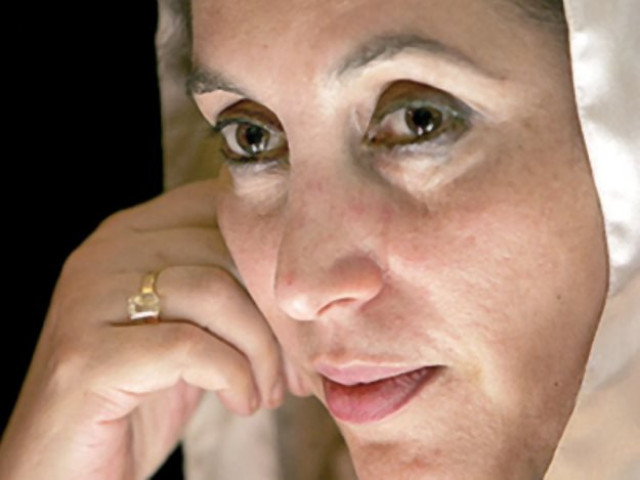
Eighteen years after the assassination of Benazir Bhutto — the “Daughter of the East” and Pakistan’s first female prime minister — the legal maze surrounding her assassination remains unsolved, its many threads still tangled despite years of investigations, trials and appeals.
The long afterlife of Benazir’s trial is still unfinished as workers and leaders of the Pakistan People’s Party (PPP) mark the death anniversary of the former prime minister at the site where she was assassinated in a gun and bomb attack on December 27, 2007.
Although the PPP remained in power for eight years after his assassination, it failed to conclusively identify and bring to justice the masterminds behind the assassination.
The case dragged on for a decade before a special anti-terrorism court and has now spent another eight years languishing before the Rawalpindi bench of the Lahore High Court (LHC).
From January 1, 2024 to December 27, 2025, the case has not been scheduled for hearing once and is unlikely to be resumed before January 31.
Benazir was assassinated on December 27, 2007, in freezing, overcast weather, moments after speaking at a public rally at Liaquat Bagh, a historic site in Rawalpindi. As she was leaving the scene near Liaquat Bagh Chowk, she was first fired upon and then targeted by a suicide attack.
This was the second assassination of a prime minister at Liaquat Bagh, named after the country’s first prime minister, Liaquat Ali Khan, who was assassinated in a similar manner in 1951. Along with Benazir, 27 party members were martyred and 98 others injured.
Despite the assassination of its president and former prime minister, neither the Bhutto family nor the PPP became plaintiffs in the case, forcing the police to assume this role.
The case was the subject of four separate investigations, including those by the United Nations, Scotland Yard in the United Kingdom, the Punjab Police and, finally, the Federal Investigation Agency (FIA). A total of seven complaints were filed, 12 judges were changed during the proceedings, 291 hearings were conducted and the statements of 57 witnesses were recorded.
During the trial, lead prosecutor Zulfiqar Chaudhry, who was prosecuting the case, was himself assassinated on the day of the hearing. The PPP also brought in American journalist Mark Siegel as a witness via video link from the Pakistan High Commission in the United Kingdom. However, he failed to adequately respond to defense attorneys’ rigorous cross-examination.
In eight years, the High Court has held only seven hearings, all limited to adjournments of proceedings. The session judge summoned PPP leaders, including President Asif Ali Zardari, Bilawal Bhutto Zardari, Sanam Bhutto, Bakhtawar Bhutto and Asifa Bhutto, at least a dozen times. However, the party did not pursue the matter from start to finish.
After the completion of the FIA investigation and trial, ATC Judge Muhammad Asghar Khan delivered the verdict on August 31, 2017, following a trial that lasted ten years. Five accused, including Aitzaz Shah, Sher Zaman, Hasnain, Rifat and Abdul Rashid, arrested by the police, were acquitted and branded scapegoats.
Conversely, former Rawalpindi city police officer Saud Aziz and SP Khurram Shehzad were found guilty and sentenced to 17 years’ imprisonment each, along with a fine of one million rupees.
Both were arrested and jailed, but were later granted bail by the High Court and remain on bail.
The eighth accused, former president and military leader Pervez Musharraf, was declared a delinquent after repeatedly failing to appear in court. The court issued permanent arrest warrants, ordered the confiscation of his movable and immovable property, the freezing of his bank accounts and his extradition via Interpol.
However, none of the orders were carried out and Musharraf later died in Dubai following a prolonged illness.
Following the verdict, three acquitted accused namely Aitzaz Shah, Sher Zaman and Hasnain were released.
However, Abdul Rashid remains imprisoned in Adiala Prison even after 18 years and is currently in custody, while the fifth acquitted accused, Rifat, disappeared from the gates of Adiala Prison after his release and remains untraceable to date.
After the verdict, Asif Ali Zardari filed an appeal in the High Court, challenging the acquittal of the five accused and seeking the return of Musharraf to stand trial, but did not appeal the convictions or sentences of the two police officers.
However, the FIA appealed both the officers’ acquittals and convictions. A total of 12 appeals related to the Benazir Bhutto murder case are pending in the High Court.
Speaking to this correspondent, senior advocate Asad Abbasi, appearing for the committee handling PPP’s Benazir Bhutto murder case, said the appeals had been awaiting hearing for far too long and an application for early hearing would be filed immediately after the court vacation.
He vowed that the party would not remain silent until Benazir Bhutto’s killers were fully exposed. “Justice has been delayed, but it has not been extinguished. The innocent blood of Benazir Bhutto will bear fruit,” he said.


