
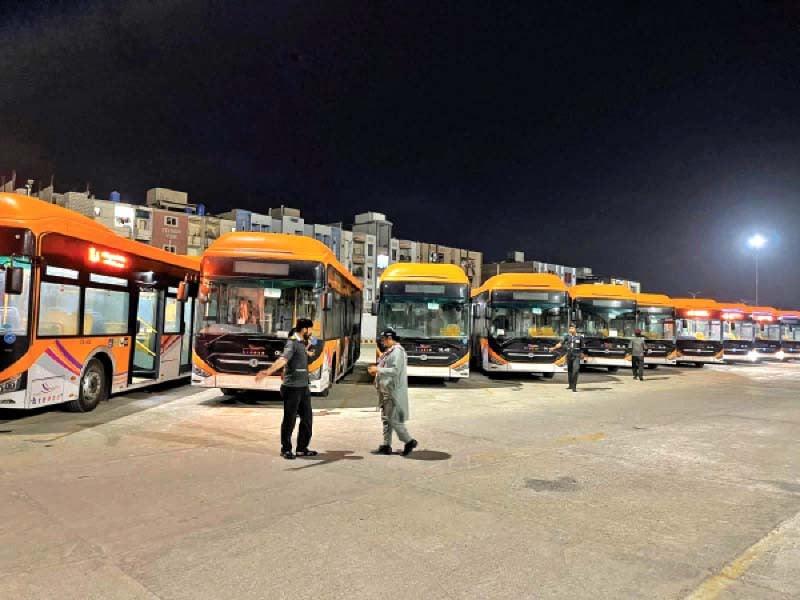
Operational control of Green Line and Orange Line bus services was officially handed over to the Sindh government.
A ceremony to transfer the operational command and the control of the Green Line and Orange Line bus services took place at the Garden, Karachi command and operational control center. PDG CEO, Wasim Bajwa, submitted control to the transport secretary asad Zamin, reported Express News.
The event was followed by the MD of the Sindh Mass Transit Authority, Kamal Dayo, as well as managers of the Orange Line and Green Line BRT systems.
On this occasion, the main minister of Sindh, Sharjeel Inam Memon, addressed the meeting and said that the transfer of the green line and the orange line to the Sindh government is an important step towards the organization of the public transport network.
The Sindh government is committed to improving and ensuring the sustainability of bus services to provide the best travel facilities to citizens. “We will work on improving the performance of bus services through the use of modern technology and regular maintenance,” he added.
Sharjeel Memon also mentioned that a complete and effective urban transport system is being developed for Karachi. The work is underway to connect the two BRT lines to other public transport systems.
Last week, the board of directors of the Sindh Mass Transit Authority approved the management of the control of the green line and the Orange BRT line during its 14th meeting, chaired by the main minister Sharjeel Inam Memon.
Discussions have taken place on the sending of documents related to the BRT agreements of the green line and the orange line to the Department of Law for legal validation. It was approved to keep the structure of existing human resources of the green and orange BRT line for three months.
Meanwhile, the Sindh government announced an extension of the hours of operation of the peoples bus services during Ramadan, the buses operating up to 1 a.m.
Sindh Minister of Transport, Sharjeel Inam Memon, said that prolonged hours would apply to key roads, including R1, R2, R3, R4, R9, R10 and EV1.
He noted that the decision had been made to meet the needs of Karachi residents who rely on public transport.


